Sucrose Fatty Acid Ester from TCI is an ester formed from sucrose and fatty acids. It is a sugar-based nonionic surfactant and sits in the Glycoscience group of the TCI catalog. Each molecule has a hydrophilic sucrose head and a hydrophobic fatty acid tail. Because of this amphiphilic structure, the material can lower interfacial tension, form emulsions and solubilize compounds that dissolve poorly in water. Laboratories use it in formulation studies, biochemistry and food technology research.
Researchers often choose sucrose fatty acid esters because they come from natural raw materials, are generally regarded as environmentally friendly, and break down readily in the environment. As nonionic surfactants, their behavior depends relatively little on the ionic charge of the surrounding solution, so they work in a wide range of buffer systems. The product is a mixture of esters with a particular degree of esterification, not a single compound. For that reason it has no single specific CAS number, and researchers should check the Certificate of Analysis (CoA) for the characteristics of the lot they use.
In Indonesia, this material is useful to food technology, pharmaceutical, cosmetic and biotechnology laboratories working on formulation and surfactant research. University research groups and industrial R&D teams can use it to study emulsion systems, test how well poorly water-soluble ingredients dissolve, and compare sugar-based surfactants with conventional ones. Because its properties vary from lot to lot, laboratories that need reproducible results should record the lot number and its CoA data in their experimental documentation.
TCI brochures (PDF)
- Emulsion formulation studies: the amphiphilic sucrose head and fatty acid tail lower interfacial tension, so researchers can prepare and evaluate oil-in-water and related emulsion systems.
- Solubilization of poorly water-soluble compounds: as a surfactant, the ester helps disperse and dissolve hydrophobic substances in aqueous media for formulation and analytical experiments.
- Biochemical work in buffered systems: its nonionic character means ionic charge in solution affects its behavior relatively little, so it suits experiments run in many different buffer systems.
- Food technology research: as a sugar-based surfactant from natural raw materials, it fits laboratory studies of emulsifier behavior and texture in food model systems.
- Green and biodegradable surfactant studies: it is generally regarded as environmentally friendly and readily biodegradable, which makes it a good reference material when comparing sustainable surfactants with conventional ones.
| Brand | TCI (product code S0112) |
|---|---|
| CAS number | no single CAS number; the product is a mixture of esters with a particular degree of esterification |
| Molecular formula | — |
| Purity | — |
| Category | Chemistry > Chemical Biology > Glycoscience |
| Pack sizes | please ask AMI Scientific for available pack sizes |
| Physical form | refer to the TCI product documentation and the lot-specific CoA |
| Storage | follow the storage conditions on the TCI label and Safety Data Sheet |
Store Sucrose Fatty Acid Ester in its original, tightly closed container in a cool, dry and well-ventilated place, away from direct sunlight, heat and moisture. Follow the storage conditions on the TCI label and Safety Data Sheet. Reseal the container promptly after each use so the material does not absorb moisture or become contaminated. Wear standard laboratory protective equipment when handling it, including gloves, safety glasses and a lab coat. Avoid creating dust or inhaling it, and avoid contact with the eyes and skin. Because this is a mixture of esters, record the lot number and check the CoA before use so experimental results can be reproduced. Dispose of waste according to local regulations and your laboratory's safety procedures.
—
Produk Terkait
-
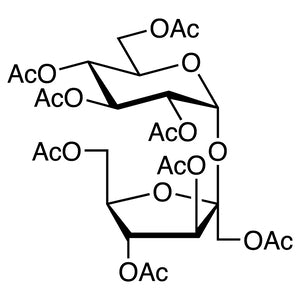
Octa-O-acetylD-(+)-Sucrose TCI S0052
Regular price From Rp 505.050,00Regular priceRp 368.550,00Sale price From Rp 505.050,00 -
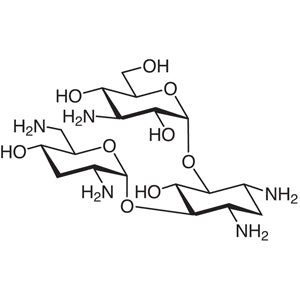
Tobramycin TCI T2503
Regular price From Rp 2.942.100,00Regular priceRp 2.072.700,00Sale price From Rp 2.942.100,00 -
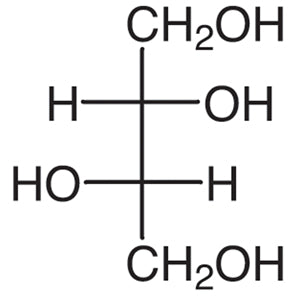
L-Threitol TCI T1647
Regular price Rp 3.445.050,00Regular priceRp 2.424.450,00Sale price Rp 3.445.050,00 -
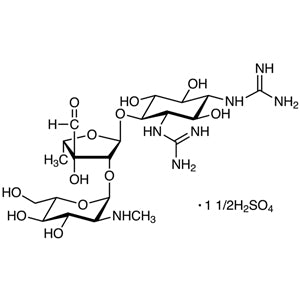
StreptomycinSulfate[forProteinResearch] TCI S0834
Regular price From Rp 557.550,00Regular priceRp 405.300,00Sale price From Rp 557.550,00 -
StreptomycinSulfate TCI S0585
Regular price From Rp 822.150,00Regular priceRp 590.100,00Sale price From Rp 822.150,00 -
Saponin TCI S0019
Regular price From Rp 1.272.600,00Regular priceRp 905.100,00Sale price From Rp 1.272.600,00 -
ParomomycinSulfate TCI P2092
Regular price From Rp 1.087.800,00Regular priceRp 775.950,00Sale price From Rp 1.087.800,00 -
KanamycinMonosulfate TCI K0047
Regular price Rp 1.272.600,00Regular priceRp 905.100,00Sale price Rp 1.272.600,00