Alkyne Tyramide (CAS 1694495-59-4) is a functionalized tyramide reagent that carries a terminal alkyne group at the end of the molecule. The reagent is designed to combine two of the most powerful techniques in modern molecular biology: peroxidase-mediated tyramide signal amplification and azide-alkyne click chemistry. When the tyramide is activated by horseradish peroxidase in the presence of hydrogen peroxide, an extremely short-lived phenoxyl radical is generated that forms covalent bonds with electron-rich residues on nearby proteins, leaving an alkyne mark precisely at the target location.
The advantage that makes this reagent a preferred choice is the separation between the deposition step and the detection step. The alkyne group is small, biologically neutral, and causes almost no disturbance to the structure of the sample, yet it remains highly reactive toward azides through copper-catalyzed cycloaddition as well as copper-free variants. Researchers can therefore store a labeled sample and later choose whichever fluorescent dye, biotin, or mass probe suits the next experiment. The very narrow labeling radius, a consequence of the short radical lifetime, gives excellent spatial resolution.
In Indonesian laboratories, this reagent fits research groups at universities, hospital pathology units, and biotechnology institutes that already run peroxidase-based immunodetection and want to extend it toward proximity labeling and multiplexed imaging. It is typically handled in facilities equipped with fluorescence microscopy or flow cytometry, where the two-step workflow allows scarce clinical or field-collected specimens to be labeled once and then analyzed with several different reporters over time.
TCI brochures (PDF)
- Tyramide Signal Amplification (TSA) Reagents 2025-12-22 · p. 1
- Click Chemistry 2026-09-08 · p. 16
- Tyramide signal amplification in immunohistochemistry, where the alkyne handle deposits at the antigen site and is later developed with an azide-linked reporter of choice.
- Proximity labeling and protein interaction mapping, since the short radical lifetime confines the alkyne mark to molecules in the immediate neighborhood of the peroxidase.
- Multiplexed fluorescence imaging, because one deposition step can be revealed with different azide dyes, letting several targets be visualized in a single specimen.
- Affinity enrichment of labeled proteins, in which an azide-biotin probe is clicked onto the deposited alkyne so that tagged material can be pulled down for downstream analysis.
- In situ hybridization signal enhancement, where the peroxidase-driven deposition intensifies weak probe signals while the bioorthogonal alkyne keeps detection chemistry flexible.
| Brand | TCI, catalogue number H1847 |
|---|---|
| CAS number | 1694495-59-4 |
| Molecular formula | — |
| Purity | — |
| Category | Chemistry > Chemical Biology > Conjugation Chemistry / Click Chemistry |
| Pack sizes | available in standard research-scale packaging as listed by the manufacturer |
| Physical form | — |
| Storage | keep according to the manufacturer's stated conditions for this reagent |
- Product name: Alkyne Tyramide
Store the reagent in its original tightly closed container, protected from light and moisture, and follow the temperature conditions stated by the manufacturer on the product label. Amber glass vials or the supplied container are appropriate; avoid repeated opening at room temperature so that condensation does not reach the material. Prepare working solutions inside a fume hood or a suitable ventilated enclosure, and wear gloves, safety glasses, and a laboratory coat when weighing or dissolving the compound. Label all prepared solutions clearly, keep them separate from strong oxidizing agents, and dispose of residues and contaminated consumables through the laboratory's chemical waste procedure.
—
Product Categories
Produk Terkait
-
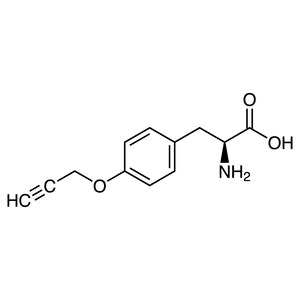
H-L-Tyr(Propargyl)-OH TCI P3021
Regular price Rp 7.950.600,00Regular price -
10-Undecyn-1-ol TCI U0055
Regular price Rp 3.446.100,00Regular price -
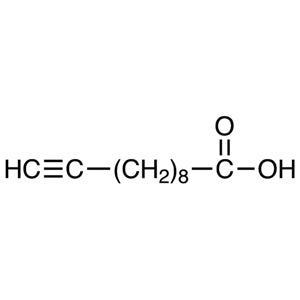
10-UndecynoicAcid TCI U0054
Regular price From Rp 1.008.000,00Regular price -
TripropargylPhosphate TCI T3987
Regular price From Rp 2.730.000,00Regular price -
Tetrakis(4-ethynylphenyl)methane TCI T3151
Regular price Rp 3.976.350,00Regular price -
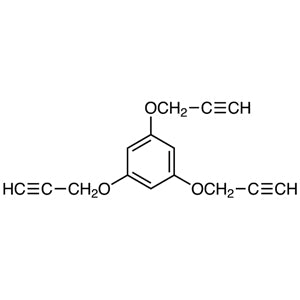
1,3,5-Tris(2-propynyloxy)benzene TCI T3135
Regular price From Rp 4.056.150,00Regular price -
TriethyleneGlycolMono(2-propynyl)Ether TCI T3114
Regular price From Rp 2.411.850,00Regular price -
1,3,5-Triethynylbenzene TCI T2760
Regular price From Rp 3.578.400,00Regular price