

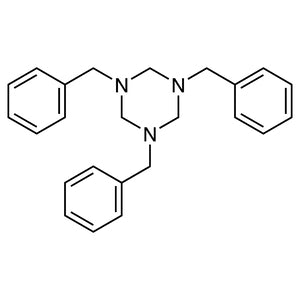
1,3,5-Tribenzyl-1,3,5-triazinane is a chemical compound widely used as a building block in the synthesis of complex heterocyclic compounds. This material plays a crucial role in organic chemistry laboratories by providing a stable and versatile platform for molecular construction. Its triazine core, substituted with benzyl groups at each position, allows for the development of molecules with specific biological or chemical properties. This compound is particularly valuable for researchers aiming to design and test new compounds with tailored functionalities.
The compound’s unique structure and chemical stability make it a preferred choice for various synthetic applications. Its ability to participate in substitution, hydrolysis, and cross-reaction processes enhances its utility in diverse chemical transformations. The non-toxic and non-degradable nature of this material further supports its long-term use and safe handling in laboratory settings. These characteristics ensure that it remains a reliable and efficient reagent for advanced chemical research.
In Indonesian laboratories, 1,3,5-Tribenzyl-1,3,5-triazinane is commonly used in organic chemistry research, especially in the pharmaceutical industry. Its role in synthesizing bioactive compounds and exploring new drug candidates makes it an essential component in academic and industrial research. Its stability and reactivity make it suitable for a wide range of experimental conditions, supporting both basic and applied research efforts.
Related TCI products
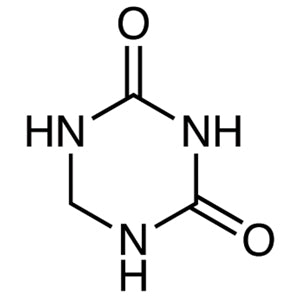
- TCI T3800 27032-78-6 1,3,5-Triazinane-2,4-dione
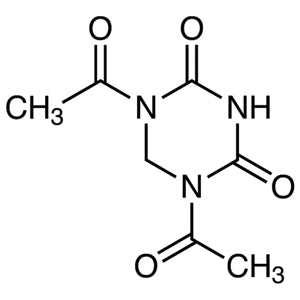
- TCI D5634 86320-44-7 1,5-Diacetyl-1,3,5-triazinane-2,4-dione
- TCI T3653 27676-62-6 1,3,5-Tris(3,5-di-tert-butyl-4-hydroxybenzyl)-1,3,5-triazinane-2,4,6-trione
- TCI T2974 40601-76-1 1,3,5-Tris[4-(tert-butyl)-3-hydroxy-2,6-dimethylbenzyl]-1,3,5-triazinane-2,4,6-trione
- TCI H1842 3779-63-3 1,3,5-Tris(6-isocyanatohexyl)-1,3,5-triazinane-2,4,6-trione
- Organic synthesis of heterocyclic compounds due to its stable triazine core and benzyl substituents.
- Development of bioactive molecules for pharmaceutical research as it supports diverse chemical transformations.
- Cross-reaction studies in synthetic chemistry because of its reactivity and structural versatility.
- Hydrolysis experiments to explore the compound’s behavior under different reaction conditions.
- Structural modification projects where a stable and flexible molecular framework is required.
| Brand | TCI |
|---|---|
| CAS number | 2547-66-2 |
| Molecular formula | — |
| Purity | — |
| Category | Chemistry > Building Blocks > Heterocyclic Building Blocks |
| Pack sizes | Available in various quantities as per standard chemical supply practices |
| Physical form | Solid |
| Storage | Store in a cool, dry place away from direct sunlight and moisture |
This compound should be stored in a cool, dry environment to maintain its stability and prevent degradation. It is recommended to keep it in a tightly sealed container to avoid exposure to moisture and air. Due to its non-toxic nature, it does not require special containment, but standard laboratory safety protocols should still be followed. The compound is stable under normal storage conditions, making it suitable for long-term use. It is important to ensure that the storage area is well-ventilated and free from potential contaminants. Proper labeling and safe handling practices are essential to maintain a secure laboratory environment.
—
Produk Terkait
-
1,3,5-Triazinane-2,4-dione TCI T3800
Regular price From Rp 2.332.050,00Regular price -
1,5-Diacetyl-1,3,5-triazinane-2,4-dione TCI D5634
Regular price From Rp 2.571.450,00Regular price -
1,3,5-Tris(3,5-di-tert-butyl-4-hydroxybenzyl)-1,3,5-triazinane-2,4,6-trione TCI T3653
Regular price From Rp 1.485.750,00Regular price -
1,3,5-Tris[4-(tert-butyl)-3-hydroxy-2,6-dimethylbenzyl]-1,3,5-triazinane-2,4,6-trione TCI T2974
Regular price From Rp 4.081.350,00Regular price -
1,3,5-Tris(6-isocyanatohexyl)-1,3,5-triazinane-2,4,6-trione TCI H1842
Regular price From Rp 689.850,00Regular price

![40601-76-1 1,3,5-Tris[4-(tert-butyl)-3-hydroxy-2,6-dimethylbenzyl]-1,3,5-triazinane-2,4,6-trione - AMI Scientific](http://amiscientific.com/cdn/shop/files/TCI2510T2974.jpg?v=1768819713&width=533)
