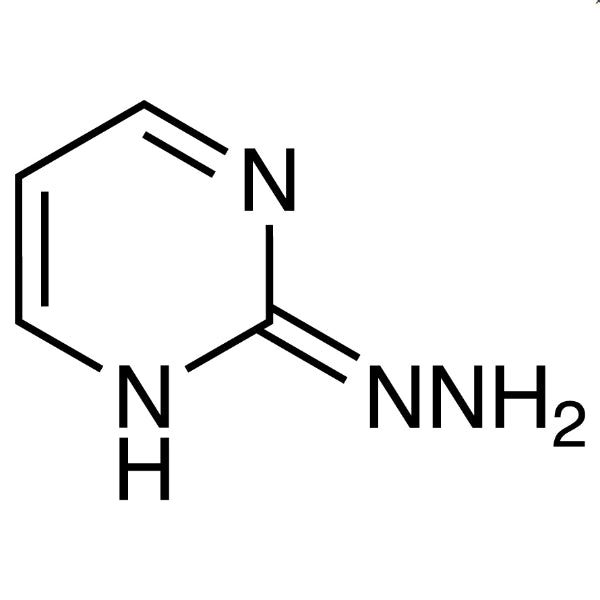
2-Hydrazinopyrimidine is a heterocyclic compound that combines a pyrimidine ring with a hydrazine group at the two position, producing a molecule that carries two reactive characters at once within a compact framework. The pyrimidine ring is a core motif very well known in medicinal chemistry because of its presence in the nucleic acid bases and in many biologically active compounds, while the hydrazine group supplies a bifunctional nucleophile ready to form new bonds. This combination makes the compound a building block frequently encountered in synthesis programmes directed at fused heterocyclic systems.
The strength of this reagent lies in the two consecutive nitrogen atoms of the hydrazine group, which allow condensation and cyclisation reactions to proceed as one efficient sequence of steps. Condensation with aldehydes or ketones affords hydrazones, while reaction with 1,3-dicarbonyl compounds opens a route towards pyrazole rings. When followed by an oxidative cyclisation step, this group can form the triazolopyrimidine systems that attract considerable interest in drug discovery. The pyrimidine ring itself is electron-poor, and it therefore influences the basicity and nucleophilicity of the attached hydrazine group.
In Indonesian laboratories, this building block is typically found in university and institutional research groups working on organic synthesis and medicinal chemistry, where fused heterocyclic scaffolds are prepared on a small scale for screening or for methodology studies. It also appears in postgraduate research projects and in the exploratory synthesis work of pharmaceutical and agrochemical developers, who use it to assemble candidate structures before committing to larger preparations.
- Hydrazone formation — condensation with aldehydes or ketones proceeds readily through the terminal nitrogen, giving pyrimidinyl hydrazones that serve as intermediates or as substrates for further ring closure.
- Pyrazole ring construction — reaction with 1,3-dicarbonyl compounds builds a pyrazole ring directly onto the pyrimidine nitrogen, delivering linked bicyclic frameworks in a single condensation operation.
- Triazolopyrimidine synthesis — after condensation, an oxidative cyclisation step closes the triazole ring, giving access to fused systems that are widely pursued in drug discovery programmes.
- Medicinal chemistry scaffold preparation — the pyrimidine core mirrors the nucleic acid bases and many bioactive compounds, making derivatives of this reagent attractive starting points for screening libraries.
- Heterocyclic methodology studies — the two adjacent nitrogen atoms combined with an electron-poor ring make this a useful probe for examining how ring electronics govern nucleophilicity and cyclisation outcomes.
| Brand | TCI |
|---|---|
| CAS number | 7504-94-1 |
| Molecular formula | — |
| Purity | — |
| Category | Chemistry > Building Blocks > Heterocyclic Building Blocks |
| Pack sizes | available in the standard research-scale pack sizes offered by TCI for this catalogue item |
| Physical form | — |
| Storage | keep in a cool, dry place in a tightly closed container, away from light and moisture |
- Catalogue code: H1906
Store the container tightly closed in a cool, dry and well-ventilated area, protected from light, moisture and sources of ignition, and keep it separate from strong oxidising agents. The original supplier packaging is the most suitable container; where transfer is necessary, use clean, dry, chemically compatible glass vessels with secure closures and clear labelling. Handle the material in a fume hood, wearing safety glasses, chemically resistant gloves and a laboratory coat, and avoid raising dust or inhaling any vapour. Allow sealed containers to reach room temperature before opening to prevent condensation on the contents, and always consult the manufacturer's safety data sheet before use and before disposal.
—
Produk Terkait
-
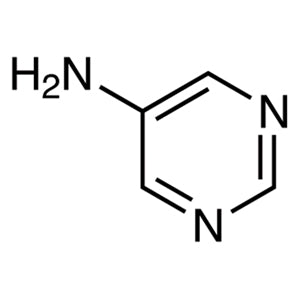
5-Aminopyrimidine TCI A2589
Regular price Rp 2.491.650,00Regular price -
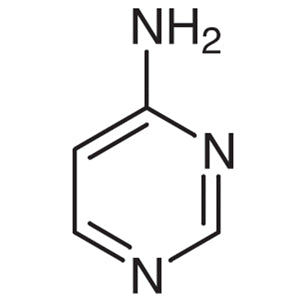
4-Aminopyrimidine TCI A2251
Regular price Rp 3.949.050,00Regular price -
2-Aminopyrimidine TCI A0412
Regular price Rp 1.167.600,00Regular price -
4,5-Diaminopyrimidine TCI D3858
Regular price Rp 4.188.450,00Regular price -
4,6-Diaminopyrimidine TCI D3648
Regular price From Rp 1.881.600,00Regular price -
2,4-Diaminopyrimidine TCI D2120
Regular price From Rp 4.161.150,00Regular price -
2,4,5,6-TetraaminopyrimidineSulfate TCI T1462
Regular price Rp 1.538.250,00Regular price -
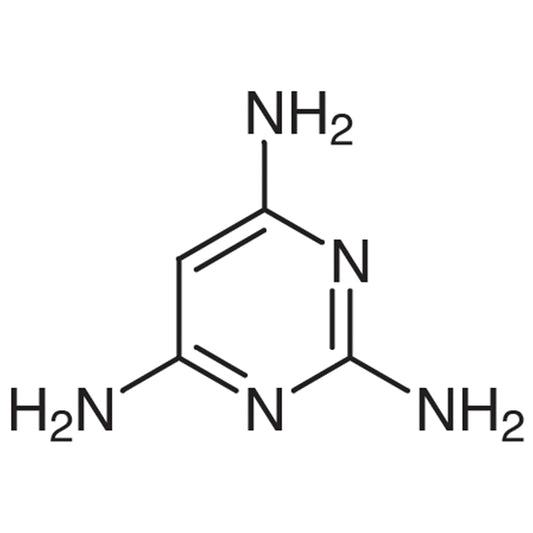
2,4,6-Triaminopyrimidine TCI T0834
Regular price From Rp 928.200,00Regular price