


Indan, also known as indane, is a bicyclic hydrocarbon formed from a benzene ring fused to a cyclopentane ring. This half-aromatic, half-saturated structure makes it both an interesting reference compound and an important building block in the laboratory. The indan skeleton is the structural core of many high-value molecules, ranging from active pharmaceutical ingredients to fragrance compounds, which is why the parent compound is frequently used as a starting point for synthesising derivatives such as indanones, indanols, and indanamines through oxidation, halogenation, and aromatic substitution reactions.
The characteristic that makes it a preferred choice is the clear difference in reactivity between its two rings. The benzene ring undergoes electrophilic substitution with a predictable directing pattern, while the benzylic positions on the five-membered ring are far more readily oxidised, giving researchers two functionalisation pathways that can be controlled independently of one another. The compound is a colourless liquid at room temperature, non-polar in character, practically insoluble in water yet readily miscible with organic solvents, and sufficiently stable to be convenient in routine handling.
In Indonesian laboratories, indan is typically encountered in synthetic organic chemistry groups building derivative libraries, in analytical laboratories that need a well-defined reference compound, and in petrochemical and fuel-testing work where its stability makes it a comfortable component of hydrocarbon test mixtures. Its predictable behaviour and compatibility with common organic solvents allow it to fit into established bench workflows without requiring specialised infrastructure.
TCI brochures (PDF)
- Ligands 2025-12-01 · p. 19
Related TCI products
- Synthesis of indanone derivatives — the benzylic positions of the five-membered ring oxidise readily, giving a direct and controllable route from the parent hydrocarbon to the ketone.
- Preparation of pharmaceutical intermediates — the indan skeleton forms the structural core of many active pharmaceutical ingredients, making the parent compound a practical starting point for derivative synthesis.
- Fragrance compound development — indan-based structures appear in aroma chemistry, so the parent hydrocarbon serves as an accessible entry point for preparing scent-active derivatives in research settings.
- Electrophilic aromatic substitution studies — the fused benzene ring reacts with predictable directing patterns, making indan a clean substrate for teaching and investigating substitution selectivity.
- Hydrocarbon test mixture formulation — its non-polar character, good miscibility with organic solvents, and adequate stability make it a reliable component in reference mixtures for analytical work.
| Brand | TCI |
|---|---|
| CAS number | 496-11-7 |
| Molecular formula | — |
| Purity | — |
| Category | Chemistry > Building Blocks > Non-Heterocyclic Building Blocks |
| Pack sizes | available in standard TCI research-scale packaging; please confirm the size required when ordering. |
| Physical form | colourless liquid at room temperature |
| Storage | store in a tightly closed container in a cool, well-ventilated area away from ignition sources. |
Store indan in a tightly closed container in a cool, dry, well-ventilated area, away from heat, sparks, open flames, and strong oxidising agents. Amber glass or the original manufacturer's container is suitable, as the material is compatible with common laboratory glassware; avoid containers whose seals may be degraded by non-polar organic liquids. Handle in a fume hood to limit vapour inhalation, and wear safety goggles, a laboratory coat, and chemically resistant gloves. Keep containers closed when not in use to reduce evaporation, ground equipment where appropriate when transferring larger volumes, and always consult the manufacturer's safety data sheet before first use.
—
Produk Terkait
-
2-(Dicyanomethylene)indan-1,3-dione TCI D2090
Regular price Rp 2.597.700,00Regular price -
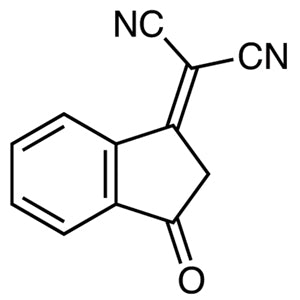
3-(Dicyanomethylidene)indan-1-one TCI D2054
Regular price From Rp 4.320.750,00Regular price -
1,3-Bis(dicyanomethylidene)indan TCI B1416
Regular price From Rp 1.485.750,00Regular price -
Acenaphthylene TCI A0005
Regular price From Rp 769.650,00Regular price -
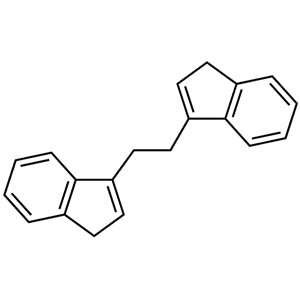
1,2-Bis(3-indenyl)ethane TCI B2281
Regular price From Rp 1.035.300,00Regular price -
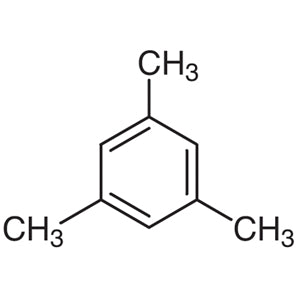
1,3,5-Trimethylbenzene TCI T0470
Regular price From Rp 452.550,00Regular price -
(mixtureof1H-and3H-form) TCI M1425
Regular price From Rp 3.287.550,00Regular price -
2-Methylcyclopenta[l]phenanthrene TCI M1411
Regular price From Rp 2.279.550,00Regular price



![2-Methylbenzo[e]indene (mixture of 1H- and 3H-form) - AMI Scientific](http://amiscientific.com/cdn/shop/files/TCI2510M1425.jpg?v=1767124955&width=533)
![121254-39-5 2-Methylcyclopenta[l]phenanthrene - AMI Scientific](http://amiscientific.com/cdn/shop/files/TCI2510M1411.jpg?v=1767124927&width=533)