1,3,5-Trimethylbenzene is an organic compound widely used in various laboratory applications across the chemical industry. As a member of the aromatic hydrocarbon family, it features a benzene ring with three methyl groups attached at positions 1, 3, and 5. This structural arrangement makes it a versatile building block for synthetic chemists. Its stability and controlled reactivity allow it to be used in a range of chemical reactions, particularly those involving aromatic substrates that require modification. This compound is commonly found in research settings where the synthesis of complex molecules is required.
The compound’s non-polar and volatile nature makes it highly soluble in organic solvents such as ethers, chloroform, and benzene. These properties make it an ideal choice for reactions that require non-polar solvent environments. Additionally, its relatively high boiling point enables its use in distillation or evaporation processes that demand specific temperature conditions. The combination of its chemical stability and predictable reactivity ensures that it remains a preferred material in many laboratory workflows.
In Indonesian laboratories, 1,3,5-Trimethylbenzene is commonly used in organic synthesis, pharmaceutical research, and polymer development. Its availability and compatibility with various chemical processes make it a staple in both academic and industrial research settings. Researchers rely on its consistent performance and reliability in chemical reactions, making it an essential component in many laboratory protocols.
TCI brochures (PDF)
- Ligands 2025-12-01 · p. 19
- Organic synthesis applications benefit from the compound’s aromatic structure and reactivity, enabling the creation of complex molecules.
- Pharmaceutical research utilizes this compound as a building block for the synthesis of various drug compounds and derivatives.
- Polymer development processes often incorporate this material due to its compatibility with organic solvents and chemical stability.
- Analytical chemistry experiments use it as a standard reference material for chromatographic and spectroscopic analyses.
- Industrial chemical production relies on its non-polar properties for use in solvent-based reactions and manufacturing processes.
| Brand | TCI |
|---|---|
| CAS number | 108-67-8 |
| Molecular formula | — |
| Purity | — |
| Category | Chemistry > Building Blocks > Non-Heterocyclic Building Blocks |
| Pack sizes | Available in various quantities as per supplier specifications |
| Physical form | Liquid |
| Storage | Store in a cool, dry place away from direct sunlight |
This compound should be stored in a cool, dry environment, away from direct sunlight and sources of heat. It is recommended to use airtight containers made of materials such as glass or stainless steel to prevent contamination and evaporation. Due to its volatile nature, it should be handled in a well-ventilated area or fume hood to minimize exposure. General laboratory precautions include wearing appropriate personal protective equipment, such as gloves and safety goggles, when handling the substance. It is important to avoid contact with skin and eyes and to ensure proper disposal according to local regulations. The compound is not flammable but should be kept away from incompatible materials to maintain safety in the laboratory setting.
—
Produk Terkait
-
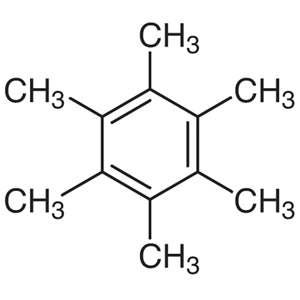
Hexamethylbenzene TCI H0087
Regular price From Rp 2.650.200,00Regular priceRp 1.853.250,00Sale price From Rp 2.650.200,00 -
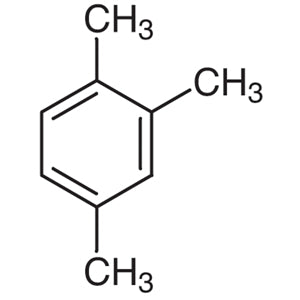
1,2,4-Trimethylbenzene TCI T0469
Regular price From Rp 477.750,00Regular priceRp 333.900,00Sale price From Rp 477.750,00 -
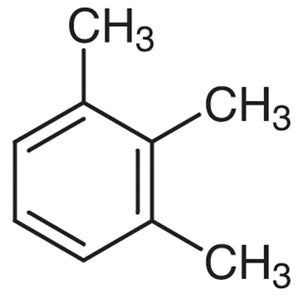
1,2,3-Trimethylbenzene TCI T0468
Regular price From Rp 717.150,00Regular priceRp 500.850,00Sale price From Rp 717.150,00 -
2-Ethynyl-1,3,5-trimethylbenzene TCI E1361
Regular price From Rp 2.466.450,00Regular priceRp 1.724.100,00Sale price From Rp 2.466.450,00 -
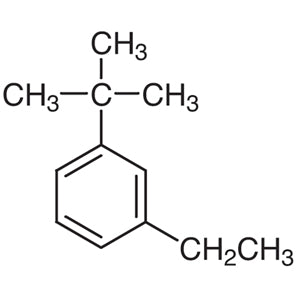
1-tert-Butyl-3-ethylbenzene TCI B1739
Regular price Rp 1.881.600,00Regular priceRp 1.315.650,00Sale price Rp 1.881.600,00 -
1,3,5-Triethylbenzene TCI T0868
Regular price From Rp 1.936.200,00Regular priceRp 1.353.450,00Sale price From Rp 1.936.200,00 -
1,2,4,5-Tetramethylbenzene TCI T0714
Regular price From Rp 875.700,00Regular priceRp 612.150,00Sale price From Rp 875.700,00 -
1,3,5-Triethylbenzene TCI T0426
Regular price From Rp 3.367.350,00Regular priceRp 2.354.100,00Sale price From Rp 3.367.350,00