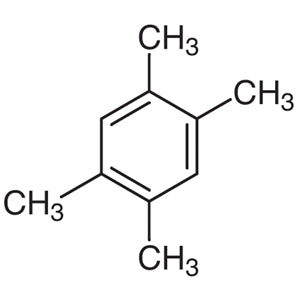
1,2,4-Trimethylbenzene is an organic chemical compound widely used in various laboratory experiments. It belongs to the category of non-heterocyclic building blocks and is recognized for its aromatic structure. This compound serves as a fundamental component in the synthesis of more complex organic molecules. Its stability and non-polar nature make it a reliable choice for chemical reactions that require controlled environments. In laboratory settings, it is commonly used as a solvent or a starting material due to its inertness and predictable behavior under different conditions.
The compound's non-polar characteristics and solubility in organic solvents make it a preferred choice for a wide range of applications. Its relatively stable boiling and melting points ensure consistent performance under controlled laboratory conditions. Additionally, 1,2,4-Trimethylbenzene exhibits low reactivity with other chemicals under normal conditions, minimizing the risk of unexpected chemical interactions. These properties contribute to its reliability in both research and industrial settings.
In Indonesian laboratories, 1,2,4-Trimethylbenzene is frequently utilized in pure chemical research, organic synthesis, and chemical quality testing. It is a standard component in educational and research institutions, supporting academic and industrial chemical processes. Its availability and reliable performance make it an essential material for many laboratory operations in Indonesia.
- Organic synthesis experiments benefit from 1,2,4-Trimethylbenzene due to its stable structure and non-polar nature, making it ideal for reactions requiring controlled chemical environments.
- As a solvent, it is preferred in laboratory settings where non-polar solubility is essential for dissolving organic compounds without causing chemical interactions.
- In chemical quality testing, it is used to assess the purity and stability of other compounds, ensuring accurate and reproducible results.
- It supports research in pure chemistry by providing a reliable base for creating more complex molecular structures.
- Educational institutions use it as a fundamental teaching material to demonstrate chemical properties and reaction mechanisms.
| Brand | TCI |
|---|---|
| CAS number | 95-63-6 |
| Molecular formula | — |
| Purity | — |
| Category | Chemistry > Building Blocks > Non-Heterocyclic Building Blocks |
| Pack sizes | Available in standard laboratory quantities |
| Physical form | Liquid |
| Storage | Store in a cool, dry place away from direct sunlight |
1,2,4-Trimethylbenzene should be stored in a cool, dry location away from direct sunlight to maintain its stability. It is recommended to use airtight containers made of materials resistant to chemical interactions, such as glass or stainless steel. Due to its non-polar nature, it is important to ensure proper ventilation in the laboratory to prevent the accumulation of vapors. Always handle the compound with appropriate personal protective equipment, including gloves and safety goggles. Avoid contact with skin and eyes, and ensure that spillage is cleaned up promptly to prevent any potential hazards. Regular monitoring of storage conditions is essential to maintain the integrity and safety of the compound in the laboratory environment.
—
Produk Terkait
-
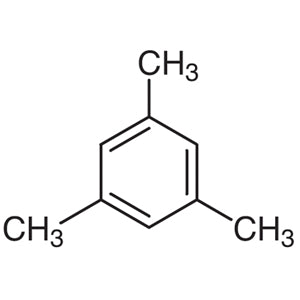
1,3,5-Trimethylbenzene TCI T0470
Regular price From Rp 452.550,00Regular priceRp 316.050,00Sale price From Rp 452.550,00 -
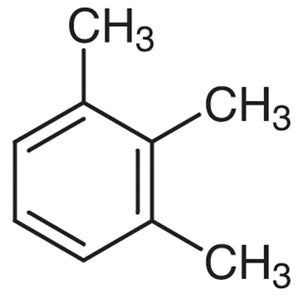
1,2,3-Trimethylbenzene TCI T0468
Regular price From Rp 717.150,00Regular priceRp 500.850,00Sale price From Rp 717.150,00 -
2-Ethynyl-1,3,5-trimethylbenzene TCI E1361
Regular price From Rp 2.466.450,00Regular priceRp 1.724.100,00Sale price From Rp 2.466.450,00 -
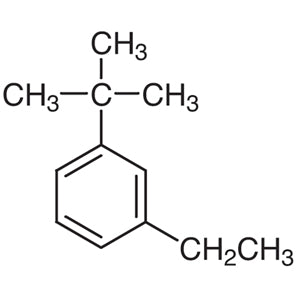
1-tert-Butyl-3-ethylbenzene TCI B1739
Regular price Rp 1.881.600,00Regular priceRp 1.315.650,00Sale price Rp 1.881.600,00 -
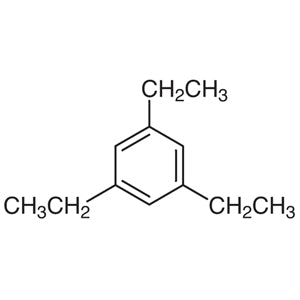
1,3,5-Triethylbenzene TCI T0868
Regular price From Rp 1.936.200,00Regular priceRp 1.353.450,00Sale price From Rp 1.936.200,00 -
1,2,4,5-Tetramethylbenzene TCI T0714
Regular price From Rp 875.700,00Regular priceRp 612.150,00Sale price From Rp 875.700,00 -
1,3,5-Triethylbenzene TCI T0426
Regular price From Rp 3.367.350,00Regular priceRp 2.354.100,00Sale price From Rp 3.367.350,00 -
Pentamethylbenzene TCI P0043
Regular price From Rp 1.458.450,00Regular priceRp 1.019.550,00Sale price From Rp 1.458.450,00