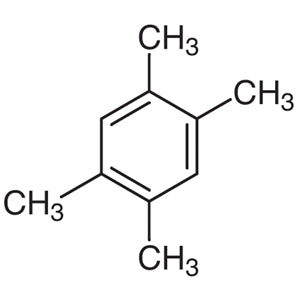
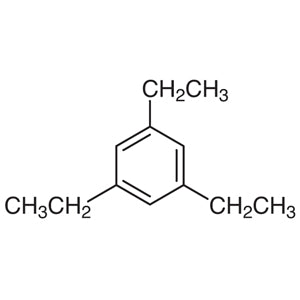
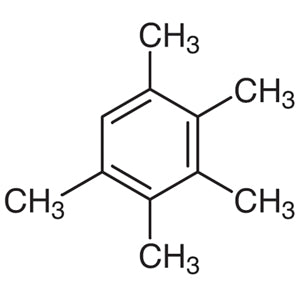
1,2,3-Trimethylbenzene is a chemical compound widely used in laboratory settings, particularly in the synthesis of organic compounds. This aromatic compound features a benzene ring with three methyl groups attached at positions 1, 2, and 3. Its structural simplicity and chemical stability make it a versatile building block for researchers. It is commonly utilized in organic chemistry to create more complex molecules, serving as a fundamental component in various chemical reactions. Due to its non-polar nature, it is often used as a solvent in organic synthesis and other chemical processes.
The compound's non-polar and hydrophobic properties make it an ideal choice for reactions requiring organic solvents. Its symmetrical molecular structure contributes to stable physical properties, including a consistent boiling point and melting point, which enhance its usability in laboratory conditions. Additionally, its chemical inertness allows it to be manipulated with minimal side reactions, making it a preferred material for synthetic pathways. These characteristics ensure that it remains a reliable and predictable reagent in chemical experiments.
In Indonesian laboratories, 1,2,3-Trimethylbenzene is frequently used in chemical research, pharmaceutical development, and industrial chemistry applications. It plays a crucial role in the creation of new compounds, including drug molecules and specialty chemicals. Its availability and consistent performance make it a valuable resource for both academic and industrial research in the country.
- Organic synthesis where a stable and predictable solvent is required for complex molecule formation.
- Pharmaceutical research for the development of new drugs and chemical intermediates.
- Industrial chemistry applications involving the production of specialty chemicals and additives.
- Chemical analysis where a non-reactive and non-polar solvent is needed for sample preparation.
- Teaching laboratories for demonstrating basic organic chemistry principles and reaction mechanisms.
| Brand | TCI |
|---|---|
| CAS number | 526-73-8 |
| Molecular formula | — |
| Purity | — |
| Category | Chemistry > Building Blocks > Non-Heterocyclic Building Blocks |
| Pack sizes | Available in various quantities as per standard laboratory supply options |
| Physical form | Liquid |
| Storage | Store in a cool, dry, and well-ventilated area away from heat and direct sunlight |
1,2,3-Trimethylbenzene should be stored in a cool, dry, and well-ventilated area, away from heat and direct sunlight. It is recommended to use sealed containers made of materials compatible with organic solvents, such as glass or high-density polyethylene. Due to its non-polar nature, it does not mix with water, so it should be handled in a fume hood to minimize exposure. Always ensure proper ventilation when working with this compound to avoid inhalation of vapors. It is important to keep it away from incompatible substances such as strong oxidizing agents. Regular inspection of storage containers is advised to maintain the integrity of the compound and ensure safe handling in the laboratory.
—
Produk Terkait
-
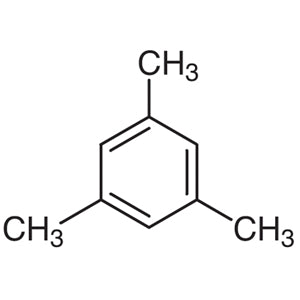
1,3,5-Trimethylbenzene TCI T0470
Regular price From Rp 452.550,00Regular priceRp 316.050,00Sale price From Rp 452.550,00 -
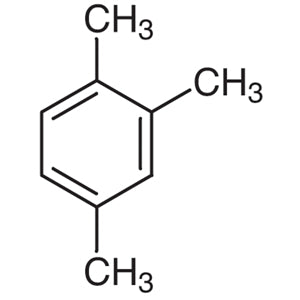
1,2,4-Trimethylbenzene TCI T0469
Regular price From Rp 477.750,00Regular priceRp 333.900,00Sale price From Rp 477.750,00 -
2-Ethynyl-1,3,5-trimethylbenzene TCI E1361
Regular price From Rp 2.466.450,00Regular priceRp 1.724.100,00Sale price From Rp 2.466.450,00 -
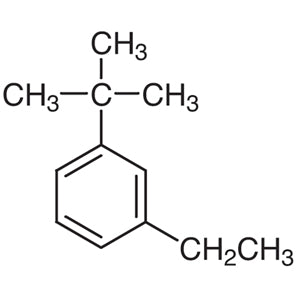
1-tert-Butyl-3-ethylbenzene TCI B1739
Regular price Rp 1.881.600,00Regular priceRp 1.315.650,00Sale price Rp 1.881.600,00 -
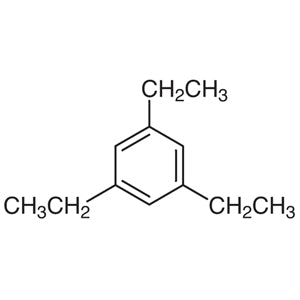
1,3,5-Triethylbenzene TCI T0868
Regular price From Rp 1.936.200,00Regular priceRp 1.353.450,00Sale price From Rp 1.936.200,00 -
1,2,4,5-Tetramethylbenzene TCI T0714
Regular price From Rp 875.700,00Regular priceRp 612.150,00Sale price From Rp 875.700,00 -
1,3,5-Triethylbenzene TCI T0426
Regular price From Rp 3.367.350,00Regular priceRp 2.354.100,00Sale price From Rp 3.367.350,00 -
Pentamethylbenzene TCI P0043
Regular price From Rp 1.458.450,00Regular priceRp 1.019.550,00Sale price From Rp 1.458.450,00