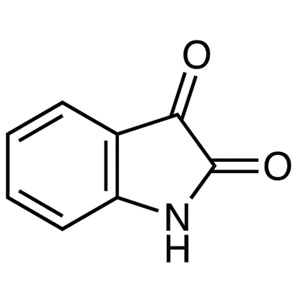
Isatin is a chemical compound belonging to the heterocyclic category and is widely used as a building block in the synthesis of complex compounds. With the CAS number 91-56-5, it plays a crucial role in various chemical reactions such as Diels-Alder, substitution, and oxidation reactions. Its unique molecular structure allows it to interact with a variety of functional groups, making it a versatile material in chemical laboratories. Isatin is particularly valuable in organic chemistry due to its ability to participate in multiple reaction types, which enhances its utility in synthetic pathways.
Isatin is preferred for its chemical stability under certain conditions and its reactivity with a range of reagents, including acids, bases, and organic solvents. These properties make it suitable for a wide array of chemical applications, especially in the development of pharmaceuticals and industrial chemicals. Its solubility in solvents like ethyl acetate and ethanol further simplifies purification and separation processes in the laboratory. This combination of reactivity and solubility ensures that isatin remains a key component in many experimental setups.
In Indonesian laboratories, isatin is commonly used in organic chemistry research, particularly in pharmaceutical and industrial chemical fields. It is a fundamental material for researchers aiming to synthesize new compounds or develop advanced chemical products. Its availability and reliability make it an essential reagent for both academic and industrial applications in the region.
- Organic synthesis applications benefit from isatin's ability to participate in various reaction types, making it ideal for creating complex chemical structures.
- Pharmaceutical research utilizes isatin due to its role in the development of new drugs and medicinal compounds through its reactivity and structural versatility.
- Industrial chemical production relies on isatin as a building block for the synthesis of dyes, pigments, and other specialty chemicals.
- Analytical chemistry experiments often incorporate isatin for its solubility properties, which aid in the purification and separation of compounds.
- Educational institutions use isatin in teaching laboratories to demonstrate fundamental chemical reactions and synthetic techniques to students.
| Brand | TCI |
|---|---|
| CAS number | 91-56-5 |
| Molecular formula | — |
| Purity | — |
| Category | Chemistry > Building Blocks > Heterocyclic Building Blocks |
| Pack sizes | Available in various quantities as per standard laboratory supply |
| Physical form | Solid powder |
| Storage | Store in a cool, dry place away from direct sunlight |
Isatin should be stored in a cool, dry environment to maintain its chemical stability and prevent degradation. It is recommended to keep it in a tightly sealed container to avoid exposure to moisture and air. Due to its reactivity with certain reagents, it should be handled with care in a well-ventilated area. Laboratory personnel should wear appropriate personal protective equipment, such as gloves and safety goggles, when working with isatin. It is important to store isatin away from incompatible substances like strong acids and bases to ensure safety. Proper labeling of storage containers is essential to prevent accidental use or contamination.
—
Produk Terkait
-
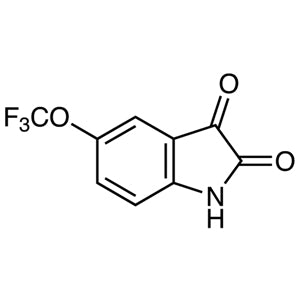
5-(Trifluoromethoxy)isatin TCI T2774
Regular price From Rp 2.094.750,00Regular price -
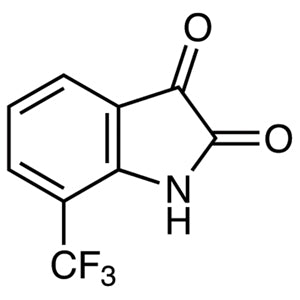
7-(Trifluoromethyl)isatin TCI T2457
Regular price From Rp 689.850,00Regular price