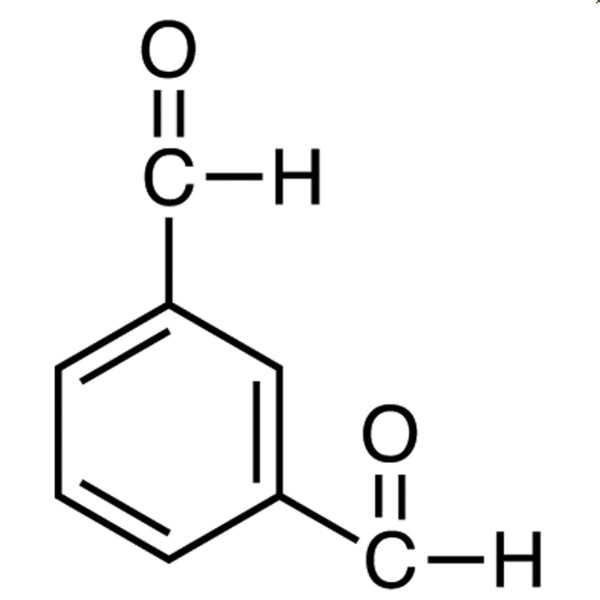
Isophthalaldehyde (TCI I0153), with CAS number 626-19-7, is a chemical compound widely used in laboratory settings for its versatile reactivity. As a non-heterocyclic building block, it plays a crucial role in organic chemistry by serving as a foundational material for the synthesis of more complex molecules. Its aldehyde functional group allows for various chemical reactions, including substitution and condensation, making it a valuable resource for researchers. This compound is commonly found in chemical laboratories where the development of new compounds and materials is essential.
Isophthalaldehyde is known for its chemical stability under controlled conditions, though it is sensitive to moisture and air exposure. Its open molecular structure enables it to react readily with a wide range of reagents, making it ideal for applications requiring high reactivity. The compound’s ability to participate in multiple reaction types, such as nucleophilic substitution and condensation, enhances its utility in synthetic chemistry. These properties make it a preferred choice for researchers aiming to explore diverse chemical transformations.
In Indonesian laboratories, Isophthalaldehyde is frequently used in chemical research, particularly in the synthesis of heterocyclic compounds and the study of aldehyde reactivity. It is also utilized in polymer research and industrial chemical studies due to its capacity to engage in complex chemical reactions. Its role in these areas highlights its importance in both academic and applied chemical investigations.
Related TCI products
- Synthesis of Heterocyclic Compounds: Isophthalaldehyde is ideal for creating heterocyclic structures due to its reactive aldehyde group, enabling efficient bond formation.
- Aldehyde Reactivity Studies: The compound’s open molecular structure allows for detailed investigation of aldehyde functional group behavior in various reaction conditions.
- Polymer Research: Its ability to participate in complex chemical reactions makes it suitable for developing new polymer materials and modifying existing ones.
- Industrial Chemical Development: The compound’s versatility supports the creation of new chemical products used in manufacturing and production processes.
- Organic Synthesis Applications: Isophthalaldehyde serves as a key building block in the synthesis of complex organic molecules, offering a reliable starting point for multiple reaction pathways.
| Brand | TCI |
|---|---|
| CAS number | 626-19-7 |
| Molecular formula | — |
| Purity | — |
| Category | Chemistry > Building Blocks > Non-Heterocyclic Building Blocks |
| Pack sizes | Available in various quantities as per supplier specifications |
| Physical form | Liquid |
| Storage | Store in a cool, dry place away from moisture and air exposure |
Isophthalaldehyde should be stored in a cool, dry environment to prevent degradation. It is recommended to use airtight containers to minimize exposure to moisture and air, which can affect its stability. Due to its reactivity, it should be handled in a well-ventilated area, preferably under a fume hood. Avoid direct contact with skin and eyes, and use appropriate personal protective equipment such as gloves and safety goggles. Keep the compound away from incompatible materials to ensure safe storage and handling in laboratory settings.
—
Product Categories
Produk Terkait
-
2-Hydroxy-5-methylisophthalaldehyde TCI H0683
Regular price From Rp 2.466.450,00Regular price -
4-Hydroxyisophthalaldehyde TCI F0310
Regular price From Rp 3.127.950,00Regular price -
Terephthalaldehyde TCI T0010
Regular price From Rp 980.700,00Regular price -
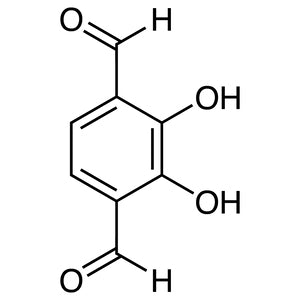
2,3-Dihydroxyterephthalaldehyde TCI D6103
Regular price From Rp 2.174.550,00Regular price -
2,3-Dimethoxyterephthalaldehyde TCI D6102
Regular price From Rp 3.232.950,00Regular price -
2,5-Dimethoxyterephthalaldehyde TCI D6056
Regular price From Rp 1.644.300,00Regular price -
2,5-Dibromoterephthalaldehyde TCI D5793
Regular price Rp 1.961.400,00Regular price -
2,5-Dihydroxyterephthalaldehyde TCI D5510
Regular price From Rp 3.630.900,00Regular price