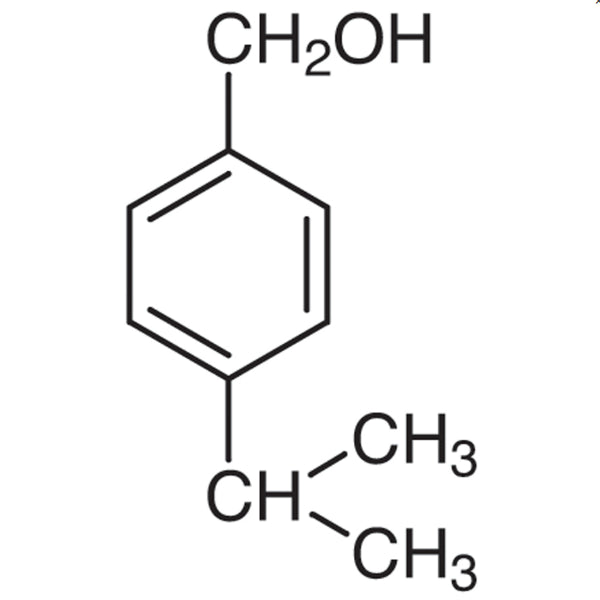
4-Isopropylbenzyl Alcohol is a chemical compound widely used as a foundational material in various chemical reactions. It serves as a key building block in synthetic chemistry, particularly in the development of complex organic molecules. Its molecular structure consists of an isopropyl group attached to a benzene ring, which contributes to its reactivity and versatility in chemical synthesis. This compound is essential for researchers aiming to create new compounds with specific functional properties. Its role in laboratory settings is critical for advancing research in pharmaceuticals and organic chemistry.
The compound is characterized by its polar and volatile nature, making it highly soluble in organic solvents such as ethyl acetate and ethanol. These properties make it ideal for use in reactions requiring organic solvents. Additionally, its relatively high boiling point allows for controlled heating applications in laboratory processes. The stability and resistance to degradation further enhance its reliability as a laboratory reagent. These features collectively make it a preferred choice for chemical synthesis and modification processes.
In Indonesian laboratories, 4-Isopropylbenzyl Alcohol is extensively used in chemical research, especially in the synthesis of organic compounds. Its availability and chemical properties make it a go-to material for researchers in both academic and industrial settings. Its role in the development of new pharmaceuticals and functional chemicals is significant, contributing to the advancement of scientific research in Indonesia.
Related TCI products
- TCI C0986 1007-03-0 alpha-Cyclopropylbenzyl Alcohol
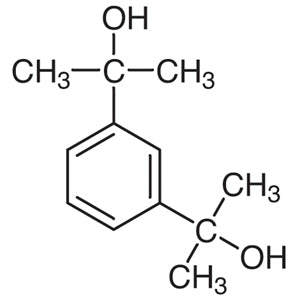
- TCI D1788 1999-85-5 alpha,alpha'-Dihydroxy-1,3-diisopropylbenzene
- TCI D1577 2948-46-1 alpha,alpha'-Dihydroxy-1,4-diisopropylbenzene
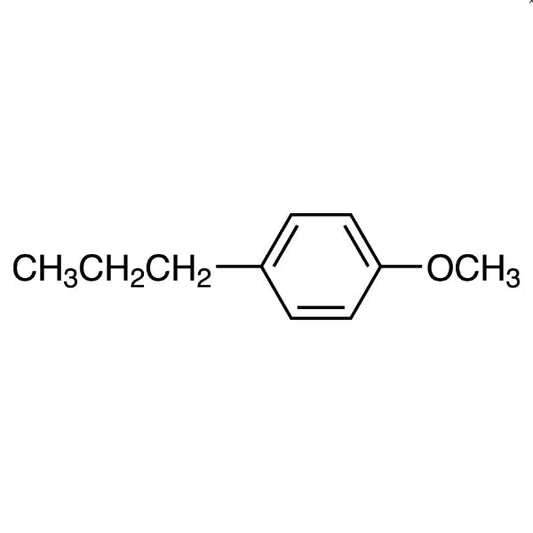
- TCI P3068 104-45-0 1-Methoxy-4-propylbenzene
- TCI I0810 18282-51-4 4-Iodobenzyl Alcohol
- TCI I0858 5159-41-1 2-Iodobenzyl Alcohol
- Organic synthesis: This compound is commonly used in the synthesis of complex organic molecules due to its reactivity and structural versatility.
- Pharmaceutical research: It serves as a building block in the development of new drugs and medicinal compounds.
- Molecular modification: Its ability to participate in various chemical reactions makes it suitable for modifying existing molecules to achieve desired functionalities.
- Solvent applications: Its solubility in organic solvents makes it a useful component in reaction mixtures and purification processes.
- Controlled heating processes: The compound's high boiling point allows it to be used in reactions that require precise temperature control.
| Brand | TCI |
|---|---|
| CAS number | 536-60-7 |
| Molecular formula | — |
| Purity | — |
| Category | Chemistry > Building Blocks > Non-Heterocyclic Building Blocks |
| Pack sizes | Available in various quantities as per supplier specifications |
| Physical form | Liquid |
| Storage | Store in a cool, dry place away from direct sunlight |
This compound should be stored in a cool, dry environment, away from direct sunlight and sources of heat. It is recommended to use airtight containers to prevent evaporation and contamination. Due to its volatility, it should be handled in a well-ventilated area to minimize exposure. Laboratory personnel should wear appropriate personal protective equipment, such as gloves and safety goggles, when handling the compound. It is important to ensure that the storage area is secure and inaccessible to unauthorized individuals. Regular monitoring of storage conditions will help maintain the compound's integrity and ensure safe laboratory practices.
—
Produk Terkait
-
alpha-CyclopropylbenzylAlcohol TCI C0986
Regular price From Rp 2.597.700,00Regular price -
alpha,alpha'-Dihydroxy-1,3-diisopropylbenzene TCI D1788
Regular price Rp 1.008.000,00Regular price -
alpha,alpha'-Dihydroxy-1,4-diisopropylbenzene TCI D1577
Regular price From Rp 2.730.000,00Regular price -
1-Methoxy-4-propylbenzene TCI P3068
Regular price Rp 1.829.100,00Regular price -
4-IodobenzylAlcohol TCI I0810
Regular price From Rp 2.889.600,00Regular price -
2-IodobenzylAlcohol TCI I0858
Regular price Rp 1.035.300,00Regular price -
3-IodobenzylAlcohol TCI I0866
Regular price From Rp 1.510.950,00Regular price -
SyringylAlcohol TCI Y0033
Regular price From Rp 1.273.650,00Regular price