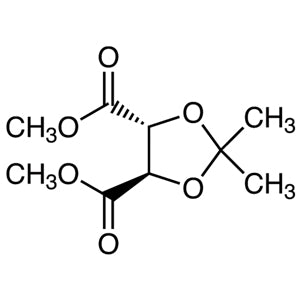

Dimethyl (-)-2,3-O-Isopropylidene-L-tartrate is a chiral building block used in asymmetric synthesis to create molecules with specific optical activity. This compound plays a crucial role in organic chemistry laboratories where precise control over molecular configuration is required. It is particularly valuable in the development of pharmaceuticals and other bioactive compounds, as its chiral nature allows for the synthesis of enantiomerically pure substances. Its structural complexity makes it an essential tool for researchers aiming to design molecules with targeted biological effects.
The compound’s chiral properties and structural features make it a preferred choice for synthetic chemists. The presence of two chiral centers and the isopropylidene group contribute to its utility in creating stereoselective reactions. Its ability to serve as a versatile starting material enables the synthesis of a wide range of optically active compounds. This makes it ideal for applications in drug discovery and the development of chiral pharmaceutical intermediates.
In Indonesian laboratories, this compound is commonly used in organic chemistry research, especially in pharmaceutical and molecular synthesis projects. It is a key component in the work of academic institutions and research centers focused on developing new therapeutic agents and industrial chemicals. Its application is widespread in both academic and industrial settings, supporting advancements in chemical sciences.
TCI brochures (PDF)
- Chiral Building Blocks 2025-04-14 · p. 11
Related TCI products
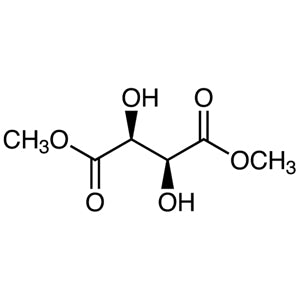
- TCI T1659 13171-64-7 Dimethyl D-(-)-Tartrate
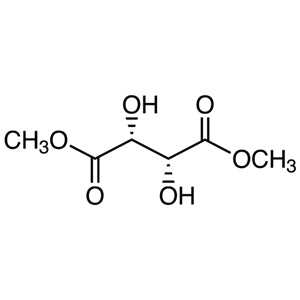
- TCI T0006 608-68-4 Dimethyl L-(+)-Tartrate
- TCI I0474 37031-30-4 Dimethyl (+)-2,3-O-Isopropylidene-D-tartrate
- TCI I0376 50622-09-8 (+)-2,3-O-Isopropylidene-L-threitol
- TCI I0375 73346-74-4 (-)-2,3-O-Isopropylidene-D-threitol
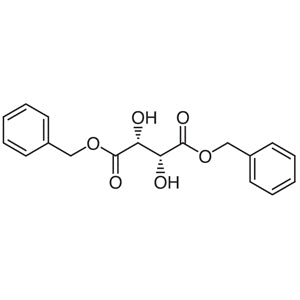
- TCI T1671 622-00-4 Dibenzyl L-Tartrate
- Asymmetric Synthesis: This compound is ideal for creating enantiomerically pure compounds, which are essential in pharmaceutical development due to their specific biological activity.
- Chiral Intermediate Development: Its chiral structure allows for the synthesis of complex molecules with precise stereochemistry, supporting drug discovery efforts.
- Organic Chemistry Research: Widely used in academic and industrial laboratories for the synthesis of optically active compounds and functionalized derivatives.
- Pharmaceutical Compound Synthesis: It serves as a building block for the production of bioactive molecules, contributing to the development of new therapeutic agents.
- Molecular Structure Optimization: Its structural versatility makes it suitable for modifying existing compounds to enhance their pharmacological properties.
| Brand | TCI |
|---|---|
| CAS number | 37031-29-1 |
| Molecular formula | — |
| Purity | — |
| Category | Chemistry > Asymmetric Synthesis > Chiral Building Blocks |
| Pack sizes | Available in various quantities as per standard laboratory supply |
| Physical form | Solid |
| Storage | Store in a cool, dry place away from light and moisture |
This compound should be stored in a cool, dry environment, away from direct light and moisture to maintain its chemical integrity. It is recommended to use airtight containers to prevent exposure to humidity and contaminants. Due to its chiral nature, it is important to handle it with care to avoid contamination or degradation. Standard laboratory safety protocols should be followed, including the use of appropriate personal protective equipment. Proper labeling and storage conditions ensure the compound remains effective for use in synthetic processes. Regular inspection of storage conditions is advised to maintain optimal performance in laboratory applications.
—
Produk Terkait
-
DimethylD-(-)-Tartrate TCI T1659
Regular price From Rp 584.850,00Regular price -
DimethylL-(+)-Tartrate TCI T0006
Regular price Rp 980.700,00Regular price -
Dimethyl(+)-2,3-O-Isopropylidene-D-tartrate TCI I0474
Regular price Rp 1.618.050,00Regular price -
(+)-2,3-O-Isopropylidene-L-threitol TCI I0376
Regular price From Rp 1.298.850,00Regular price -
(-)-2,3-O-Isopropylidene-D-threitol TCI I0375
Regular price From Rp 1.565.550,00Regular price -
DibenzylL-Tartrate TCI T1671
Regular price From Rp 1.298.850,00Regular price -
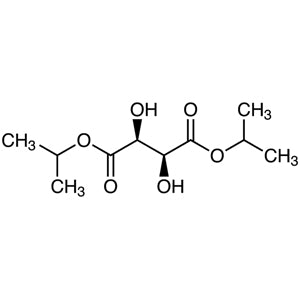
DiisopropylD-(-)-Tartrate TCI T1387
Regular price From Rp 1.881.600,00Regular price -
DiethylD-(-)-Tartrate TCI T1195
Regular price From Rp 1.115.100,00Regular price