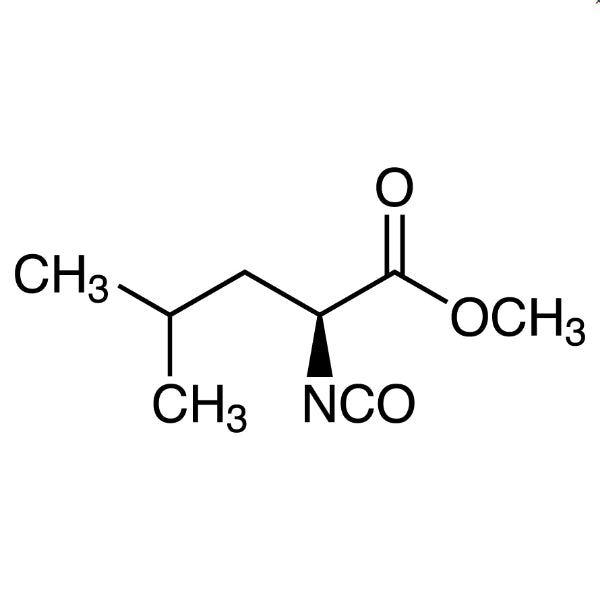
Methyl (S)-(-)-2-Isocyanato-4-methylvalerate is a chiral building block widely used in asymmetric synthesis to construct molecules with defined stereochemistry. This compound plays a crucial role in organic chemistry laboratories, particularly in research focused on the development of bioactive compounds. Its unique structure allows it to participate in various chemical reactions, making it an essential tool for chemists aiming to achieve high stereoselectivity in their synthetic processes. Due to its reactivity and specificity, it is frequently employed in the synthesis of complex molecules with pharmaceutical or biological significance.
The compound's reactivity is primarily attributed to its isocyanate group, which is highly reactive and capable of forming diverse chemical bonds under controlled conditions. This reactivity, combined with its chiral nature, makes it a preferred choice for chemists seeking precise control over the stereochemistry of their products. Its high purity and well-defined structure ensure consistent and reproducible results, which are critical in both academic and industrial research settings. These properties make it a reliable and versatile component in the synthesis of chiral compounds.
In Indonesian laboratories, this compound is commonly used in organic chemistry research, especially in the fields of pharmacology and the synthesis of biologically active compounds. It is a key reagent in the development of new pharmaceuticals and the optimization of existing synthetic pathways. Its application is widespread across research institutions and universities, supporting advancements in drug discovery and chemical innovation.
TCI brochures (PDF)
- Chiral Building Blocks 2025-04-14 · p. 10
Related TCI products
- Asymmetric Synthesis: This compound is ideal for creating chiral molecules with precise stereochemistry, essential for pharmaceutical development.
- Organic Chemistry Research: Its unique structure supports complex synthetic pathways, making it a valuable tool in academic and industrial labs.
- Bioactive Compound Synthesis: The compound's reactivity and selectivity enable the production of molecules with biological activity.
- Drug Discovery: It is used to develop new pharmaceuticals by providing a chiral scaffold for further functionalization.
- Chiral Molecule Optimization: Its high purity and defined structure aid in refining existing synthetic processes for improved efficiency.
| Brand | TCI |
|---|---|
| CAS number | 39570-63-3 |
| Molecular formula | — |
| Purity | — |
| Category | Chemistry > Asymmetric Synthesis > Chiral Building Blocks |
| Pack sizes | Available in various quantities as per standard laboratory supply |
| Physical form | Solid or liquid, depending on the specific product variant |
| Storage | Store in a cool, dry place away from moisture and direct sunlight |
This compound should be stored in a cool, dry environment to maintain its chemical integrity. It is recommended to use airtight containers to prevent exposure to moisture and air, which may affect its reactivity. Due to its potential chemical reactivity, it should be handled with appropriate personal protective equipment, including gloves and safety goggles. In laboratory settings, it should be stored away from incompatible substances to ensure safety. Regular monitoring of storage conditions is advised to maintain optimal performance and prevent degradation. Proper labeling and safe handling procedures are essential to ensure the compound remains effective and safe for use in chemical synthesis.
—
Produk Terkait
-
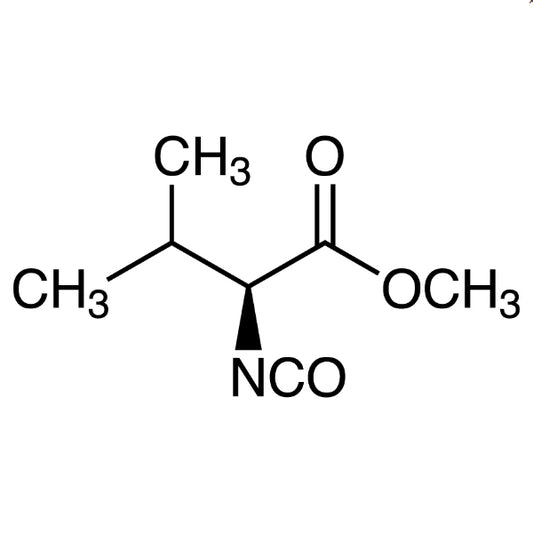
Methyl(S)-(-)-2-Isocyanato-3-methylbutyrate TCI I0466
Regular price From Rp 1.378.650,00Regular price -
1,3-Bis(2-isocyanato-2-propyl)benzene TCI B1442
Regular price From Rp 1.298.850,00Regular price -
Butyl2-Methylvalerate TCI B3359
Regular price From Rp 637.350,00Regular price -
Ethyl3-Methylvalerate TCI E0803
Regular price Rp 2.094.750,00Regular price -
Ethyl2-Methylvalerate TCI E0801
Regular price From Rp 557.550,00Regular price -
4-MethylvalerylChloride TCI M2287
Regular price Rp 3.048.150,00Regular price -
4-MethylvalericAcid TCI M0750
Regular price Rp 1.565.550,00Regular price -
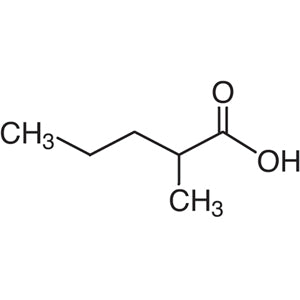
2-MethylvalericAcid TCI M0610
Regular price From Rp 689.850,00Regular price