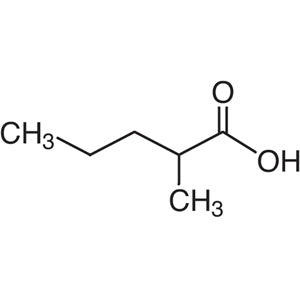
Butyl 2-Methylvalerate (TCI B3359, CAS 6297-41-2) is a chemical compound widely used in laboratory settings for its versatility in chemical reactions and molecular synthesis. As a building block in organic chemistry, it serves as a foundational component that can be modified through various chemical processes to create more complex molecules. Its role is critical in the development of esters, which are essential in multiple scientific applications. This compound is particularly valued for its ability to participate in esterification and other organic transformations, making it a key reagent in synthetic chemistry.
The chemical properties of Butyl 2-Methylvalerate make it a preferred choice for researchers. It exhibits chemical stability under normal conditions, yet it remains reactive enough to engage in useful chemical transformations. Its mild odor and low toxicity in small doses contribute to its safety profile, allowing it to be used in well-ventilated laboratory environments. These characteristics make it suitable for both routine and advanced chemical experiments, supporting a wide range of synthetic and analytical applications.
In Indonesian laboratories, Butyl 2-Methylvalerate is commonly used in organic chemistry research, particularly in the development of active pharmaceutical ingredients and cosmetic formulations. Its availability and reliability make it a favored material for both academic and industrial research. Researchers in Indonesia rely on this compound for its consistent performance and compatibility with various synthetic protocols, ensuring reliable results in their experiments.
TCI brochures (PDF)
- Lipids 2025-12-17 · p. 13
- Organic synthesis is a key application where Butyl 2-Methylvalerate is used to create complex ester structures, providing a stable and reactive starting material for further chemical modifications.
- Pharmaceutical research benefits from this compound as it is used in the synthesis of active pharmaceutical ingredients, contributing to the development of new drug compounds.
- Cosmetic formulation involves the use of this ester due to its mild nature and compatibility with various cosmetic ingredients, aiding in the creation of fragrances and skincare products.
- Analytical chemistry laboratories use it as a standard reference material for chromatographic and spectroscopic analyses, ensuring accurate identification and quantification of compounds.
- Industrial chemical production relies on this compound for its role in the creation of specialty chemicals, supporting a wide range of manufacturing processes.
| Brand | TCI |
|---|---|
| CAS number | 6297-41-2 |
| Molecular formula | — |
| Purity | — |
| Category | Chemistry > Building Blocks > Non-Heterocyclic Building Blocks |
| Pack sizes | Available in various sizes as per standard chemical supply practices |
| Physical form | Liquid |
| Storage | Store in a cool, dry place away from direct sunlight and incompatible materials |
Butyl 2-Methylvalerate should be stored in a cool, dry place, away from direct sunlight and sources of heat. It is recommended to use airtight containers made of glass or polyethylene to prevent contamination and evaporation. Due to its chemical stability, it does not require refrigeration but should be kept in a well-ventilated area to ensure safe handling. Laboratory personnel should wear appropriate personal protective equipment, such as gloves and safety goggles, when handling this compound. Proper labeling of containers is essential to ensure safe storage and easy identification. Regular inspection of storage conditions is advised to maintain the integrity and safety of the compound in the laboratory environment.
—
Produk Terkait
-
Ethyl3-Methylvalerate TCI E0803
Regular price Rp 2.147.250,00Regular priceRp 1.517.250,00Sale price Rp 2.147.250,00 -
Ethyl2-Methylvalerate TCI E0801
Regular price From Rp 610.050,00Regular priceRp 442.050,00Sale price From Rp 610.050,00 -
2-Methylvaleraldehyde TCI M0596
Regular price From Rp 505.050,00Regular priceRp 352.800,00Sale price From Rp 505.050,00 -
4-MethylvalerylChloride TCI M2287
Regular price Rp 3.100.650,00Regular priceRp 2.184.000,00Sale price Rp 3.100.650,00 -
4-MethylvalericAcid TCI M0750
Regular price Rp 1.618.050,00Regular priceRp 1.146.600,00Sale price Rp 1.618.050,00 -
2-MethylvalericAcid TCI M0610
Regular price From Rp 742.350,00Regular priceRp 534.450,00Sale price From Rp 742.350,00 -
3-MethylvalericAcid TCI M0569
Regular price Rp 1.856.400,00Regular priceRp 1.313.550,00Sale price Rp 1.856.400,00 -
3-Hydroxy-3-methylvalericAcid TCI H0626
Regular price From Rp 2.597.700,00Regular priceRp 1.832.250,00Sale price From Rp 2.597.700,00