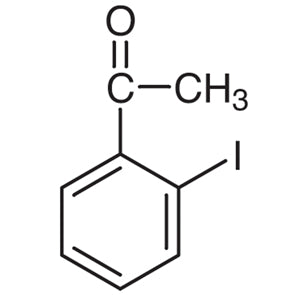
2'-Iodoacetophenone, registered under CAS number 2142-70-3, is an aromatic compound that carries two important functional groups at once: an iodine atom at the ortho position of the benzene ring and an acetyl ketone group. This combination makes it a high-value non-heterocyclic building block for synthetic chemists, because the two groups can be manipulated sequentially or made to work together in a single cyclisation reaction. In the laboratory, this material is commonly used to construct more elaborate molecular frameworks, particularly in medicinal chemistry research and the development of new heterocyclic compounds.
The advantage that makes this compound a frequent choice lies in the reactivity of the carbon–iodine bond, which is relatively easy to cleave with transition metal catalysts, making it well suited to cross-coupling reactions such as Suzuki, Sonogashira and Heck couplings as well as Buchwald–Hartwig amination. The adjacent ketone group provides an electrophilic centre that can undergo condensation or nucleophilic addition, or serve as an anchor point for intramolecular ring closure. The ortho relationship between the two groups is especially favourable for forming five- or six-membered rings in a single tandem step.
Consistent reagent quality is essential in this kind of work, and TCI-branded material supports reproducible results across repeated experiments. In Indonesian laboratories, this building block is typically found in university organic synthesis groups, research institute laboratories and industrial R&D units working on the preparation of new active compounds. It is generally used at the bench scale for method development, route scouting and the stepwise assembly of target molecules before any work is considered for scale-up.
- Suzuki cross-coupling reactions: the reactive carbon–iodine bond undergoes oxidative addition readily with palladium catalysts, allowing new biaryl carbon–carbon bonds to be formed under mild conditions.
- Sonogashira coupling with terminal alkynes: the ortho iodine provides a clean handle for installing alkynyl groups, while the neighbouring ketone can then trigger subsequent ring closure.
- Heck reactions with alkenes: the aryl iodide functions as an efficient coupling partner for building substituted olefinic frameworks in a single catalytic operation.
- Buchwald–Hartwig amination: the compound allows direct carbon–nitrogen bond formation with a variety of amines, opening routes toward nitrogen-containing target molecules for medicinal chemistry.
- Tandem cyclisation toward heterocycles: the ortho arrangement of the iodine and ketone groups favours intramolecular closure into five- or six-membered rings in one step.
| Brand | TCI |
|---|---|
| CAS number | 2142-70-3 |
| Molecular formula | — |
| Purity | — |
| Category | Chemistry > Building Blocks > Non-Heterocyclic Building Blocks |
| Pack sizes | available in standard TCI research-scale packaging; please confirm the size required when ordering |
| Physical form | — |
| Storage | keep in a cool, dark place in a tightly closed container as indicated on the supplier label |
- Catalogue number: I0689
Store the container tightly closed in a cool, dark and well-ventilated area, away from direct sunlight, heat sources and strong oxidising agents. Amber glass bottles or the original supplier packaging are appropriate, since aryl iodides are generally sensitive to light. Handle the material inside a fume hood while wearing safety goggles, nitrile gloves and a laboratory coat, and avoid contact with skin and eyes as well as inhalation of any vapour or dust. Keep the container closed when not in use to limit exposure to moisture and air, transfer with clean dry spatulas or syringes, and dispose of residues and contaminated consumables through the laboratory's chemical waste procedure. Always consult the manufacturer's safety data sheet before first use.
—
Produk Terkait
-
3'-Iodoacetophenone TCI I1080
Regular price Rp 2.704.800,00Regular price -
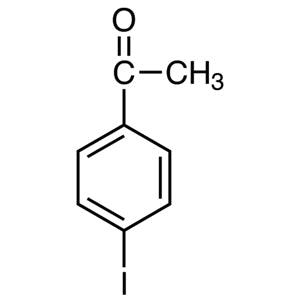
4'-Iodoacetophenone TCI I0305
Regular price From Rp 769.650,00Regular price -
4'-Iodoacetanilide TCI I0846
Regular price From Rp 795.900,00Regular price -
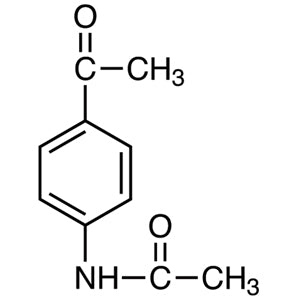
4'-Acetamidoacetophenone TCI A2821
Regular price From Rp 903.000,00Regular price -
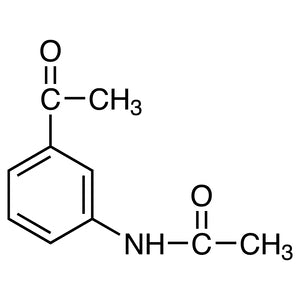
3'-Acetamidoacetophenone TCI A1408
Regular price Rp 1.724.100,00Regular price -
Iodoacetonitrile TCI I0419
Regular price From Rp 3.472.350,00Regular price