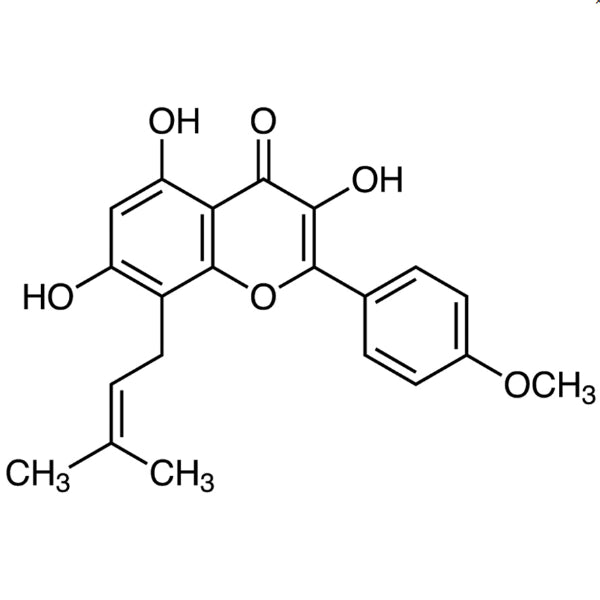
Icaritin is a chemical compound classified under phenylpropanoids and aromatic polyketides, commonly used in biochemical and pharmacological research. It plays a crucial role in laboratories by enabling the study of biological interactions and molecular mechanisms. Due to its complex molecular structure, Icaritin offers a wide range of potential applications in investigating biological activities such as antioxidant, anti-inflammatory, and metabolic regulatory effects. Its presence in research helps scientists understand the interactions between compounds and biological systems, making it an essential tool in modern scientific inquiry.
The properties that make Icaritin a preferred choice include its high purity and ability to interact with various biological receptors. These characteristics ensure reliable and reproducible results in experimental settings. Additionally, Icaritin's chemical stability under controlled conditions allows for consistent performance in laboratory processes. However, it is sensitive to UV light and high temperatures, which necessitates careful handling and storage. These attributes make it suitable for use in controlled environments where precision and accuracy are paramount.
In Indonesian laboratories, Icaritin is widely used in scientific research, particularly in the fields of biochemistry, pharmacology, and phytochemistry. Researchers rely on its properties to conduct experiments that explore its biological effects on cells, tissues, and organisms. Its role in these studies supports the development of new therapeutic approaches and the understanding of natural compounds' potential in medicine and health sciences.
TCI brochures (PDF)
- Plant Research Reagents 2026-02-24 · p. 9
- Phytochemicals 2025-12-17 · p. 11
- Biochemical Research – Icaritin is used to investigate its antioxidant and anti-inflammatory properties, supporting studies on cellular and molecular mechanisms.
- Pharmacological Studies – It is employed to evaluate its potential therapeutic applications, including its effects on metabolic regulation and disease models.
- Phytochemical Analysis – Icaritin aids in the identification and characterization of natural compounds from plant sources, contributing to the discovery of bioactive ingredients.
- Cell Culture Experiments – It is utilized to study its impact on cell behavior, including proliferation, differentiation, and apoptosis in controlled environments.
- Metabolic Pathway Investigations – Icaritin helps researchers explore its role in metabolic regulation, providing insights into enzyme activity and biochemical pathways.
| Brand | — |
|---|---|
| CAS number | — |
| Molecular formula | — |
| Purity | — |
| Category | — |
| Pack sizes | — |
| Physical form | — |
| Storage | — |
- Brand – TCI
- CAS Number – 118525-40-9
- Category – Life Science > Biochemicals and Reagents > Phenylpropanoids, Aromatic Polyketides
- Pack Sizes – Available in various quantities as per supplier specifications
- Physical Form – Solid or powder, depending on the formulation
- Storage Note – Store in a cool, dark place away from direct sunlight and high temperatures
Icaritin should be stored in a cool, dark environment to maintain its chemical stability and prevent degradation. It is recommended to use airtight containers made of glass or high-density polyethylene to protect it from moisture and contaminants. Due to its sensitivity to UV light and high temperatures, it should be kept away from direct sunlight and heat sources. In laboratory settings, proper labeling and secure storage are essential to ensure safety and prevent accidental exposure. Always handle Icaritin with appropriate personal protective equipment, such as gloves and safety goggles, to minimize risks during use and storage.
—
Produk Terkait
-
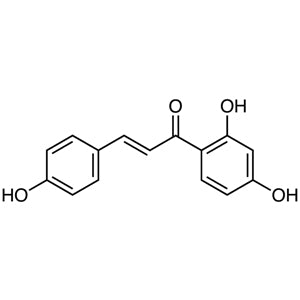
Isoliquiritigenin TCI I0822
Regular price From Rp 1.035.300,00Regular price -
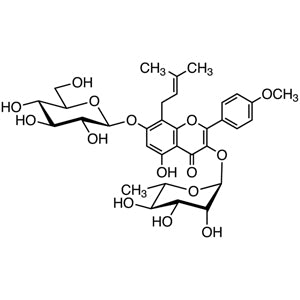
Icariin TCI I0862
Regular price From Rp 1.829.100,00Regular price -
Xanthohumol TCI X0068
Regular price Rp 13.249.950,00Regular price -
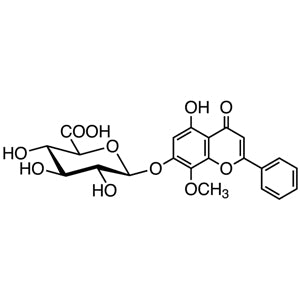
Wogonoside TCI W0012
Regular price From Rp 5.672.100,00Regular price -
Wogonin TCI W0010
Regular price From Rp 4.188.450,00Regular price -
PotengriffiosideA TCI T4196
Regular price Rp 7.844.550,00Regular price -
Tectochrysin TCI T4185
Regular price Rp 4.823.700,00Regular price -
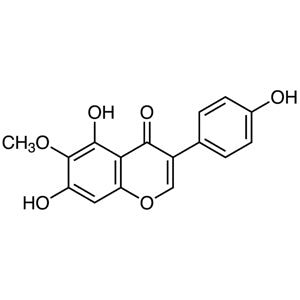
Tectorigenin TCI T3729
Regular price From Rp 4.718.700,00Regular price