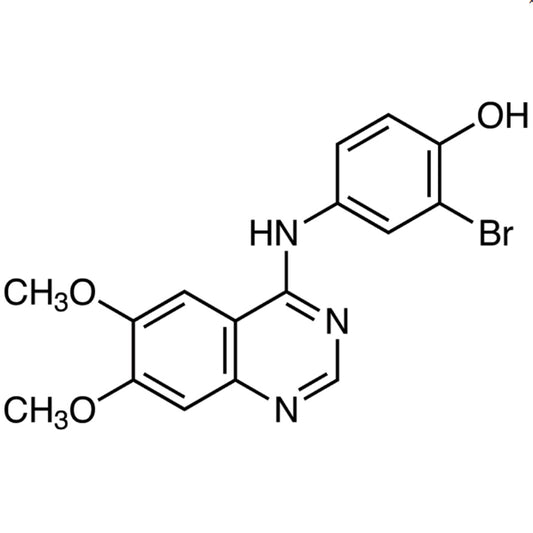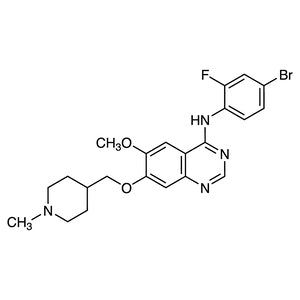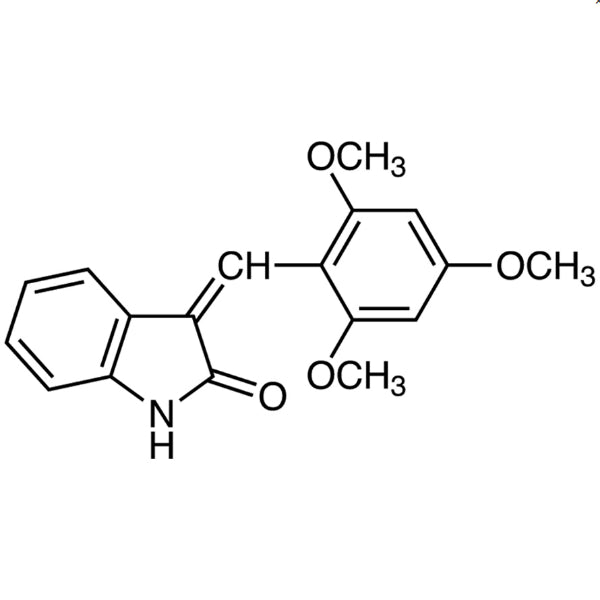
IC 261, also known as N-(4-aminobutyl)-N-ethyl-3,4-dimethoxybenzamide, is a chemical compound widely used in life science research, particularly in cell biology and neuroscience. This compound plays a crucial role in the study of cellular signaling pathways, especially in the activation of protein kinases and the regulation of intracellular communication. Its ability to act as an agonist or modulator makes it a valuable tool for inducing specific biological responses, such as changes in gene expression and enzyme activity. IC 261 is commonly utilized in experimental settings where precise control over signaling mechanisms is required.
One of the key attributes that make IC 261 a preferred choice in laboratories is its chemical stability and solubility in organic solvents like ethyl acetate and acetone. These properties ensure consistent performance across various experimental techniques, including ELISA, Western blot, and cell culture experiments. Its compatibility with standard laboratory protocols enhances its reliability and reproducibility. Additionally, its availability in solid form and appropriate concentration makes it suitable for use in both small-scale and larger laboratory applications.
In Indonesian laboratories, IC 261 is frequently employed in applied research areas such as neurodegenerative disease studies, drug development, and the analysis of cellular responses to external stimuli. Its effectiveness and ease of use have made it a go-to compound for researchers seeking accurate and consistent results in their experiments. The compound’s versatility and reliability contribute to its widespread adoption in both academic and industrial research settings.
TCI brochures (PDF)
- Circadian Period-Lengthening CK1 Inhibitor for Plants(LL073E) 2025-03-27 · p. 1
- Neurodegenerative disease research benefits from IC 261’s role in studying cellular signaling pathways that are implicated in conditions like Alzheimer’s and Parkinson’s.
- Drug development projects utilize IC 261 to investigate the effects of signaling modulators on target proteins and cellular responses.
- Cellular response analysis involves using IC 261 to observe how cells react to external stimuli, providing insights into signal transduction mechanisms.
- Western blot experiments rely on IC 261 to study protein phosphorylation and kinase activity, offering detailed molecular insights.
- ELISA assays incorporate IC 261 to assess the presence and activity of specific signaling molecules in biological samples.
| Brand | TCI |
|---|---|
| CAS number | 186611-52-9 |
| Molecular formula | — |
| Purity | — |
| Category | Life Science > Cell Biology > Cell Signaling and Neuroscience |
| Pack sizes | Available in standard laboratory quantities |
| Physical form | Solid |
| Storage | Store in a cool, dry place away from direct light |
IC 261 should be stored in a cool, dry environment, away from direct sunlight and sources of heat to maintain its chemical stability. It is recommended to use airtight containers to prevent moisture absorption and contamination. As a solid compound, it should be handled with care to avoid exposure to skin or inhalation. In laboratory settings, it is important to follow standard safety protocols when working with organic solvents, as IC 261 may require dissolution in appropriate solvents for experimental use. Proper labeling and storage conditions ensure the integrity of the compound and the safety of laboratory personnel.
—
Produk Terkait
-
Imatinib TCI I0906
Regular price From Rp 1.326.150,00Regular price -
WHI-P180Hydrochloride TCI W0021
Regular price Rp 3.340.050,00Regular price -
WHI-P154 TCI W0013
Regular price From Rp 2.491.650,00Regular price -
Wortmannin TCI W0007
Regular price Rp 11.580.450,00Regular price -
VE-821 TCI V0206
Regular price From Rp 2.889.600,00Regular price -
Vandetanib TCI V0199
Regular price From Rp 2.121.000,00Regular price -
UK-5099 TCI U0146
Regular price Rp 4.823.700,00Regular price -
SU1498 TCI U0103
Regular price From Rp 3.578.400,00Regular price