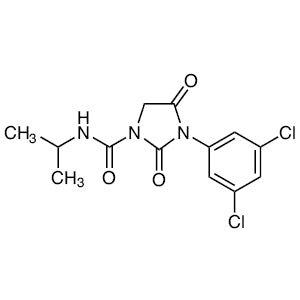
Iprodione is a chemical compound widely utilized in life science research, particularly in the fields of cell biology and nutrition. As an active ingredient, it plays a crucial role in studying metabolic processes within cells, making it an essential tool for experiments that explore the relationship between nutrition and biological functions. Its ability to influence enzymatic activity and cellular responses to environmental changes makes it highly valuable in scientific investigations. Iprodione is commonly used in research settings where precise control over biochemical processes is required, supporting a wide range of experimental methodologies.
One of the key reasons Iprodione is preferred in laboratories is its chemical stability and solubility in organic solvents. These properties simplify its preparation and application, ensuring consistent results across experiments. Its compatibility with various analytical techniques, such as chromatography and spectroscopy, further enhances its utility without significant degradation. Additionally, Iprodione exhibits good reactivity with a variety of substrates, making it suitable for studies requiring specific chemical reactions. These characteristics contribute to its reliability and effectiveness in scientific research.
In Indonesian laboratories, Iprodione is frequently used in scientific research, especially in cell biology and nutrition studies. Its availability and the reliability of experimental outcomes make it a popular choice among researchers. It is often selected for its ability to support a wide range of experimental needs, from basic biochemical studies to more complex metabolic investigations. Its versatility and performance in laboratory settings ensure its continued use in various research applications.
TCI brochures (PDF)
- Agrochemical Ingredients for Research and Experimental Use 2026-01-08 · p. 5
- Plant Research Reagents 2026-02-24 · p. 11
- Cell Metabolism Studies – Iprodione is ideal for investigating metabolic pathways and enzyme activity due to its ability to influence cellular processes.
- Nutritional Research – It supports studies on how nutrients interact with biological systems, aiding in understanding dietary impacts on cellular function.
- Enzyme Activity Analysis – Its capacity to modulate enzyme responses makes it suitable for experiments measuring enzyme kinetics and substrate interactions.
- Chromatographic Analysis – Iprodione’s solubility in organic solvents allows it to be effectively used in chromatographic techniques for compound separation.
- Spectroscopic Investigations – Its chemical stability ensures accurate results in spectroscopic methods, making it a reliable component in analytical experiments.
| Brand | TCI |
|---|---|
| CAS number | 36734-19-7 |
| Molecular formula | — |
| Purity | — |
| Category | Life Science > Cell Biology > Nutrition Research |
| Pack sizes | Available in various quantities as per standard laboratory supply |
| Physical form | Solid |
| Storage | Store in a cool, dry place away from direct sunlight |
Iprodione should be stored in a cool, dry environment to maintain its chemical stability and prevent degradation. It is recommended to keep it in a sealed container to avoid exposure to moisture and air, which may affect its performance. Suitable containers for storage include glass or high-density polyethylene vessels that are resistant to chemical reactions. In laboratory settings, it is important to handle Iprodione with care, using appropriate personal protective equipment such as gloves and goggles. Proper labeling of storage containers is essential to ensure safe handling and prevent accidental exposure. Regular monitoring of storage conditions will help maintain the integrity of the compound for reliable experimental results.
—
Produk Terkait
-
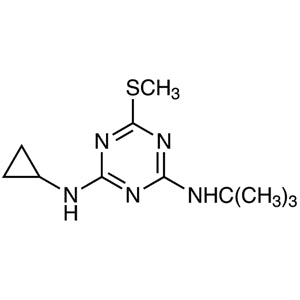
2-(tert-Butylamino)-4-(cyclopropylamino)-6-(methylthio)-1,3,5-triazine TCI I0842
Regular price From Rp 1.644.300,00Regular price -
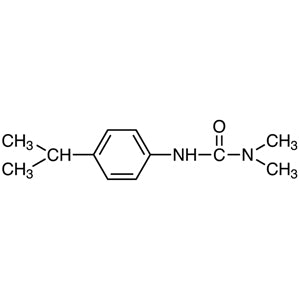
Isoproturon TCI I0843
Regular price From Rp 1.298.850,00Regular price -
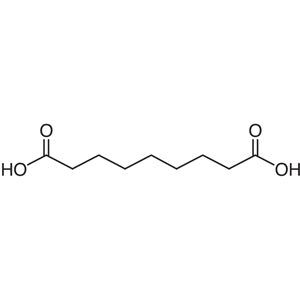
AzelaicAcid TCI A0561
Regular price From Rp 505.050,00Regular price -
AbieticAcid TCI A0001
Regular price From Rp 1.510.950,00Regular price -
Sulfentrazone TCI U0110
Regular price From Rp 2.411.850,00Regular price -
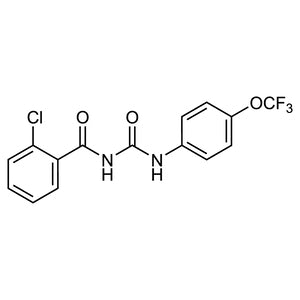
Triflumuron TCI T4364
Regular price From Rp 1.220.100,00Regular price -
Tralopyril TCI T4109
Regular price From Rp 2.730.000,00Regular price -
Tribenuron-methyl TCI T4085
Regular price From Rp 2.359.350,00Regular price