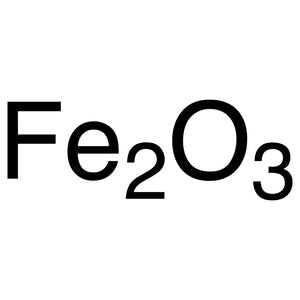
Iron(III) Oxide (Fe₂O₃), with CAS number 1309-37-1, is a widely used chemical compound in laboratory settings. It is a key component in various chemical experiments and plays a crucial role in catalytic processes, especially in oxidation and reduction reactions. This compound is commonly found in inorganic chemistry applications due to its stability and reactivity. Its versatility makes it a valuable material for both academic and industrial research. Iron(III) Oxide is also used in the production of red pigments and in metal processing, contributing to its broad range of applications in the laboratory environment.
One of the main reasons Iron(III) Oxide is preferred in laboratories is its strong oxidizing properties and chemical stability. It remains inert in air and moisture, which allows for long-term storage without degradation. Its red-brown crystalline structure is easily identifiable, making it a reliable material for use in various experiments. Additionally, its insolubility in water and solubility in strong acids like hydrochloric and sulfuric acid provide researchers with control over its behavior in different chemical environments. These characteristics make it a safe and effective choice for laboratory use.
In Indonesian laboratories, Iron(III) Oxide is extensively used in analytical chemistry, industrial chemistry, and material research. It is a fundamental reagent in many chemical processes and is often employed in the development of new materials and chemical compounds. Its role in catalytic reactions and pigment production makes it an essential component in both educational and research settings. Its reliability and consistent performance ensure its continued use in a variety of scientific applications.
- Used in catalytic oxidation reactions due to its strong oxidizing properties, making it suitable for organic synthesis processes.
- Applied in the preparation of red pigments for use in paint and dye industries, leveraging its stable and vibrant color properties.
- Utilized in metal processing applications for surface treatment and oxidation of metal surfaces, enhancing material properties.
- Employed in analytical chemistry for qualitative and quantitative analysis due to its predictable chemical behavior and reactivity.
- Incorporated in material research for the development of new composite materials and nanomaterials due to its structural and chemical versatility.
| Brand | TCI |
|---|---|
| CAS number | 1309-37-1 |
| Molecular formula | — |
| Purity | — |
| Category | Chemistry > Catalysis and Inorganic Chemistry > Transition Elements |
| Pack sizes | Available in various quantities as per standard laboratory requirements |
| Physical form | Red-brown crystalline powder |
| Storage | Store in a cool, dry place away from moisture and direct sunlight |
Iron(III) Oxide should be stored in a cool, dry place to maintain its chemical stability and prevent degradation. It is recommended to use airtight containers to protect it from moisture and humidity, which could affect its physical properties. Due to its insolubility in water, it does not pose a significant risk of contamination in the laboratory environment. However, it is advisable to handle it with care, using appropriate personal protective equipment such as gloves and safety goggles to ensure laboratory safety. Its inert nature makes it less reactive in typical laboratory conditions, but proper storage and handling are still essential to maintain its effectiveness and safety in use.
—
Produk Terkait
-
TCI B5774 5,10-Bis(4,4,5,5-tetramethyl-1,3,2-dioxaborolan-2-yl)naphtho[1,2-c:5,6-c']bis([1,2,5]oxadiazole)
Regular price Rp 10.255.350,00Regular price -
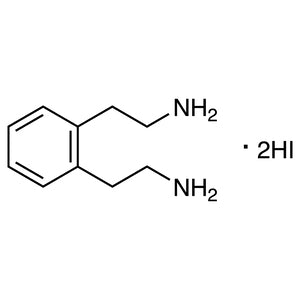
Dihydroiodide TCI B6569
Regular price From Rp 1.936.200,00Regular price -
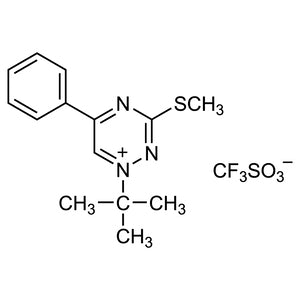
Trifluoromethanesulfonate TCI B7003
Regular price From Rp 1.936.200,00Regular price
![5,10-Bis(4,4,5,5-tetramethyl-1,3,2-dioxaborolan-2-yl)naphtho[1,2-c:5,6-c']bis([1,2,5]oxadiazole) - TCI B5774 - AMI Scientific](http://amiscientific.com/cdn/shop/files/TCI2510B5774.jpg?v=1769180228&width=533)