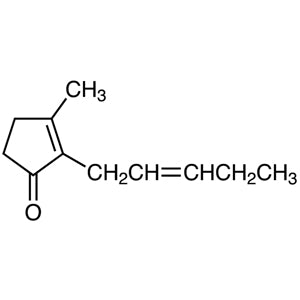
TCI J0003 488-10-8 cis-Jasmone is a chemical compound widely used in laboratory settings, particularly in organic chemistry experiments. It serves as a foundational building block for synthesizing aromatic compounds and materials with distinct fragrances. Its versatility makes it an essential component in various chemical processes, especially those involving fragrance development and molecular structure modification. In Indonesian laboratories, cis-Jasmone is commonly utilized by researchers and students in higher education institutions and research centers for its reliability and effectiveness in chemical synthesis.
The compound is valued for its stable chemical and physical properties, which make it easy to handle and manipulate under laboratory conditions. Its molecular structure, featuring a single aldehyde group and an alkyl group, contributes to its reactivity and utility in synthetic pathways. Additionally, cis-Jasmone has relatively high boiling and melting points, which facilitate heating and cooling processes during chemical reactions. These characteristics ensure that it remains a preferred choice for laboratory applications requiring controlled thermal conditions.
In the context of Indonesian laboratories, cis-Jasmone is a fundamental material in organic chemistry experiments. It is frequently used in the synthesis of aromatic compounds and in the development of cosmetic products. Its presence in educational and research institutions highlights its importance as a standard chemical for both academic and industrial applications.
- Aromatic Compound Synthesis: cis-Jasmone is ideal for creating aromatic compounds due to its stable molecular structure and reactivity, supporting efficient synthetic pathways.
- Fragrance Development: Its ability to produce stable and appealing aromas makes it a preferred choice in the formulation of perfumes and cosmetic products.
- Organic Chemistry Education: It is commonly used in teaching laboratories to demonstrate molecular building and reaction mechanisms in undergraduate chemistry courses.
- Cosmetic Product Formulation: The compound's fragrance properties are valuable in developing new cosmetic ingredients, especially in fragrance-based formulations.
- Research in Molecular Structure Modification: Its structural characteristics make it a useful tool for studying molecular transformations and chemical reactivity in advanced research projects.
| Brand | TCI |
|---|---|
| CAS number | 488-10-8 |
| Molecular formula | — |
| Purity | — |
| Category | Chemistry > Building Blocks > Non-Heterocyclic Building Blocks |
| Pack sizes | Available in various quantities as per supplier specifications |
| Physical form | Solid or liquid depending on the specific product variant |
| Storage | Store in a cool, dry place away from direct sunlight and moisture |
cis-Jasmone should be stored in a cool, dry environment to maintain its chemical stability and prevent degradation. It is recommended to use airtight containers to protect it from moisture and air exposure. Due to its chemical nature, it should be kept away from incompatible substances such as strong oxidizers or acids. In laboratory settings, proper ventilation is essential when handling this compound to minimize inhalation risks. Always ensure that storage areas are secure and accessible only to authorized personnel. Regular monitoring of storage conditions helps maintain the integrity of the compound for consistent experimental results.
—
Produk Terkait
-
TCI B5774 5,10-Bis(4,4,5,5-tetramethyl-1,3,2-dioxaborolan-2-yl)naphtho[1,2-c:5,6-c']bis([1,2,5]oxadiazole)
Regular price Rp 10.255.350,00Regular price -
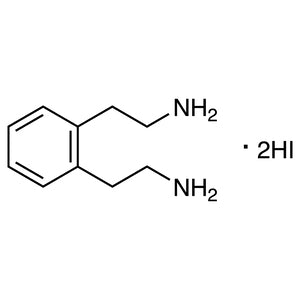
Dihydroiodide TCI B6569
Regular price From Rp 1.936.200,00Regular price -
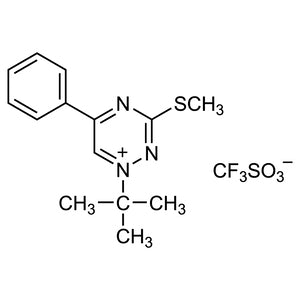
Trifluoromethanesulfonate TCI B7003
Regular price From Rp 1.936.200,00Regular price
![5,10-Bis(4,4,5,5-tetramethyl-1,3,2-dioxaborolan-2-yl)naphtho[1,2-c:5,6-c']bis([1,2,5]oxadiazole) - TCI B5774 - AMI Scientific](http://amiscientific.com/cdn/shop/files/TCI2510B5774.jpg?v=1769180228&width=533)