

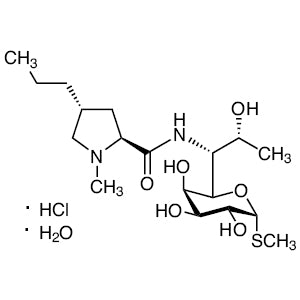
Lincomycin Hydrochloride Monohydrate is a chemical compound widely used in laboratory experiments related to biochemistry and pharmacology. This compound is a derivative of lincomycin, an antibiotic that functions by inhibiting bacterial protein synthesis. In the laboratory, it serves as a key reagent for studying antibiotic mechanisms, testing antibacterial activity, and developing new pharmaceuticals. Its chemical properties make it a reliable and versatile component in various scientific investigations.
The compound is known for its chemical stability and high purity, which are essential for accurate and precise experimental results. It dissolves well in organic solvents such as ethanol and acetone, facilitating its use in a range of chemical reactions. Its resistance to degradation under standard laboratory conditions ensures a longer shelf life and maintains its effectiveness over time. These properties make it a preferred choice for researchers requiring consistent and reliable results.
In Indonesian laboratories, Lincomycin Hydrochloride Monohydrate is extensively used in research projects related to antibiotic development, microbial studies, and pharmaceutical testing. Its availability and consistent performance make it a staple in both academic and industrial research settings. It is commonly found in biochemistry and pharmacology laboratories, supporting a wide array of scientific inquiries and applications.
TCI brochures (PDF)
- Antimicrobials and Antitumor Agents for Research and Experimental Use 2025-04-24 · p. 8
- Pharmaceutical Ingredients for Research and Experimental Use 2026-03-09 · p. 8
- Antibiotic Mechanism Studies – Lincomycin Hydrochloride Monohydrate is ideal for investigating how antibiotics inhibit bacterial protein synthesis, providing insights into antimicrobial action.
- Antibacterial Activity Testing – Its use in microbiological assays allows researchers to evaluate the effectiveness of antibiotics against various bacterial strains.
- Pharmaceutical Development – It serves as a key reagent in the formulation and testing of new antibiotics and related compounds.
- Biochemical Research – Its chemical stability and solubility make it suitable for use in biochemical experiments involving protein synthesis inhibition.
- Quality Control in Drug Manufacturing – It is used to ensure the consistency and purity of antibiotic formulations during production and testing phases.
| Brand | TCI |
|---|---|
| CAS number | 7179-49-9 |
| Molecular formula | — |
| Purity | — |
| Category | Life Science > Biochemicals and Reagents > Antibiotics |
| Pack sizes | Available in various quantities as per standard laboratory requirements |
| Physical form | Powder |
| Storage | Store in a cool, dry place away from light and moisture |
Lincomycin Hydrochloride Monohydrate should be stored in a cool, dry place, away from direct light and moisture to maintain its chemical stability. It is recommended to use airtight containers to prevent exposure to humidity and contaminants. Due to its chemical nature, it should be handled with appropriate personal protective equipment, such as gloves and safety goggles, to ensure laboratory safety. Avoid contact with incompatible substances and ensure proper ventilation when working with this compound. Regular monitoring of storage conditions is advised to maintain its integrity and effectiveness for extended periods.
—
Product Categories
- Biochemicals and ReagentsAntibioticsAntibiotics (Chemical Structure Class)
- Biochemicals and ReagentsPharmaceutical Research Reagents (for Experimental Use)Antimicrobial Ingredients (for Research and Experimental Use)
- MicrobiologyAntibioticsAntibiotics (Chemical Structure Class)
- Pharmaceutical Development and Drug Discovery ResearchPharmaceutical Research Reagents (for Experimental Use)Antimicrobial Ingredients (for Research and Experimental Use)
- Pharmaceutical Development and Drug Discovery ResearchAntibioticsAntibiotics (Chemical Structure Class)
Produk Terkait
-
4-AminosalicylicAcid TCI A0420
Regular price From Rp 769.650,00Regular price -
Sodium4-AminosalicylateDihydrate TCI A0423
Regular price From Rp 875.700,00Regular price -
Wortmannin TCI W0007
Regular price Rp 11.580.450,00Regular price -
ValganciclovirHydrochloride TCI V0158
Regular price From Rp 1.565.550,00Regular price -
ValnemulinHydrochloride TCI V0144
Regular price From Rp 4.929.750,00Regular price -
Sulfamerazine TCI U0176
Regular price From Rp 2.359.350,00Regular price -
SulfadiazineSodium TCI U0171
Regular price Rp 1.167.600,00Regular price -
Sulfaphenazole TCI U0170
Regular price Rp 3.392.550,00Regular price


