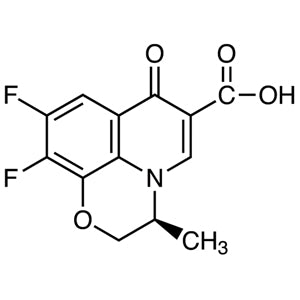
Levofloxacin Q-Acid (TCI L0238), with CAS number 100986-89-8, is a chiral compound widely used in asymmetric synthesis to construct molecules with specific biological activities. This material plays a crucial role in the laboratory by enabling the synthesis of complex organic compounds with precise stereochemistry. Its chiral nature allows for the creation of enantiomerically pure substances, which are essential in pharmaceutical and medicinal chemistry research. As a key building block, it supports the development of new therapeutic agents and advanced chemical structures.
The compound’s chiral structure and high purity make it a preferred choice for researchers seeking precise control over molecular configuration. Its stability and availability in pure form ensure reliable results in synthetic processes. These properties are particularly valuable in applications requiring high accuracy and reproducibility. The compound’s ability to participate in asymmetric reactions makes it an essential tool for scientists working on drug development and organic synthesis.
In Indonesian laboratories, Levofloxacin Q-Acid is commonly used in pharmaceutical and organic chemistry research. It is a fundamental component in the development of new medicinal compounds and is utilized by academic institutions and research centers. Its role in creating bioactive molecules supports advancements in medical science and chemical innovation within the region.
TCI brochures (PDF)
- Chiral Building Blocks 2025-04-14 · p. 5
Related TCI products
- TCI L0460 177325-13-2 Levofloxacin Hydrochloride
- TCI L0193 100986-85-4 Levofloxacin
- TCI B4127 143527-70-2 (4S,5R)-3-(tert-Butoxycarbonyl)-2,2-dimethyl-4-phenyl-1,3-oxazolidine-5-carboxylic Acid
- TCI B3410 136465-81-1 (S)-N-tert-Butyldecahydroisoquinoline-3-carboxamide
- TCI A1124 76855-69-1 (3R,4R)-4-Acetoxy-3-[(R)-(tert-butyldimethylsilyloxy)ethyl]-2-azetidinone
- TCI A0800 551-16-6 6-Aminopenicillanic Acid
- Asymmetric Synthesis: Levofloxacin Q-Acid is ideal for asymmetric synthesis due to its chiral structure, enabling the creation of enantiomerically pure compounds.
- Pharmaceutical Research: Its use in drug development supports the synthesis of bioactive molecules with specific therapeutic applications.
- Organic Chemistry Studies: The compound is widely used in organic synthesis to build complex molecular frameworks with precise stereochemistry.
- Medicinal Chemistry Applications: It facilitates the design of new drugs by allowing controlled stereochemical outcomes in synthetic pathways.
- Academic Research: Indonesian universities and research institutions rely on this compound for teaching and experimental studies in advanced chemistry.
| Brand | TCI |
|---|---|
| CAS number | 100986-89-8 |
| Molecular formula | — |
| Purity | — |
| Category | Chemistry > Asymmetric Synthesis > Chiral Building Blocks |
| Pack sizes | — |
| Physical form | — |
| Storage | Store in a cool, dry place away from light |
Levofloxacin Q-Acid should be stored in a cool, dry environment to maintain its stability and purity. It is recommended to keep the compound in a tightly sealed container to prevent moisture absorption and contamination. Due to its chemical nature, it should be handled in a well-ventilated area to minimize exposure. Laboratory personnel should wear appropriate personal protective equipment, such as gloves and safety goggles, when working with this material. Proper disposal methods should be followed to ensure compliance with safety regulations. The compound is not inherently hazardous under normal storage conditions but requires careful handling to maintain its integrity and effectiveness in research applications.
—
Product Categories
Produk Terkait
-
LevofloxacinHydrochloride TCI L0460
Regular price Rp 2.306.850,00Regular price -
Levofloxacin TCI L0193
Regular price From Rp 1.776.600,00Regular price -
(4S,5R)-3-(tert-Butoxycarbonyl)-2,2-dimethyl-4-phenyl-1,3-oxazolidine-5-carboxylicAcid TCI B4127
Regular price Rp 2.094.750,00Regular price -
(S)-N-tert-Butyldecahydroisoquinoline-3-carboxamide TCI B3410
Regular price From Rp 1.881.600,00Regular price -
(3R,4R)-4-Acetoxy-3-[(R)-(tert-butyldimethylsilyloxy)ethyl]-2-azetidinone TCI A1124
Regular price Rp 955.500,00Regular price -
6-AminopenicillanicAcid TCI A0800
Regular price From Rp 505.050,00Regular price -
(R)-1-Phenyl-1,2,3,4-tetrahydroisoquinoline TCI P2215
Regular price Rp 4.001.550,00Regular price -
(R)-3-MethylmorpholineHydrochloride TCI M2847
Regular price From Rp 530.250,00Regular price


![76855-69-1 (3R,4R)-4-Acetoxy-3-[(R)-(tert-butyldimethylsilyloxy)ethyl]-2-azetidinone - AMI Scientific](http://amiscientific.com/cdn/shop/files/TCI2510A1124.jpg?v=1767080746&width=533)