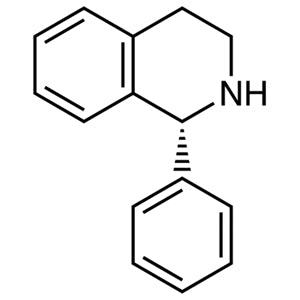
6-Aminopenicillanic Acid (6-APA) is a key chemical compound widely used in laboratory settings for the synthesis of beta-lactam antibiotics, including penicillin and cephalosporins. As a chiral building block, it plays a crucial role in asymmetric synthesis, enabling the creation of molecules with specific spatial configurations. This property makes it essential for developing pharmaceutical compounds with precise stereochemistry, which is vital for their biological activity and efficacy. Its significance extends to organic chemistry and pharmacology research, where it is employed to explore new drug development pathways.
The chemical stability of 6-APA under controlled conditions, combined with its ability to undergo highly specific chemical reactions, makes it a preferred choice for researchers. Its complex molecular structure allows for a wide range of synthetic transformations, supporting the design of bioactive compounds. Additionally, its sensitivity to high temperatures and air exposure requires careful handling, which further underscores its importance in controlled laboratory environments. These characteristics make it a versatile and reliable reagent for advanced chemical synthesis.
In Indonesian laboratories, 6-APA is commonly used in research focused on antibiotic development and pharmacological compound synthesis. It is a fundamental component in studies aimed at creating more effective and safer medications. Its role in supporting scientific innovation in the pharmaceutical sector highlights its significance in both academic and industrial research settings.
TCI brochures (PDF)
- Chiral Building Blocks 2025-04-14 · p. 5
Related TCI products
- TCI B4127 143527-70-2 (4S,5R)-3-(tert-Butoxycarbonyl)-2,2-dimethyl-4-phenyl-1,3-oxazolidine-5-carboxylic Acid
- TCI B3410 136465-81-1 (S)-N-tert-Butyldecahydroisoquinoline-3-carboxamide
- TCI A1124 76855-69-1 (3R,4R)-4-Acetoxy-3-[(R)-(tert-butyldimethylsilyloxy)ethyl]-2-azetidinone
- TCI P2215 180272-45-1 (R)-1-Phenyl-1,2,3,4-tetrahydroisoquinoline
- TCI M2847 953780-78-4 (R)-3-Methylmorpholine Hydrochloride
- TCI L0238 100986-89-8 Levofloxacin Q-Acid
- Asymmetric synthesis applications benefit from 6-APA's chiral structure, enabling precise stereochemical control in drug development.
- Pharmaceutical research relies on 6-APA for the synthesis of beta-lactam antibiotics, contributing to the creation of new therapeutic agents.
- Organic chemistry experiments utilize 6-APA due to its reactivity and ability to participate in complex molecular transformations.
- Pharmacological studies use 6-APA to investigate the effects of stereochemistry on drug efficacy and biological activity.
- Antibiotic development programs incorporate 6-APA as a core building block in the synthesis of penicillin and cephalosporin derivatives.
| Brand | TCI |
|---|---|
| CAS number | 551-16-6 |
| Molecular formula | — |
| Purity | — |
| Category | Chemistry > Asymmetric Synthesis > Chiral Building Blocks |
| Pack sizes | — |
| Physical form | — |
| Storage | Store in a cool, dry place away from light and moisture |
6-Aminopenicillanic Acid should be stored in a cool, dry environment, away from direct light and moisture to maintain its chemical stability. It is recommended to use airtight containers to prevent exposure to air, which can degrade the compound. Due to its sensitivity to high temperatures, it should be kept at controlled room temperature. In laboratory settings, it is important to handle the compound with care, using appropriate personal protective equipment to ensure safety. Proper labeling and storage conditions are essential to prevent contamination and ensure the integrity of the material for research purposes.
—
Product Categories
Produk Terkait
-
(4S,5R)-3-(tert-Butoxycarbonyl)-2,2-dimethyl-4-phenyl-1,3-oxazolidine-5-carboxylicAcid TCI B4127
Regular price Rp 2.147.250,00Regular priceRp 1.517.250,00Sale price Rp 2.147.250,00 -
(S)-N-tert-Butyldecahydroisoquinoline-3-carboxamide TCI B3410
Regular price From Rp 1.934.100,00Regular priceRp 1.368.150,00Sale price From Rp 1.934.100,00 -
(3R,4R)-4-Acetoxy-3-[(R)-(tert-butyldimethylsilyloxy)ethyl]-2-azetidinone TCI A1124
Regular price Rp 1.008.000,00Regular priceRp 720.300,00Sale price Rp 1.008.000,00 -
(R)-1-Phenyl-1,2,3,4-tetrahydroisoquinoline TCI P2215
Regular price Rp 4.054.050,00Regular priceRp 2.850.750,00Sale price Rp 4.054.050,00 -
(R)-3-MethylmorpholineHydrochloride TCI M2847
Regular price From Rp 582.750,00Regular priceRp 423.150,00Sale price From Rp 582.750,00 -
LevofloxacinQ-Acid TCI L0238
Regular price From Rp 582.750,00Regular priceRp 423.150,00Sale price From Rp 582.750,00 -
(3R,4S)-3-Hydroxy-4-phenyl-2-azetidinone TCI H1656
Regular price From Rp 1.033.200,00Regular priceRp 738.150,00Sale price From Rp 1.033.200,00 -
(R)-(-)-alpha-[[(4-Ethyl-2,3-dioxo-1-piperazinyl)carbonyl]amino]-4-hydroxybenzeneaceticAcid TCI E0994
Regular price From Rp 530.250,00Regular priceRp 386.400,00Sale price From Rp 530.250,00