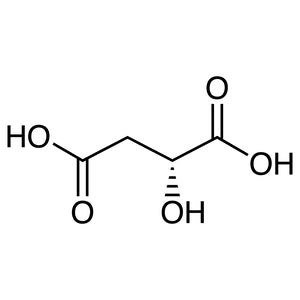
D-(+)-Malic Acid is a chiral organic compound with a two-carbon acid structure, widely used in asymmetric synthesis for constructing molecules with specific biological activities. In laboratory settings, it serves as a key building block for chemical reactions requiring precise stereochemical control. Its chiral nature makes it essential in the development of pharmaceuticals, cosmetics, and other specialty chemicals where molecular configuration is critical. This compound plays a vital role in advancing research in organic chemistry and drug synthesis by enabling the creation of enantiomerically pure compounds.
D-(+)-Malic Acid is chemically stable, highly soluble in water, and possesses a high melting point, making it suitable for various chemical reaction conditions. These properties ensure its reliability in both routine and specialized laboratory applications. Its ability to participate in asymmetric reactions allows for the synthesis of target molecules with specific stereochemistry, enhancing the efficiency and accuracy of chemical processes. The compound’s versatility and consistent performance make it a preferred choice for researchers seeking precision and reproducibility in their experiments.
In Indonesian laboratories, D-(+)-Malic Acid is commonly used in scientific research, particularly in organic chemistry and pharmaceutical studies. Its application extends to the development of new drugs and the optimization of chemical processes that require high structural specificity. The compound’s availability and reliability support ongoing scientific innovation in the region, making it a valuable resource for academic and industrial research.
TCI brochures (PDF)
- Chiral Auxiliaries and Optical Resolving Agents 2025-06-17 · p. 6
- Chiral Building Blocks 2025-04-14 · p. 12
Related TCI products
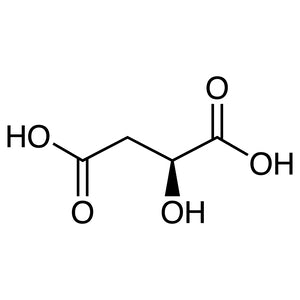
- TCI M0022 97-67-6 L-(-)-Malic Acid
- TCI A1101 59025-03-5 (-)-O-Acetyl-L-malic Anhydride
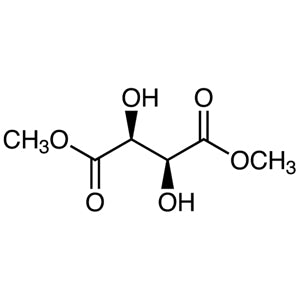
- TCI T1659 13171-64-7 Dimethyl D-(-)-Tartrate
- TCI T1521 60646-30-2 (S)-(+)-2,2,2-Trifluoro-1-(9-anthryl)ethanol [ee Determination Reagent by NMR]
- TCI T1520 53531-34-3 (R)-(-)-2,2,2-Trifluoro-1-(9-anthryl)ethanol [e.e. Determination Reagent by NMR]
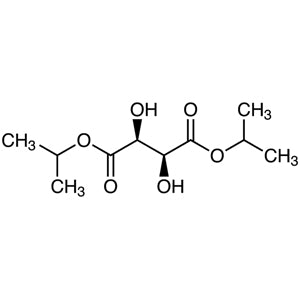
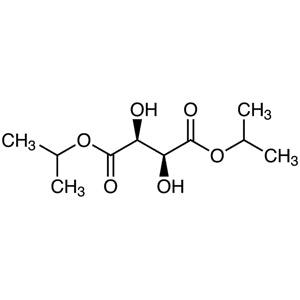
- TCI T1387 62961-64-2 Diisopropyl D-(-)-Tartrate
- Asymmetric synthesis in pharmaceutical research due to its chiral structure and ability to control stereochemistry.
- Organic chemistry experiments requiring precise molecular configuration for drug development.
- Cosmetic formulation processes where stereochemistry affects product efficacy and stability.
- Chemical synthesis of specialty compounds in industrial and academic laboratories.
- Research applications in biochemistry and pharmacology for studying molecular interactions and biological activity.
| Brand | TCI |
|---|---|
| CAS number | 636-61-3 |
| Molecular formula | — |
| Purity | — |
| Category | Chemistry > Asymmetric Synthesis > Chiral Building Blocks |
| Pack sizes | Available in standard laboratory quantities |
| Physical form | Solid |
| Storage | Store in a cool, dry place away from direct sunlight |
D-(+)-Malic Acid should be stored in a cool, dry environment to maintain its chemical stability and prevent degradation. It is recommended to use airtight containers to protect the compound from moisture and air exposure. Since it is a solid, it should be kept in a secure location away from incompatible materials. Laboratory personnel should handle the compound with care, using appropriate personal protective equipment when necessary. Regular monitoring of storage conditions ensures the compound remains in optimal condition for use in research applications. Proper storage practices help preserve its integrity and effectiveness in chemical reactions.
—
Produk Terkait
-
L-(-)-MalicAcid TCI M0022
Regular price From Rp 637.350,00Regular price -
(-)-O-Acetyl-L-malicAnhydride TCI A1101
Regular price From Rp 1.140.300,00Regular price -
DimethylD-(-)-Tartrate TCI T1659
Regular price From Rp 584.850,00Regular price -
(S)-(+)-2,2,2-Trifluoro-1-(9-anthryl)ethanol[eeDeterminationReagentbyNMR] TCI T1521
Regular price From Rp 1.644.300,00Regular price -
(R)-(-)-2,2,2-Trifluoro-1-(9-anthryl)ethanol[e.e.DeterminationReagentbyNMR] TCI T1520
Regular price Rp 2.571.450,00Regular price -
DiisopropylD-(-)-Tartrate TCI T1387
Regular price From Rp 1.881.600,00Regular price -
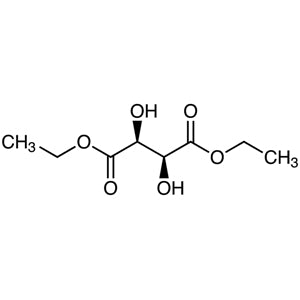
DiethylD-(-)-Tartrate TCI T1195
Regular price From Rp 1.115.100,00Regular price -
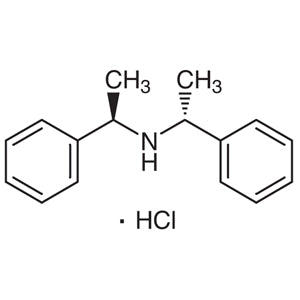
(R,R)-(+)-Bis(alpha-methylbenzyl)amineHydrochloride TCI B2034
Regular price Rp 4.743.900,00Regular price

![60646-30-2 (S)-(+)-2,2,2-Trifluoro-1-(9-anthryl)ethanol [e.e. Determination Reagent by NMR] - AMI Scientific](http://amiscientific.com/cdn/shop/files/TCI2510T1521.jpg?v=1767141776&width=533)
![60646-30-2 (S)-(+)-2,2,2-Trifluoro-1-(9-anthryl)ethanol [e.e. Determination Reagent by NMR] - AMI Scientific](http://amiscientific.com/cdn/shop/files/TCI2510T1521_7c166274-ef1b-4925-8be6-53863c4594b4.jpg?v=1772424133&width=533)
![53531-34-3 (R)-(-)-2,2,2-Trifluoro-1-(9-anthryl)ethanol [e.e. Determination Reagent by NMR] - AMI Scientific](http://amiscientific.com/cdn/shop/files/TCI2510T1520.jpg?v=1767141772&width=533)