

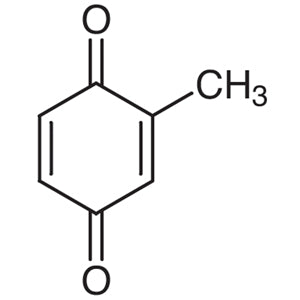
p-Toluquinone, also known as p-Toluenesulfonic acid, is a widely used chemical compound in laboratory settings. It serves as a key building block in organic reactions, particularly in the synthesis of heterocyclic and aromatic compounds. Its molecular structure provides a versatile platform for various chemical transformations, making it an essential reagent for chemists and researchers. This compound is commonly employed in substitution, oxidation, and condensation reactions due to its reactivity and stability. Its role in laboratory experiments is critical for the development of new chemical compounds and materials.
One of the main reasons p-Toluquinone is preferred is its chemical stability and controlled reactivity. It exhibits good solubility in organic solvents such as ethyl acetate and chloroform, which makes it suitable for a wide range of experimental conditions. Additionally, its ability to participate in redox and electrophilic reactions enhances its utility in synthetic chemistry. The compound also demonstrates good thermal stability, ensuring it remains effective even under varying experimental conditions. These properties make it a reliable and efficient choice for laboratory applications.
In Indonesian laboratories, p-Toluquinone is frequently used in chemical research, especially in the field of synthesis. It is a fundamental component in the development of new compounds and materials, supporting both academic and industrial research efforts. Its availability and reliability make it a go-to reagent for chemists working on diverse projects. Its consistent performance and compatibility with various experimental setups ensure its continued relevance in the scientific community.
Related TCI products
- Organic synthesis applications benefit from p-Toluquinone's reactivity and stability, making it ideal for creating complex molecular structures.
- Oxidation reactions often utilize p-Toluquinone due to its ability to act as a mild oxidizing agent under controlled conditions.
- Condensation reactions in laboratory settings rely on p-Toluquinone for its capacity to facilitate bond formation between different organic molecules.
- Redox reactions are enhanced by p-Toluquinone's participation in electron transfer processes, supporting a variety of chemical transformations.
- Electrophilic substitution reactions benefit from p-Toluquinone's ability to act as an electrophilic reagent in aromatic systems.
| Brand | TCI |
|---|---|
| CAS number | 553-97-9 |
| Molecular formula | — |
| Purity | — |
| Category | Chemistry > Building Blocks > Non-Heterocyclic Building Blocks |
| Pack sizes | Available in various quantities as per standard laboratory supply |
| Physical form | Solid |
| Storage | Store in a cool, dry place away from moisture and direct sunlight |
p-Toluquinone should be stored in a cool, dry place, away from moisture and direct sunlight to maintain its chemical integrity. It is recommended to use airtight containers to prevent exposure to air and humidity, which could affect its stability. Due to its chemical nature, it should be handled with care, using appropriate personal protective equipment such as gloves and safety goggles. It is important to ensure proper ventilation in the laboratory when working with this compound. Avoid contact with skin and eyes, and follow standard laboratory safety protocols to minimize any potential risks. Proper storage and handling ensure the compound remains effective and safe for use in various experimental applications.
—
Produk Terkait
-
p-Toluquinone TCI T1244
Regular price From Rp 848.400,00Regular price
