

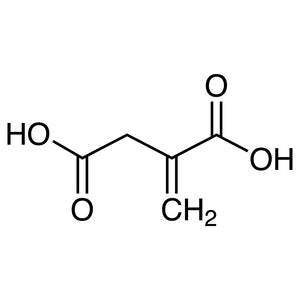
Itaconic Acid (97-65-4) is a versatile chemical compound widely used in laboratory settings for its ability to participate in various chemical reactions and organic synthesis processes. As a fundamental building block in chemistry, it plays a crucial role in the development of new compounds and molecular modifications. Its carbonil structure enables substitution reactions and polymerization, making it an essential component in the creation of polymers, food additives, and pharmaceutical products. In research and development environments, Itaconic Acid is valued for its adaptability and reactivity, supporting a wide range of experimental applications.
One of the key reasons Itaconic Acid is preferred in laboratories is its chemical stability and reactivity under different conditions. It has a low melting point and dissolves easily in organic solvents such as ethyl acetate and acetone. These properties make it ideal for reactions requiring efficiency and speed. Additionally, its availability in various packaging options ensures convenience for both small-scale and large-scale experiments. This versatility and ease of use contribute to its popularity among researchers and chemists.
In Indonesian laboratories, Itaconic Acid is commonly used in chemical research, including organic synthesis, polymer development, and studies on chemical reactivity. Its availability, reliability, and ease of handling make it a preferred choice for scientists working on diverse projects. The compound’s role in advancing chemical innovation is well-recognized, supporting both academic and industrial research efforts in the region.
Related TCI products
- Organic synthesis applications benefit from Itaconic Acid due to its reactivity and ability to participate in substitution and polymerization reactions.
- Polymer development relies on Itaconic Acid as a building block for creating various types of polymers with specific properties.
- Food additive formulation utilizes Itaconic Acid for its chemical properties that contribute to the stability and functionality of food products.
- Pharmaceutical research employs Itaconic Acid as a starting material for the synthesis of new drug compounds and active pharmaceutical ingredients.
- Chemical reactivity studies use Itaconic Acid to investigate its behavior under different reaction conditions and its potential for molecular modification.
| Brand | TCI |
|---|---|
| CAS number | 97-65-4 |
| Molecular formula | — |
| Purity | — |
| Category | Chemistry > Building Blocks > Non-Heterocyclic Building Blocks |
| Pack sizes | Available in various sizes to suit different laboratory needs |
| Physical form | Solid |
| Storage | Store in a cool, dry place away from moisture and direct sunlight |
Itaconic Acid should be stored in a cool, dry environment to maintain its chemical stability and prevent degradation. It is recommended to use airtight containers to protect it from moisture and air exposure. Due to its reactivity, it should be handled with care, and appropriate personal protective equipment should be worn when working with the compound. It is important to ensure that storage conditions are suitable for the specific packaging used, and that the material is kept away from incompatible substances. Regular inspection of storage conditions is advised to maintain the integrity of the compound and ensure safe laboratory practices.
—
Produk Terkait
-
ItaconicAnhydride TCI I0203
Regular price Rp 903.000,00Regular price
