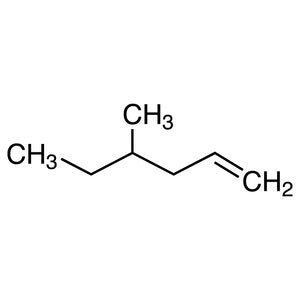
TCI M0302 4-Methyl-1-hexene is an unsaturated hydrocarbon belonging to the branched-chain alkene family, identified by CAS number 3769-23-1 and supplied by TCI in a small 5 mL research pack. In organic synthesis laboratories, this compound serves as a non-heterocyclic building block: a simple carbon skeleton that is ready for further modification through reactions at its terminal double bond. Its role is not that of a finished product but rather that of a starting material or model compound, helping researchers construct more complex molecules in a stepwise and controlled manner.
The characteristics that make this material a preferred choice are the combination of a reactive terminal double bond and a methyl branch on the main chain. The vinyl group at the end of the chain readily undergoes addition, hydroboration, epoxidation, metathesis, and polymerization reactions, while the methyl branching introduces steric hindrance and a distinctive branching pattern that is useful when researchers wish to observe the influence of structure on reaction rate or selectivity. Being a pure hydrocarbon also means there are no other functional groups to interfere, so observations are easier to interpret without competing side reactions.
In Indonesian laboratories, materials of this kind are typically used in university and institutional research groups working on organic synthesis, catalysis, and polymer studies, where work is carried out at small scale on the bench. The 5 mL research pack suits this pattern of use, providing enough material for repeated trial reactions and method development without holding a large volume of a volatile hydrocarbon in the laboratory for longer than a project requires.
- Addition reaction studies — the reactive terminal vinyl group readily accepts a range of reagents, making this alkene a straightforward substrate for demonstrating and quantifying addition chemistry.
- Hydroboration experiments — the terminal double bond allows regiochemistry to be examined clearly, while the nearby methyl branch offers a useful steric variable for comparison across substrates.
- Epoxidation work — converting the terminal alkene into an epoxide gives researchers a reactive intermediate for building more elaborate structures step by step under controlled conditions.
- Olefin metathesis investigations — as a simple branched terminal olefin with no interfering functional groups, it serves as a clean substrate for evaluating catalyst activity and selectivity.
- Polymerization and comonomer studies — the terminal double bond participates in polymerization, while the methyl branching lets researchers study how side-chain branching affects reaction behaviour.
| Brand | TCI (Tokyo Chemical Industry) |
|---|---|
| CAS number | 3769-23-1 |
| Molecular formula | — |
| Purity | — |
| Category | Chemistry > Building Blocks > Non-Heterocyclic Building Blocks |
| Pack sizes | 5 mL research pack |
| Physical form | — |
| Storage | keep tightly closed in a cool, well-ventilated place away from heat and ignition sources |
- Catalogue number: M0302
Store the container tightly closed in a cool, well-ventilated area, away from heat, sparks, open flames, and other ignition sources, and keep it separated from strong oxidizing agents. Retain the material in the original supplier bottle or in a chemically compatible, tightly sealed glass container, and avoid transferring it into unsuitable plastic vessels. As a volatile hydrocarbon, it should be handled inside a working fume hood with appropriate personal protective equipment, including safety glasses, gloves, and a laboratory coat. Dispense only the quantity needed for the experiment at hand, return the container promptly to its designated flammables storage, and dispose of residues according to the institution's chemical waste procedures.
—
Produk Terkait
-
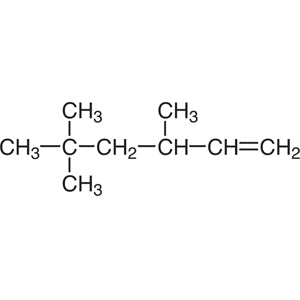
3,5,5-Trimethyl-1-hexene TCI T0779
Regular price Rp 4.982.250,00Regular price -
2,4,4-Trimethyl-1-hexene TCI T0778
Regular price Rp 3.896.550,00Regular price -
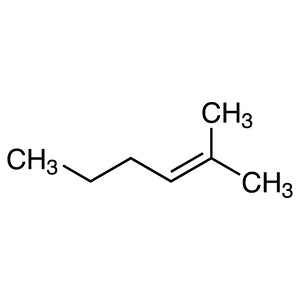
2-Methyl-2-hexene TCI M0526
Regular price Rp 4.293.450,00Regular price -
2-Methyl-1-hexene TCI M0525
Regular price From Rp 1.510.950,00Regular price -
5-Methyl-1-hexene TCI M0303
Regular price Rp 4.133.850,00Regular price -
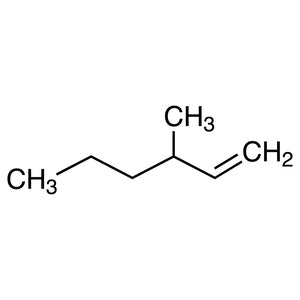
3-Methyl-1-hexene TCI M0301
Regular price Rp 8.506.050,00Regular price -
2-Hexene(cis-andtrans-mixture) TCI H1009
Regular price Rp 2.359.350,00Regular price -
3-Hexene(cis-andtrans-mixture) TCI H0656
Regular price Rp 4.664.100,00Regular price