3,5,5-Trimethyl-1-hexene is an organic compound widely used in chemical reactions for the synthesis of complex molecules. As a building block, it serves as a fundamental component in the creation of more intricate chemical structures. Its role in the laboratory is critical for researchers aiming to develop compounds with specific properties. This compound is particularly valued for its versatility and chemical reactivity, making it a key reagent in various synthetic pathways. Its presence in laboratory settings ensures the availability of a reliable and adaptable material for chemical experimentation.
The compound’s chemical properties, including its stability and reactivity, make it a preferred choice for synthetic chemists. Its molecular structure allows for multiple reaction pathways, enabling the formation of a wide range of derivatives. The compound is known for its relatively high boiling and melting points, which make it suitable for use in controlled laboratory environments. Additionally, its non-heterocyclic nature minimizes the risk of unintended side reactions, ensuring predictable outcomes in chemical processes. These characteristics contribute to its reliability and consistency in experimental applications.
In Indonesian laboratories, 3,5,5-Trimethyl-1-hexene is commonly used in organic synthesis and material development research. Its availability and chemical properties make it a staple in chemical laboratories across the country. Researchers in Indonesia rely on this compound for its adaptability and performance in various synthetic reactions. Its use is particularly prominent in academic and industrial research settings where the synthesis of complex organic compounds is required.
- Organic synthesis reactions benefit from 3,5,5-Trimethyl-1-hexene due to its reactivity and structural versatility, enabling the formation of complex molecules.
- Alkylation processes often utilize this compound as a starting material because of its ability to undergo substitution reactions under appropriate conditions.
- Polymerization experiments may incorporate this compound as a monomer or initiator, leveraging its chemical stability and reactivity in forming long-chain structures.
- Heterocyclic compound development can be supported by this compound, as its non-heterocyclic nature allows for controlled synthetic pathways.
- Material development research frequently employs this compound for its role in creating new polymers and functional materials with desired properties.
| Brand | TCI |
|---|---|
| CAS number | 4316-65-8 |
| Molecular formula | — |
| Purity | — |
| Category | Chemistry > Building Blocks > Non-Heterocyclic Building Blocks |
| Pack sizes | Available in various quantities as per supplier specifications |
| Physical form | Liquid |
| Storage | Store in a cool, dry place away from direct sunlight |
This compound should be stored in a cool, dry environment to maintain its chemical stability and prevent degradation. It is recommended to use airtight containers made of glass or high-density polyethylene to minimize exposure to moisture and air. Since it is a liquid, it should be kept in properly sealed containers to avoid evaporation or contamination. Laboratory personnel should handle the compound with care, using appropriate personal protective equipment such as gloves and safety goggles. It is important to ensure that the storage area is well-ventilated and free from potential sources of ignition. Proper labeling and storage practices help ensure the safety and integrity of the compound during handling and experimentation.
—
Produk Terkait
-
2,4,4-Trimethyl-1-hexene TCI T0778
Regular price Rp 3.896.550,00Regular priceRp 2.724.750,00Sale price Rp 3.896.550,00 -
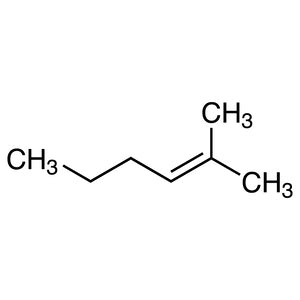
2-Methyl-2-hexene TCI M0526
Regular price Rp 4.293.450,00Regular priceRp 3.001.950,00Sale price Rp 4.293.450,00 -
2-Methyl-1-hexene TCI M0525
Regular price From Rp 1.510.950,00Regular priceRp 1.056.300,00Sale price From Rp 1.510.950,00 -
5-Methyl-1-hexene TCI M0303
Regular price Rp 4.133.850,00Regular priceRp 2.890.650,00Sale price Rp 4.133.850,00 -
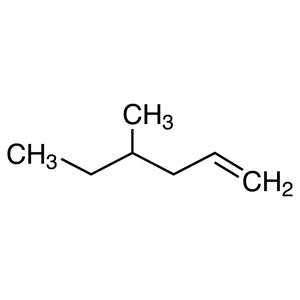
4-Methyl-1-hexene TCI M0302
Regular price Rp 5.778.150,00Regular priceRp 4.040.400,00Sale price Rp 5.778.150,00 -
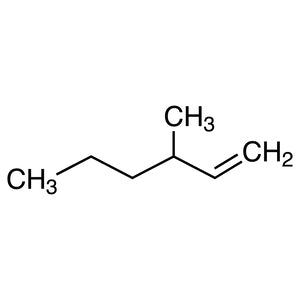
3-Methyl-1-hexene TCI M0301
Regular price Rp 8.506.050,00Regular priceRp 5.948.250,00Sale price Rp 8.506.050,00 -
2-Hexene(cis-andtrans-mixture) TCI H1009
Regular price Rp 2.359.350,00Regular priceRp 1.649.550,00Sale price Rp 2.359.350,00 -
3-Hexene(cis-andtrans-mixture) TCI H0656
Regular price Rp 4.664.100,00Regular priceRp 3.261.300,00Sale price Rp 4.664.100,00