2,4,4-Trimethyl-1-hexene is an organic compound widely used in chemical reactions to construct complex molecular structures. This compound belongs to the category of non-heterocyclic building blocks and is commonly utilized in synthetic chemistry for its versatility and reactivity. In the laboratory, it serves as a fundamental starting material for the synthesis of various compounds with applications in pharmaceuticals, materials science, and industrial chemistry. Its molecular structure features a six-carbon aliphatic chain with a double bond and three methyl groups, making it a valuable tool for chemists seeking to create functional derivatives.
The compound's reactivity makes it a preferred choice for a range of chemical transformations, including addition, substitution, and polymerization reactions. Its ability to interact with electrophilic reagents such as acids, bases, and catalysts allows for the formation of diverse products. The stability of 2,4,4-Trimethyl-1-hexene under certain conditions further enhances its utility in controlled synthetic environments. Its chemical properties enable it to act as both a precursor and a component in complex reaction sequences, offering researchers flexibility in their experimental approaches.
In Indonesian laboratories, this compound is extensively used in both fundamental and applied chemical research. Researchers across educational institutions and research organizations frequently employ it for experiments requiring a reliable and reactive building block. Its availability and chemical properties make it a standard component in many synthetic protocols, supporting advancements in chemical synthesis and material development.
- Synthetic Organic Chemistry: This compound is ideal for creating complex molecules due to its reactivity and structural versatility, making it a key reagent in organic synthesis.
- Pharmaceutical Research: It serves as a building block for the synthesis of drug compounds, supporting the development of new therapeutic agents.
- Polymer Science: Its ability to participate in polymerization reactions makes it useful in the production of various polymeric materials.
- Material Science: It is used in the formulation of advanced materials, contributing to the development of new functional compounds.
- Analytical Chemistry: It is employed as a standard in chromatographic and spectroscopic analyses due to its well-defined chemical properties.
| Brand | TCI |
|---|---|
| CAS number | 51174-12-0 |
| Molecular formula | — |
| Purity | — |
| Category | Chemistry > Building Blocks > Non-Heterocyclic Building Blocks |
| Pack sizes | Available in various quantities as per supplier specifications |
| Physical form | Liquid |
| Storage | Store in a cool, dry place away from light and incompatible materials |
This compound should be stored in a cool, dry environment, away from direct sunlight and sources of heat. It is recommended to use airtight containers made of materials that are chemically inert, such as glass or stainless steel, to prevent contamination and degradation. Due to its reactivity, it should be handled in a well-ventilated area, and appropriate personal protective equipment, including gloves and safety goggles, should be worn. Avoid contact with strong oxidizing agents or reactive metals. Always follow standard laboratory safety protocols when working with this compound to ensure safe and effective use.
—
Produk Terkait
-
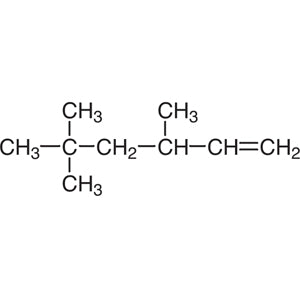
3,5,5-Trimethyl-1-hexene TCI T0779
Regular price Rp 4.982.250,00Regular priceRp 3.483.900,00Sale price Rp 4.982.250,00 -
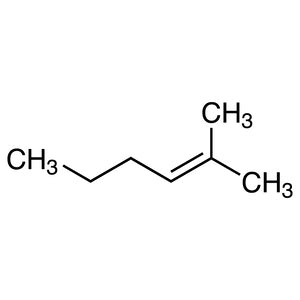
2-Methyl-2-hexene TCI M0526
Regular price Rp 4.293.450,00Regular priceRp 3.001.950,00Sale price Rp 4.293.450,00 -
2-Methyl-1-hexene TCI M0525
Regular price From Rp 1.510.950,00Regular priceRp 1.056.300,00Sale price From Rp 1.510.950,00 -
5-Methyl-1-hexene TCI M0303
Regular price Rp 4.133.850,00Regular priceRp 2.890.650,00Sale price Rp 4.133.850,00 -
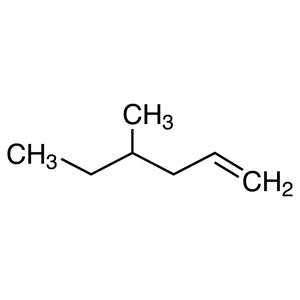
4-Methyl-1-hexene TCI M0302
Regular price Rp 5.778.150,00Regular priceRp 4.040.400,00Sale price Rp 5.778.150,00 -
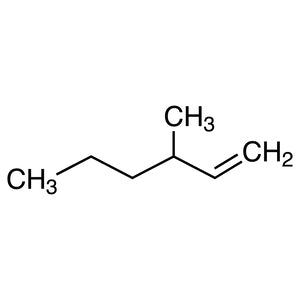
3-Methyl-1-hexene TCI M0301
Regular price Rp 8.506.050,00Regular priceRp 5.948.250,00Sale price Rp 8.506.050,00 -
2-Hexene(cis-andtrans-mixture) TCI H1009
Regular price Rp 2.359.350,00Regular priceRp 1.649.550,00Sale price Rp 2.359.350,00 -
3-Hexene(cis-andtrans-mixture) TCI H0656
Regular price Rp 4.664.100,00Regular priceRp 3.261.300,00Sale price Rp 4.664.100,00