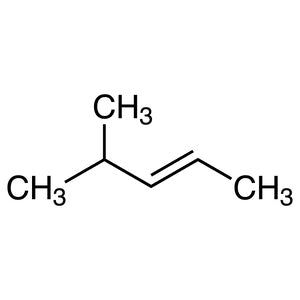
TCI M0394 trans-4-Methyl-2-pentene is an unsaturated branched olefin hydrocarbon supplied by Tokyo Chemical Industry as a raw material for organic synthesis. The molecule carries a single carbon-carbon double bond with a clearly defined trans geometry, so the position of the methyl group along the main chain remains predictable throughout the course of a reaction. In the laboratory, this material serves as a non-heterocyclic building block that provides a six-carbon skeleton ready for modification, whether through addition, oxidation, or other catalytic transformations.
Organic chemists reach for this compound when they need a simple yet branched alkene substrate for studying reaction behaviour systematically. The principal characteristic that makes the product a preferred choice is the consistent trans isomeric purity delivered by TCI, which keeps reaction outcomes free from interference by unwanted stereoisomer mixtures. As a light hydrocarbon liquid, the material is highly volatile and highly flammable, yet that very volatility makes it straightforward to remove unreacted starting material by evaporation or simple distillation once a reaction is complete. It also dissolves readily in common organic solvents.
Within Indonesian laboratories, trans-4-Methyl-2-pentene typically appears in university research groups and industrial R&D units engaged in synthetic organic chemistry and catalysis studies. It is drawn upon whenever a well-defined, stereochemically clean alkene is required as a model substrate or as an intermediate feedstock, and its ease of removal after reaction suits workflows where downstream purification capacity is limited and clean isolation of products matters.
Related TCI products
- Addition reaction studies — the single, well-positioned double bond lets researchers examine regiochemical and stereochemical outcomes of electrophilic or radical addition across a branched alkene framework.
- Oxidation chemistry — the defined olefinic site provides a predictable point of attack for epoxidation, dihydroxylation, or cleavage work where substrate geometry must remain unambiguous throughout.
- Catalytic transformation screening — as a simple branched alkene, it serves as a model substrate for evaluating catalyst activity, selectivity, and tolerance toward sterically hindered double bonds.
- Non-heterocyclic building block synthesis — the six-carbon skeleton offers a ready starting framework that chemists elaborate into larger target molecules through sequential functionalisation steps.
- Stereochemistry teaching and method development — the consistent trans isomeric purity makes it a dependable reference substrate when validating analytical methods or demonstrating geometric isomerism principles.
| Brand | TCI (Tokyo Chemical Industry) |
|---|---|
| CAS number | 674-76-0 |
| Molecular formula | — |
| Purity | — |
| Category | Chemistry > Building Blocks > Non-Heterocyclic Building Blocks |
| Pack sizes | available in standard TCI packaging options; please confirm the size required when ordering |
| Physical form | volatile hydrocarbon liquid, soluble in common organic solvents |
| Storage | keep tightly closed in a cool, well-ventilated area away from ignition sources |
- Product code: M0394
Store trans-4-Methyl-2-pentene in a cool, well-ventilated area reserved for flammable liquids, away from heat, sparks, open flames, and strong oxidising agents. Keep the material in its original tightly sealed container, or in a compatible solvent bottle with a secure closure, to limit evaporative loss given its high volatility. Handle inside a functioning fume hood and use appropriate personal protective equipment, including safety goggles, chemical-resistant gloves, and a laboratory coat. Ground containers during transfer of larger volumes to prevent static discharge, return the bottle to flammables storage promptly after dispensing, and dispose of residues and contaminated materials through recognised chemical waste channels rather than the general laboratory drain.
—
Produk Terkait
-
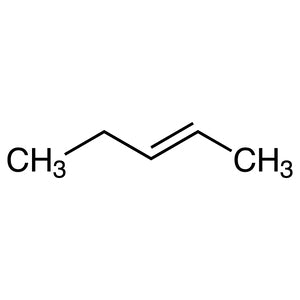
trans-2-Pentene TCI P0635
Regular price Rp 6.599.250,00Regular price -
2-Pentene(cis-andtrans-mixture) TCI P0064
Regular price From Rp 1.035.300,00Regular price -
4-Methyl-2-pentene(cis-andtrans-mixture) TCI M0395
Regular price From Rp 1.988.700,00Regular price -
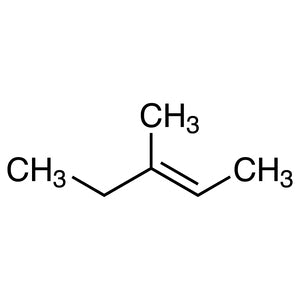
trans-3-Methyl-2-pentene TCI M0312
Regular price From Rp 2.016.000,00Regular price -
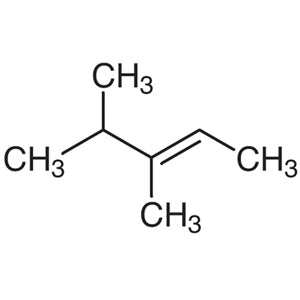
trans-3,4-Dimethyl-2-pentene TCI D1256
Regular price Rp 5.169.150,00Regular price -
2,3,4-Trimethyl-2-pentene TCI T1080
Regular price Rp 1.246.350,00Regular price -
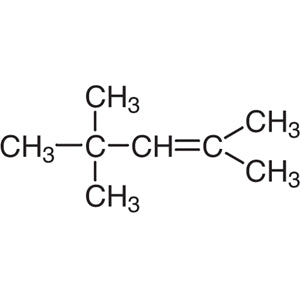
2,4,4-Trimethyl-2-pentene TCI T0780
Regular price From Rp 4.743.900,00Regular price -
2,4,4-Trimethyl-1-pentene TCI T0665
Regular price From Rp 1.405.950,00Regular price