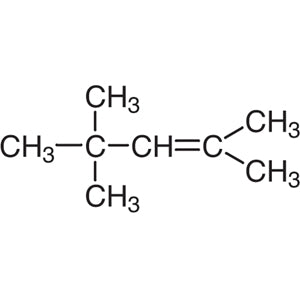
TCI T1080 is 2,3,4-Trimethyl-2-pentene (CAS 565-77-5), a branched alkene hydrocarbon with a highly substituted carbon-carbon double bond. It belongs to the non-heterocyclic building block category and is commonly used in organic chemistry as a model substrate. The double bond is surrounded by methyl groups, which makes the compound useful for studying how steric hindrance and electronic effects influence addition reactions of alkenes. In the laboratory it serves as a well-defined reference alkene, so researchers can compare reactivity and reaction pathways without the complications of a more complex molecular structure.
The properties that make this compound a preferred choice come from its electron-rich, branched alkene structure. Alkenes of this type typically react readily with electrophiles such as peroxyacids, halogens, or ozone. Because of its distinctive substitution pattern, the direction of addition can be analyzed clearly. For this reason, researchers use it to examine regioselectivity, reaction mechanisms, and reaction rates. The material is supplied under the TCI brand in a 1 mL pack, which suits small-scale experiments that do not require large quantities of reagent.
In Indonesian laboratories, 2,3,4-Trimethyl-2-pentene is well suited to research groups working in physical organic chemistry, atmospheric chemistry, and fuel chemistry that need a branched alkene as a model compound or reference standard. Lecturers can also use it as an example in advanced studies of alkene reactivity, where students compare how substitution patterns affect reaction behavior. The small pack size lets universities and research institutes run focused studies while keeping reagent consumption low.
- Regioselectivity studies: the highly substituted double bond gives a distinctive substitution pattern, so researchers can analyze the direction of electrophilic addition clearly and compare outcomes between different reagents.
- Reaction mechanism research: the electron-rich, branched alkene structure reacts readily with electrophiles, making it a practical model substrate for investigating how addition reactions proceed step by step.
- Reaction rate and kinetics experiments: methyl groups around the double bond allow researchers to examine how steric hindrance and electronic effects change the rate of alkene addition reactions under controlled conditions.
- Atmospheric chemistry and fuel chemistry research: groups that need a branched alkene as a model compound or reference standard can use it to represent branched alkene behavior in their experimental systems.
- Teaching and advanced organic chemistry studies: lecturers can use it as a clear example of how substitution and branching influence alkene reactivity, supporting advanced coursework and student research projects.
| Brand | TCI |
|---|---|
| CAS number | 565-77-5 |
| Molecular formula | — |
| Purity | — |
| Category | Chemistry > Building Blocks > Non-Heterocyclic Building Blocks |
| Pack sizes | 1 mL |
| Physical form | — |
| Storage | — |
- Product code: T1080
- Product name: 2,3,4-Trimethyl-2-pentene
Store the container tightly closed in a cool, dry, well-ventilated place, away from heat sources, open flames, and strong oxidizing agents. Like other low-molecular-weight hydrocarbons, alkenes of this type should be treated as potentially flammable, so keep them away from ignition sources. Keep the product in its original manufacturer container, or transfer it only to clean, compatible, properly labeled glass containers with secure closures. Handle it inside a fume hood, and wear safety glasses, gloves, and a laboratory coat to avoid skin and eye contact and inhalation of vapors. Because the pack is only 1 mL, plan experiments carefully to avoid waste. Always consult the manufacturer's safety data sheet for specific hazard and storage instructions before use, and dispose of residues according to your institution's chemical waste procedures.
—
Produk Terkait
-
2,4,4-Trimethyl-2-pentene TCI T0780
Regular price From Rp 4.743.900,00Regular priceRp 3.316.950,00Sale price From Rp 4.743.900,00 -
2,4,4-Trimethyl-1-pentene TCI T0665
Regular price From Rp 1.405.950,00Regular priceRp 982.800,00Sale price From Rp 1.405.950,00 -
trans-2-Pentene TCI P0635
Regular price Rp 6.599.250,00Regular priceRp 4.614.750,00Sale price Rp 6.599.250,00 -
1-Pentene TCI P0316
Regular price From Rp 955.500,00Regular priceRp 667.800,00Sale price From Rp 955.500,00 -
cis-2-Pentene TCI P0065
Regular price Rp 5.644.800,00Regular priceRp 3.946.950,00Sale price Rp 5.644.800,00 -
2-Pentene(cis-andtrans-mixture) TCI P0064
Regular price From Rp 1.035.300,00Regular priceRp 723.450,00Sale price From Rp 1.035.300,00 -
3-Methyl-1-pentene TCI M0575
Regular price From Rp 1.405.950,00Regular priceRp 982.800,00Sale price From Rp 1.405.950,00 -
2-Methyl-2-pentene TCI M0541
Regular price From Rp 2.411.850,00Regular priceRp 1.686.300,00Sale price From Rp 2.411.850,00