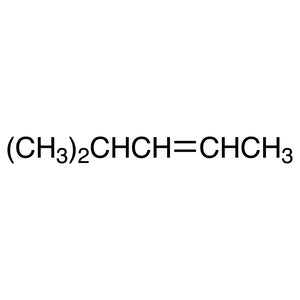
TCI M0395 4-Methyl-2-pentene (cis- and trans- mixture) is a branched olefinic hydrocarbon supplied as a combination of both of its geometric isomers in a single container. The product provides a six-carbon skeleton carrying one internal double bond, ready to serve as a starting material for a wide range of organic transformations. In practical laboratory work, an isomeric mixture of this kind is often the preferred form whenever the intended reaction is not sensitive to double bond geometry, so researchers obtain a convenient building block without paying the time and cost of an isomer separation step.
The property that makes this material a frequent choice is the flexibility it offers as a versatile alkene substrate, backed by the quality consistency characteristic of TCI reagents. As a light hydrocarbon liquid it is highly volatile and highly flammable, which means unreacted starting material is easily removed by evaporation once a reaction has reached completion. Its good solubility in non-polar organic solvents makes it compatible with the common reaction systems used at the bench, and the presence of two isomers in one bottle is also useful for analytical work, since both species are available together for comparison.
In Indonesian laboratories, this reagent fits naturally into synthetic organic chemistry groups at universities, research institutes, and industrial development units that need a simple internal alkene for method development or routine preparative chemistry. It is typically ordered for hydrogenation studies, oxidation experiments, and radical reactions where the cis/trans composition has no bearing on the outcome. Its easy removal by evaporation suits laboratories that value straightforward workup procedures on standard benchtop equipment.
Related TCI products
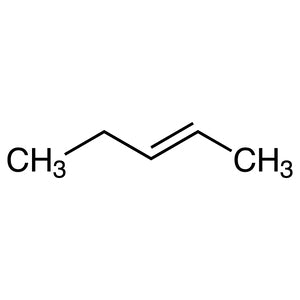
- TCI P0635 646-04-8 trans-2-Pentene
- TCI P0064 109-68-2 2-Pentene (cis- and trans- mixture)
- TCI M0394 674-76-0 trans-4-Methyl-2-pentene
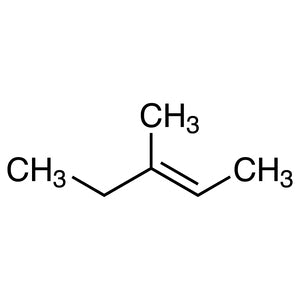
- TCI M0312 616-12-6 trans-3-Methyl-2-pentene
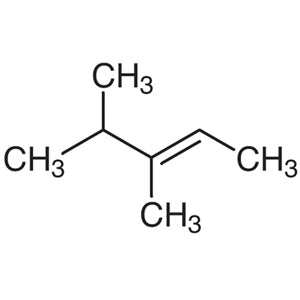
- TCI D1256 4914-92-5 trans-3,4-Dimethyl-2-pentene
- TCI P1841 504-60-9 1,3-Pentadiene (cis- and trans- mixture) (stabilized with TBC)
- Catalytic hydrogenation studies: both geometric isomers converge to the same saturated product, so the mixture can be used directly without any prior separation of cis and trans forms.
- Oxidation reactions: the internal double bond provides a well-defined reactive site, and complete oxidation pathways are unaffected by the geometry of the starting alkene.
- Radical reaction development: radical additions across the double bond proceed without regard to the original cis/trans ratio, making an isomeric mixture an economical and entirely suitable substrate.
- Organic synthesis building block: the six-carbon branched framework serves as a convenient starting skeleton for constructing more elaborate non-heterocyclic target molecules in multistep routes.
- Analytical and chromatographic method work: having two closely related isomers present in one bottle is helpful for developing and checking separation methods that must resolve geometric isomers.
| Brand | TCI |
|---|---|
| CAS number | 4461-48-7 |
| Molecular formula | — |
| Purity | — |
| Category | Chemistry > Building Blocks > Non-Heterocyclic Building Blocks |
| Pack sizes | available in the standard TCI catalogue pack sizes; please confirm the option required when ordering |
| Physical form | light hydrocarbon liquid, highly volatile, soluble in non-polar organic solvents |
| Storage | keep tightly closed in a cool, well-ventilated place away from all sources of ignition |
- Product code: M0395
Because this material is a highly volatile and highly flammable hydrocarbon liquid, it should be stored in a cool, well-ventilated area, well away from open flames, hot surfaces, sparks, and any other source of ignition. Keep the container tightly closed at all times to limit evaporative loss, and use containers and closures that are compatible with light hydrocarbon solvents. All handling, transfer, and reaction work should be carried out inside a functioning fume hood, with appropriate personal protective equipment including safety glasses, chemical-resistant gloves, and a laboratory coat. Take precautions against static discharge during pouring, ground equipment where appropriate, and keep only the working quantity at the bench, returning the main stock to its designated flammables storage cabinet immediately after use.
—
Produk Terkait
-
trans-2-Pentene TCI P0635
Regular price Rp 6.599.250,00Regular price -
2-Pentene(cis-andtrans-mixture) TCI P0064
Regular price From Rp 1.035.300,00Regular price -
trans-4-Methyl-2-pentene TCI M0394
Regular price From Rp 2.121.000,00Regular price -
trans-3-Methyl-2-pentene TCI M0312
Regular price From Rp 2.016.000,00Regular price -
trans-3,4-Dimethyl-2-pentene TCI D1256
Regular price Rp 5.169.150,00Regular price -
1,3-Pentadiene(cis-andtrans-mixture)(stabilizedwithTBC) TCI P1841
Regular price Rp 10.229.100,00Regular price -
beta-Methylstyrene(cis-andtrans-mixture)(stabilizedwithTBC) TCI P0495
Regular price Rp 4.771.200,00Regular price -
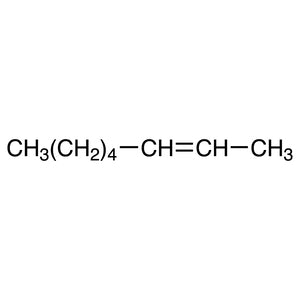
2-Octene(cis-andtrans-mixture) TCI O0042
Regular price From Rp 1.220.100,00Regular price