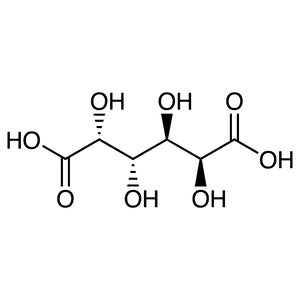
Mucic Acid (TCI M0466, CAS 526-99-8) is a versatile chemical compound widely used in laboratory settings for its role in organic synthesis and industrial production. As a fundamental building block in chemistry, it plays a crucial part in the development of complex molecules, especially in reactions involving functional group attachment. Its chemical structure, consisting of a dicarboxylic acid with two hydroxyl groups attached to the central carbon, makes it a valuable reagent for chemical modifications and derivatization processes. This compound is essential for researchers and chemists seeking to explore new synthetic pathways and create advanced chemical structures.
The properties of Mucic Acid make it a preferred choice in laboratory applications. Its stability under various reaction conditions, combined with controlled reactivity, ensures predictable outcomes in chemical reactions. It is soluble in water and has good thermal stability, which enhances its usability in a wide range of experimental setups. These characteristics allow it to be easily incorporated into both small-scale research and larger industrial production processes, making it a reliable and efficient material for chemical experimentation.
In Indonesian laboratories, Mucic Acid is commonly used in organic chemistry research, particularly in the synthesis of heterocyclic compounds and polymers. It is also utilized in analytical chemistry for sample preparation and in the development of new materials. Its availability and chemical versatility make it an essential component in the chemical supply chain, supporting both academic and industrial research activities across the country.
- Organic synthesis is a key application where Mucic Acid is used to create complex molecules through functional group modifications.
- Polymer development benefits from Mucic Acid due to its ability to participate in cross-linking and chain extension reactions.
- Heterocyclic compound synthesis relies on Mucic Acid for its reactivity in ring-forming reactions and functional group transformations.
- Analytical chemistry uses Mucic Acid in sample preparation and derivatization processes to enhance detection and analysis.
- Industrial production incorporates Mucic Acid as a building block in the manufacture of specialty chemicals and pharmaceutical intermediates.
| Brand | TCI |
|---|---|
| CAS number | 526-99-8 |
| Molecular formula | — |
| Purity | — |
| Category | Chemistry > Building Blocks > Non-Heterocyclic Building Blocks |
| Pack sizes | Available in various quantities as per standard laboratory supply |
| Physical form | White crystalline solid |
| Storage | Store in a cool, dry place away from moisture and direct sunlight |
Mucic Acid should be stored in a cool, dry environment to maintain its chemical integrity and prevent degradation. It is recommended to keep it in a sealed container to avoid moisture absorption, which can affect its purity and reactivity. As a solid, it does not require special containment beyond standard laboratory storage practices. When handling, it is advisable to use appropriate personal protective equipment such as gloves and safety goggles to ensure safety. Due to its chemical nature, it should be kept away from incompatible substances and stored in a well-ventilated area to minimize any potential risks. Regular inspection of storage conditions is recommended to ensure optimal preservation of the material.
—
Produk Terkait
-
TCI B5774 5,10-Bis(4,4,5,5-tetramethyl-1,3,2-dioxaborolan-2-yl)naphtho[1,2-c:5,6-c']bis([1,2,5]oxadiazole)
Regular price Rp 10.255.350,00Regular price -
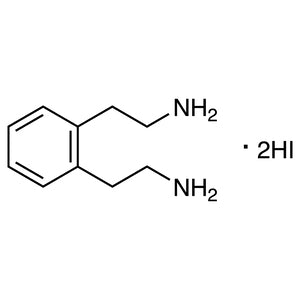
Dihydroiodide TCI B6569
Regular price From Rp 1.936.200,00Regular price -
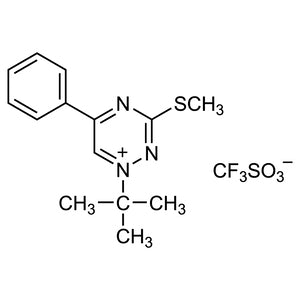
Trifluoromethanesulfonate TCI B7003
Regular price From Rp 1.936.200,00Regular price
![5,10-Bis(4,4,5,5-tetramethyl-1,3,2-dioxaborolan-2-yl)naphtho[1,2-c:5,6-c']bis([1,2,5]oxadiazole) - TCI B5774 - AMI Scientific](http://amiscientific.com/cdn/shop/files/TCI2510B5774.jpg?v=1769180228&width=533)