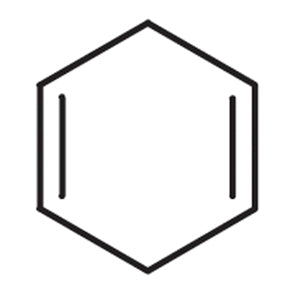
1-Methyl-1,4-cyclohexadiene is a chemical compound widely used in laboratory settings as a building block for the synthesis of complex organic compounds. This compound features a cyclohexadiene ring with a methyl group attached at the 1-position, making it highly reactive and versatile for various chemical reactions. Its unique structure allows it to participate in key reactions such as Diels-Alder and substitution reactions, which are fundamental in organic chemistry. In research and development environments, it plays a crucial role in constructing molecular frameworks and exploring new chemical pathways.
The compound’s high reactivity and aromatic-like structure make it a preferred choice for synthetic chemists. Its ability to undergo multiple reaction types and its stability under controlled conditions contribute to its popularity in both academic and industrial laboratories. The compound’s reactivity allows for the formation of a wide range of derivatives, making it a valuable tool in the development of new materials and pharmaceuticals. Its predictable behavior in chemical reactions also ensures reliable results, which is essential for research accuracy.
In Indonesian laboratories, 1-Methyl-1,4-cyclohexadiene is commonly used in both pure and applied chemistry research. It is a staple in university research labs and industrial chemical development centers. Its availability in various packaging formats supports both small-scale experiments and larger production processes. Its role in the synthesis of organic compounds is well established, making it a key reagent in the chemical industry and academic research in Indonesia.
Related TCI products
- TCI T1718 4724-89-4 1,3,5,5-Tetramethyl-1,3-cyclohexadiene
- TCI C2808 Cyclohexadiene (1,3- and 1,4- mixture) (contains 4-10% Benzene) (stabilized with BHT)
- TCI C0468 628-41-1 1,4-Cyclohexadiene (stabilized with BHT)
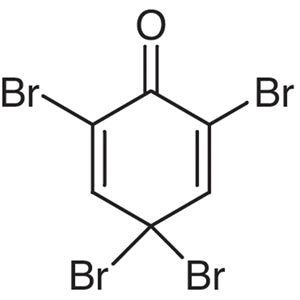
- TCI T1235 20244-61-5 2,4,4,6-Tetrabromo-2,5-cyclohexadienone
- TCI V0130 2444-68-0 9-Vinylanthracene
- TCI V0062 3048-64-4 5-Vinylbicyclo[221]hept-2-ene (stabilized with BHT)
- Organic synthesis applications benefit from the compound’s reactivity and structural versatility, enabling the creation of complex molecular frameworks.
- Material science research utilizes this compound to develop new polymers and functional materials through controlled chemical reactions.
- Pharmaceutical research employs it in the synthesis of drug precursors, leveraging its ability to form stable intermediates in reaction sequences.
- Analytical chemistry labs use it as a standard reference material for testing reaction mechanisms and kinetic studies.
- Environmental chemistry studies incorporate it to model the behavior of aromatic compounds in various chemical environments.
| Brand | TCI |
|---|---|
| CAS number | 4313-57-9 |
| Molecular formula | — |
| Purity | — |
| Category | Chemistry > Building Blocks > Non-Heterocyclic Building Blocks |
| Pack sizes | Available in various sizes to suit different experimental needs |
| Physical form | Liquid |
| Storage | Store in a cool, dry place away from light and incompatible substances |
This compound should be stored in a cool, dry place, away from direct sunlight and sources of heat. It is recommended to use airtight containers made of materials compatible with organic solvents to prevent contamination and evaporation. Due to its reactivity, it should be handled in a well-ventilated area, ideally under a fume hood, to minimize exposure. Avoid contact with strong oxidizing agents or acids, as they may cause unwanted reactions. Always use appropriate personal protective equipment, including gloves and safety goggles, when handling this material. Proper labeling and storage conditions are essential to ensure the safety of laboratory personnel and the integrity of the compound.
—
Produk Terkait
-
1,3,5,5-Tetramethyl-1,3-cyclohexadiene TCI T1718
Regular price From Rp 1.618.050,00Regular priceRp 1.130.850,00Sale price From Rp 1.618.050,00 -
Cyclohexadiene(1,3-and1,4-mixture)(contains4-10%Benzene)(stabilizedwithBHT) TCI C2808
Regular price From Rp 1.829.100,00Regular priceRp 1.278.900,00Sale price From Rp 1.829.100,00 -
1,4-Cyclohexadiene(stabilizedwithBHT) TCI C0468
Regular price From Rp 2.174.550,00Regular priceRp 1.520.400,00Sale price From Rp 2.174.550,00 -
2,4,4,6-Tetrabromo-2,5-cyclohexadienone TCI T1235
Regular price From Rp 1.458.450,00Regular priceRp 1.035.300,00Sale price From Rp 1.458.450,00 -
9-Vinylanthracene TCI V0130
Regular price From Rp 2.545.200,00Regular priceRp 1.779.750,00Sale price From Rp 2.545.200,00 -
5-Vinylbicyclo[221]hept-2-ene(stabilizedwithBHT) TCI V0062
Regular price From Rp 769.650,00Regular priceRp 537.600,00Sale price From Rp 769.650,00