

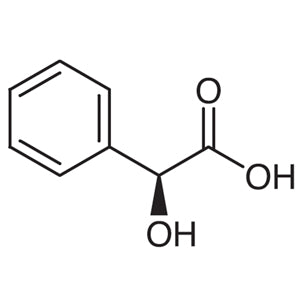
L-(+)-Mandelic Acid is a chemical compound widely used in laboratory settings, particularly in asymmetric synthesis. It plays a crucial role in the development of chiral compounds, which are essential in pharmaceutical and industrial chemistry. This compound is valued for its ability to act as a chiral building block, enabling the synthesis of complex molecules with specific stereochemistry. Its unique molecular structure allows it to participate in various chemical reactions, making it a versatile tool for researchers.
L-(+)-Mandelic Acid is preferred due to its high purity and stable chemical properties. These characteristics ensure consistent and reliable results in experimental processes. Its good reactivity allows it to be used in a wide range of synthetic pathways, supporting the creation of bioactive compounds. The compound’s reliability and effectiveness make it a go-to choice for scientists requiring high-quality materials for complex experiments.
In Indonesian laboratories, L-(+)-Mandelic Acid is commonly used in chemical and pharmaceutical research. It supports the development of new synthetic techniques and the testing of chemical properties. Its availability contributes to local scientific innovation and technological advancement. Researchers in educational and research institutions rely on this compound for accurate and reproducible experimental outcomes.
Related TCI products
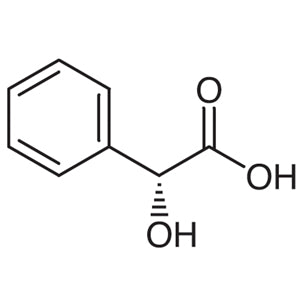
- TCI M0662 611-71-2 D-(-)-Mandelic Acid
- TCI T1521 60646-30-2 (S)-(+)-2,2,2-Trifluoro-1-(9-anthryl)ethanol [ee Determination Reagent by NMR]
- TCI T1520 53531-34-3 (R)-(-)-2,2,2-Trifluoro-1-(9-anthryl)ethanol [e.e. Determination Reagent by NMR]
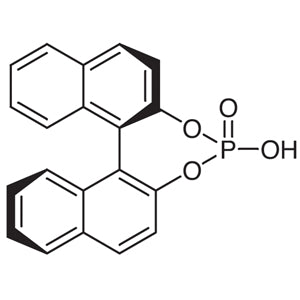
- TCI B1144 35193-64-7 (S)-(+)-1,1'-Binaphthyl-2,2'-diyl Hydrogen Phosphate
- TCI B1143 39648-67-4 (R)-(-)-1,1'-Binaphthyl-2,2'-diyl Hydrogen Phosphate
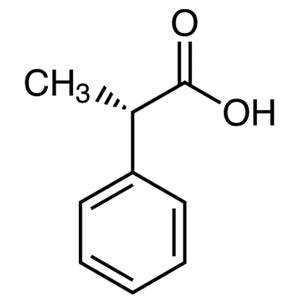
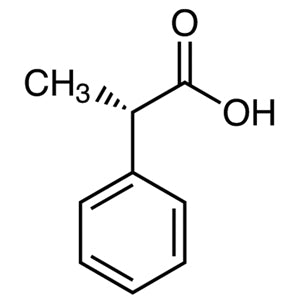
- TCI P1220 7782-24-3 (S)-(+)-2-Phenylpropionic Acid
- Asymmetric Synthesis: L-(+)-Mandelic Acid is ideal for creating chiral compounds due to its unique molecular structure, enabling precise stereochemical control in synthetic reactions.
- Pharmaceutical Research: It is used in the synthesis of bioactive compounds, supporting the development of new drugs and therapeutic agents.
- Industrial Chemistry: The compound’s stability and reactivity make it suitable for producing various chemical intermediates used in manufacturing processes.
- Educational Institutions: It is a valuable tool for teaching and research, helping students and researchers understand chiral synthesis techniques.
- Quality Control Testing: Its high purity ensures accurate results in analytical and testing procedures, supporting reliable data collection.
| Brand | TCI |
|---|---|
| CAS number | 17199-29-0 |
| Molecular formula | — |
| Purity | — |
| Category | Chemistry > Asymmetric Synthesis > Chiral Building Blocks |
| Pack sizes | Available in various quantities as per supplier specifications |
| Physical form | Solid |
| Storage | Store in a cool, dry place away from moisture and direct sunlight |
L-(+)-Mandelic Acid should be stored in a cool, dry environment to maintain its chemical stability. It is recommended to keep it in airtight containers to prevent moisture absorption, which can affect its purity. The compound should be stored away from direct sunlight and heat sources to avoid degradation. When handling, it is advisable to use appropriate personal protective equipment, such as gloves and safety goggles, to ensure safety. Proper labeling of storage containers is essential for easy identification and safe handling. This compound is non-hazardous under normal conditions but should be treated with care in a well-ventilated laboratory setting.
—
Product Categories
Produk Terkait
-
D-(-)-MandelicAcid TCI M0662
Regular price From Rp 875.700,00Regular price -
(S)-(+)-2,2,2-Trifluoro-1-(9-anthryl)ethanol[eeDeterminationReagentbyNMR] TCI T1521
Regular price From Rp 1.644.300,00Regular price -
(R)-(-)-2,2,2-Trifluoro-1-(9-anthryl)ethanol[e.e.DeterminationReagentbyNMR] TCI T1520
Regular price Rp 2.571.450,00Regular price -
(S)-(+)-1,1'-Binaphthyl-2,2'-diylHydrogenPhosphate TCI B1144
Regular price From Rp 505.050,00Regular price -
(R)-(-)-1,1'-Binaphthyl-2,2'-diylHydrogenPhosphate TCI B1143
Regular price From Rp 477.750,00Regular price -
(S)-(+)-2-PhenylpropionicAcid TCI P1220
Regular price From Rp 2.386.650,00Regular price -
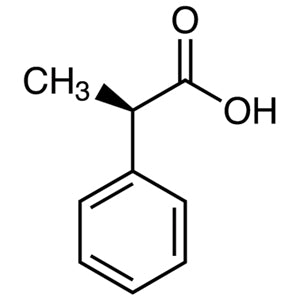
(R)-(-)-2-PhenylpropionicAcid TCI P1219
Regular price Rp 2.016.000,00Regular price -
(S)-(-)-alpha-Methoxy-alpha-(trifluoromethyl)phenylaceticAcid[OpticalResolving] TCI M0832
Regular price From Rp 5.034.750,00Regular price
![60646-30-2 (S)-(+)-2,2,2-Trifluoro-1-(9-anthryl)ethanol [e.e. Determination Reagent by NMR] - AMI Scientific](http://amiscientific.com/cdn/shop/files/TCI2510T1521.jpg?v=1767141776&width=533)
![60646-30-2 (S)-(+)-2,2,2-Trifluoro-1-(9-anthryl)ethanol [e.e. Determination Reagent by NMR] - AMI Scientific](http://amiscientific.com/cdn/shop/files/TCI2510T1521_7c166274-ef1b-4925-8be6-53863c4594b4.jpg?v=1772424133&width=533)
![53531-34-3 (R)-(-)-2,2,2-Trifluoro-1-(9-anthryl)ethanol [e.e. Determination Reagent by NMR] - AMI Scientific](http://amiscientific.com/cdn/shop/files/TCI2510T1520.jpg?v=1767141772&width=533)

![17257-71-5 (S)-(-)-alpha-Methoxy-alpha-(trifluoromethyl)phenylacetic Acid [Optical Resolving] - AMI Scientific](http://amiscientific.com/cdn/shop/files/TCI2510M0832.jpg?v=1769142869&width=533)