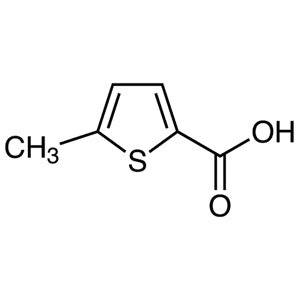
TCI M1118 is 5-Methyl-2-thiophenecarboxylic Acid, an aromatic carboxylic acid built on a thiophene ring bearing a methyl group at the five position. The compound belongs to the family of heterocyclic building blocks and is widely used as a starting material in the synthesis of pharmaceutical intermediates, agrochemicals, and functional materials. The thiophene ring is a classical bioisostere of the benzene ring, so medicinal chemists frequently employ it to modify the properties of a molecule without drastically altering its underlying framework. In the laboratory, the carboxylic acid group serves as a ready handle that can be activated to form a wide range of derivatives.
The property that makes this material a preferred choice is the combination of an electron-rich thiophene ring with a carboxylic acid group that is easy to manipulate. The acid group can be converted into an acid chloride, ester, amide, or hydrazide through well-established standard procedures, which makes the compound a flexible branch point in the design of synthetic routes. The methyl group at the five position blocks one reactive position on the ring while also contributing an electron-donating effect that influences subsequent substitution reactions. The sulfur atom within the ring contributes polarity and distinctive electronic character to the scaffold.
In Indonesian laboratories, this building block typically appears in synthetic organic chemistry research at universities and in the research and development units of pharmaceutical and agrochemical producers. It is commonly used at bench scale for route exploration, for preparing small libraries of derivatives, and for teaching heterocyclic chemistry at the graduate level. Laboratories that carry out multi-step synthesis generally keep such intermediates on hand so that coupling and functional group interconversion work can proceed without delay.
TCI brochures (PDF)
- Thiophenes 2026-06-29 · p. 3
Related TCI products
- TCI T1252 5813-89-8 2-Thiophenecarboxamide
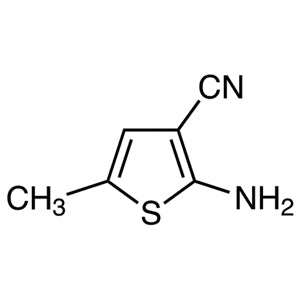
- TCI A2351 138564-58-6 2-Amino-5-methyl-3-thiophenecarbonitrile
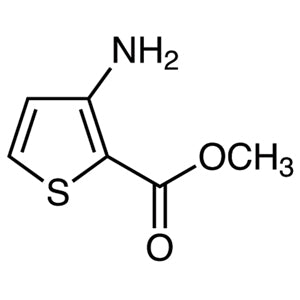
- TCI A1039 22288-78-4 Methyl 3-Amino-2-thiophenecarboxylate
- TCI T1140 2361-27-5 2-Thiophenecarboxylic Hydrazide
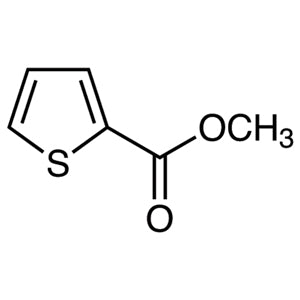
- TCI T1139 5380-42-7 Methyl 2-Thiophenecarboxylate
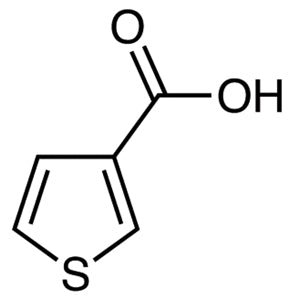
- TCI T1084 88-13-1 3-Thiophenecarboxylic Acid
- Pharmaceutical intermediate synthesis: the thiophene scaffold acts as a bioisostere of benzene, allowing medicinal chemists to adjust molecular properties while retaining the overall framework of a candidate structure.
- Amide and ester derivative preparation: the carboxylic acid group is readily activated using standard laboratory procedures, making it a dependable coupling partner for building diverse derivative series efficiently.
- Agrochemical research: heterocyclic building blocks of this type serve as starting materials in the development of active ingredients, giving formulators a well-characterised and reproducible entry point.
- Functional materials development: the electron-rich thiophene ring contributes distinctive electronic character, which makes the compound useful when preparing molecules with tailored electronic behaviour.
- Academic teaching and method development: the compound illustrates heterocyclic reactivity clearly, so instructors and graduate researchers use it to demonstrate functional group interconversion on a real substrate.
| Brand | TCI (Tokyo Chemical Industry) |
|---|---|
| CAS number | 1918-79-2 |
| Molecular formula | — |
| Purity | — |
| Category | Chemistry > Building Blocks > Heterocyclic Building Blocks |
| Pack sizes | available in standard TCI research pack sizes; please confirm the currently listed pack options when ordering |
| Physical form | — |
| Storage | store according to the conditions stated on the manufacturer label and accompanying documentation |
- Chemical name: 5-Methyl-2-thiophenecarboxylic Acid
Store the container tightly closed in a cool, dry, and well-ventilated area, away from direct sunlight and from incompatible materials such as strong bases and strong oxidising agents. Keep the compound in its original manufacturer container wherever possible; if transfer is necessary, use a clean, dry, chemically compatible container that is clearly labelled with the chemical name and CAS number. Handle the solid inside a fume hood to limit dust exposure, and wear safety glasses, gloves, and a laboratory coat. Avoid contact with skin and eyes and avoid inhaling dust. Always consult the manufacturer's Safety Data Sheet before use, and follow institutional procedures for waste collection and disposal.
—
Produk Terkait
-
2-Thiophenecarboxamide TCI T1252
Regular price Rp 1.405.950,00Regular price -
2-Amino-5-methyl-3-thiophenecarbonitrile TCI A2351
Regular price From Rp 928.200,00Regular price -
Methyl3-Amino-2-thiophenecarboxylate TCI A1039
Regular price From Rp 1.538.250,00Regular price -
2-ThiophenecarboxylicHydrazide TCI T1140
Regular price Rp 2.439.150,00Regular price -
Methyl2-Thiophenecarboxylate TCI T1139
Regular price From Rp 848.400,00Regular price -
3-ThiophenecarboxylicAcid TCI T1084
Regular price From Rp 1.644.300,00Regular price -
Ethyl2-Thiophenecarboxylate TCI T0904
Regular price From Rp 1.035.300,00Regular price -
3-Thiophenecarboxaldehyde TCI T0864
Regular price From Rp 1.353.450,00Regular price