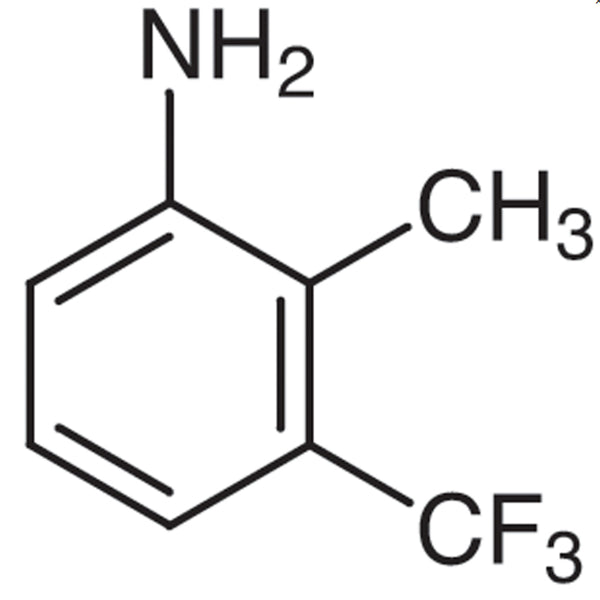
2-Methyl-3-trifluoromethylaniline is a chemical compound widely used as a building block in the synthesis of complex organic molecules. This compound contains both a trifluoromethyl group and an amine group, making it a versatile reagent in various chemical reactions such as substitution, reduction, and Friedel-Crafts reactions. Its unique structure allows it to participate in nucleophilic and electrophilic reactions, expanding its utility in synthetic chemistry. Due to its functional groups, it is particularly valuable in the development of compounds with specific biological or electronic properties.
The presence of the trifluoromethyl group significantly enhances the stability and reactivity of this compound, allowing for controlled chemical transformations. This makes it a preferred choice for researchers aiming to design fluorinated compounds with tailored properties. The compound’s ability to undergo various reaction pathways also makes it suitable for advanced organic synthesis. Its chemical stability and reactivity provide a reliable foundation for creating new materials and pharmaceuticals.
In Indonesian laboratories, 2-Methyl-3-trifluoromethylaniline is commonly used in chemical, pharmaceutical, and materials research. It is a key component in experiments involving fluorinated compounds, especially in the development of new drugs and functional materials. Its application is widespread across academic and industrial research settings, contributing to the advancement of scientific knowledge and innovation.
- Organic synthesis research benefits from this compound's reactivity and structural versatility, enabling the creation of complex fluorinated molecules.
- Pharmaceutical development utilizes its properties to design compounds with specific biological activities and enhanced stability.
- Materials science applications leverage its fluorinated structure for the synthesis of advanced electronic and functional materials.
- Academic research in chemistry and biochemistry employs it for studying reaction mechanisms and molecular interactions.
- Industrial chemical processes incorporate it as a key intermediate in the production of specialty chemicals and pharmaceutical intermediates.
| Brand | TCI |
|---|---|
| CAS number | 54396-44-0 |
| Molecular formula | — |
| Purity | — |
| Category | Chemistry > Building Blocks > Fluorinated Building Blocks |
| Pack sizes | — |
| Physical form | — |
| Storage | Store in a cool, dry place away from light and incompatible substances. |
This compound should be stored in a cool, dry environment, away from direct sunlight and sources of heat. It is recommended to use airtight containers to prevent moisture absorption and contamination. Due to its chemical nature, it should be kept separate from strong oxidizing agents and reactive materials. Proper ventilation is essential when handling the compound to minimize exposure. Laboratory personnel should wear appropriate personal protective equipment, including gloves and safety goggles, to ensure safe handling. Regular monitoring of storage conditions is advised to maintain the compound's integrity and ensure compliance with safety standards.
—
Produk Terkait
-
TCI B5774 5,10-Bis(4,4,5,5-tetramethyl-1,3,2-dioxaborolan-2-yl)naphtho[1,2-c:5,6-c']bis([1,2,5]oxadiazole)
Regular price Rp 10.255.350,00Regular price -
Dihydroiodide TCI B6569
Regular price From Rp 1.936.200,00Regular price -
Trifluoromethanesulfonate TCI B7003
Regular price From Rp 1.936.200,00Regular price
![5,10-Bis(4,4,5,5-tetramethyl-1,3,2-dioxaborolan-2-yl)naphtho[1,2-c:5,6-c']bis([1,2,5]oxadiazole) - TCI B5774 - AMI Scientific](http://amiscientific.com/cdn/shop/files/TCI2510B5774.jpg?v=1769180228&width=533)