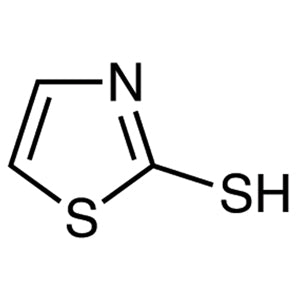
2-Mercaptothiazole from TCI is a heterocyclic building block that combines a thiazole ring with a thiol group at the two position. The thiazole ring is itself one of the most important heterocyclic scaffolds in medicinal chemistry, since it appears in a great many biologically active compounds and provides the combination of a nitrogen atom and a sulfur atom within a single five-membered ring. The presence of a thiol group at the position adjacent to nitrogen adds a distinct dimension of reactivity, making this compound a versatile intermediate for organic synthesis and coordination chemistry laboratories.
The property that makes this compound a preferred choice is the strongly nucleophilic character of its sulfur group. The sulfur atom readily undergoes S-alkylation reactions with alkyl halides and benzyl halides to give thiazolyl thioethers, a motif that appears frequently in the design of bioactive compounds. In addition, the paired nitrogen and sulfur atoms allow the compound to act as a bidentate ligand that binds transition metal ions fairly strongly, which makes it useful in the preparation of metal complexes and in surface studies. Mercaptoheterocyclic compounds of this class are also known for their tendency to form adsorbed layers on metal surfaces.
In Indonesian laboratories, this building block is typically used in university and institutional research groups working on synthetic organic chemistry, medicinal chemistry and coordination chemistry, as well as in industrial R&D groups developing new intermediates. It is generally ordered in small research quantities for exploratory synthesis, ligand preparation and scaffold derivatisation work, and it is handled alongside other heterocyclic building blocks within a standard fume hood workflow.
Related TCI products
- S-Alkylation reactions: the nucleophilic sulfur atom reacts readily with alkyl and benzyl halides, giving thiazolyl thioethers that serve as key intermediates in bioactive compound design.
- Medicinal chemistry scaffold synthesis: the thiazole ring is present in many biologically active compounds, so this building block supports the construction of drug-like heterocyclic frameworks.
- Coordination chemistry and ligand preparation: the adjacent nitrogen and sulfur atoms let the molecule act as a bidentate ligand, binding transition metal ions fairly strongly in complex synthesis.
- Metal complex characterisation studies: laboratories preparing transition metal complexes use this compound to introduce a nitrogen–sulfur donor set for structural and spectroscopic investigation.
- Surface and adsorbed layer studies: mercaptoheterocyclic compounds of this class tend to form adsorbed layers on metal surfaces, which suits interface and surface chemistry research.
| Brand | TCI |
|---|---|
| CAS number | 82358-09-6 |
| Molecular formula | — |
| Purity | — |
| Category | Chemistry > Building Blocks > Heterocyclic Building Blocks |
| Pack sizes | research-scale pack sizes as supplied by TCI; please refer to the pack size options listed on this page |
| Physical form | — |
| Storage | store in a tightly closed container in a cool, dry and well-ventilated place, away from oxidising agents |
- Chemical class: heterocyclic building block, thiazole ring bearing a thiol group at the two position
Store the compound in its original tightly closed container in a cool, dry and well-ventilated area, protected from direct sunlight and kept away from oxidising agents. Amber glass or the manufacturer's supplied container is suitable, and the cap should be resealed promptly after each use to limit exposure to air and moisture. Thiol-bearing compounds carry a characteristic odour, so all weighing and transfer operations should be carried out inside a functioning fume hood. Laboratory personnel should wear a lab coat, chemical-resistant gloves and safety goggles, avoid contact with skin and eyes, and wash hands thoroughly after handling. Keep the container clearly labelled, segregate it from incompatible materials, and consult the manufacturer's safety data sheet before first use.
—
Produk Terkait
-
2-Mercaptothiazoline TCI M0065
Regular price From Rp 769.650,00Regular price -
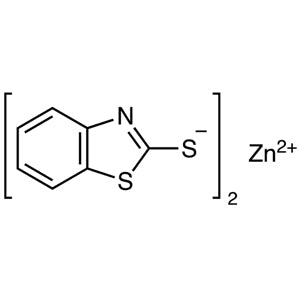
Zinc2-Mercaptobenzothiazole TCI Z0033
Regular price Rp 530.250,00Regular price -
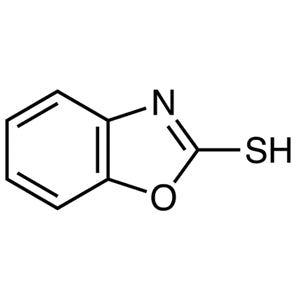
2-Mercaptobenzoxazole TCI B0096
Regular price From Rp 1.298.850,00Regular price -
2-Mercaptobenzimidazole TCI B0055
Regular price From Rp 477.750,00Regular price -
5-Amino-2-mercaptobenzimidazole TCI A1482
Regular price From Rp 903.000,00Regular price -
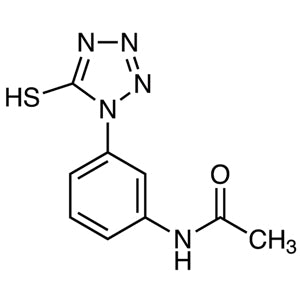
1-(3-Acetamidophenyl)-5-mercaptotetrazole TCI A1352
Regular price Rp 2.227.050,00Regular price -
4-Amino-6-hydroxy-2-mercaptopyrimidine TCI A0791
Regular price Rp 1.140.300,00Regular price -
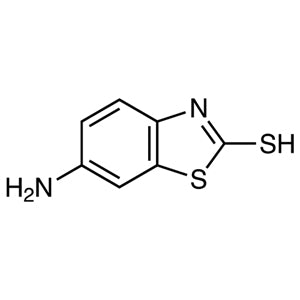
6-Amino-2-mercaptobenzothiazole TCI A0682
Regular price Rp 2.969.400,00Regular price