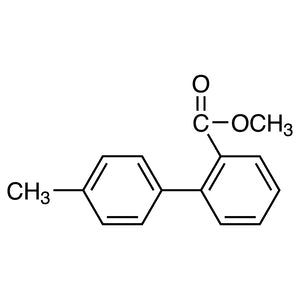
Methyl 2-(p-Tolyl)benzoate is a chemical compound widely used in organic synthesis reactions within laboratory settings. This compound serves as a key building block in the development of various organic molecules, playing a crucial role in the synthesis of pharmaceuticals, materials, and other chemical compounds. Its molecular structure consists of a benzoate group attached to a p-tolyl chain, making it a versatile intermediate in chemical reactions. Due to its stability and reactivity, it is a valuable tool for chemists seeking to create complex molecules with specific functional groups.
One of the main reasons this compound is preferred in laboratories is its chemical neutrality and resistance to unwanted reactions under normal conditions. It maintains its integrity during synthesis processes, ensuring consistent results. Additionally, its relatively high melting and boiling points facilitate efficient purification and separation techniques, such as distillation and crystallization. These properties make it ideal for use in experiments requiring high stability and controlled reactivity.
In Indonesian laboratories, Methyl 2-(p-Tolyl)benzoate is commonly used in organic chemistry research, particularly in projects involving the synthesis of bioactive compounds. Its availability and high quality make it a reliable choice for researchers working on drug development and material science. The compound is also frequently employed in academic and industrial settings where precision and reproducibility are essential. Its role in supporting scientific innovation is well recognized in the Indonesian chemical research community.
- Organic synthesis of bioactive compounds due to its stable molecular structure and reactivity in controlled environments.
- Pharmaceutical research for the development of new drugs as a key intermediate in complex molecule synthesis.
- Material science applications in the creation of polymers and functional materials through controlled chemical reactions.
- Academic research in chemical laboratories for teaching and experimental purposes requiring reliable chemical intermediates.
- Industrial chemical processes where high purity and consistent performance are essential for large-scale production.
| Brand | TCI |
|---|---|
| CAS number | 114772-34-8 |
| Molecular formula | — |
| Purity | — |
| Category | Chemistry > Building Blocks > Non-Heterocyclic Building Blocks |
| Pack sizes | Available in standard laboratory quantities as per supplier specifications |
| Physical form | Solid, crystalline appearance |
| Storage | Store in a cool, dry place away from direct sunlight and moisture |
Methyl 2-(p-Tolyl)benzoate should be stored in a cool, dry environment to maintain its chemical stability. It is recommended to keep the compound in a sealed container to prevent exposure to moisture and air, which may affect its integrity. Suitable storage containers include glass or high-density polyethylene vessels that are resistant to chemical degradation. In laboratory settings, it is important to handle the compound with care, using appropriate personal protective equipment such as gloves and safety goggles. Avoid contact with incompatible substances and ensure proper ventilation when working with this material. Regular monitoring of storage conditions will help preserve the compound's quality and ensure safe usage in chemical experiments.
—
Produk Terkait
-
p-TolylBenzoate TCI M3523
Regular price From Rp 875.700,00Regular price -
Methyl3,4,5-Tris(benzyloxy)benzoate TCI T1870
Regular price Rp 1.458.450,00Regular price -
Methyl3-(Bromomethyl)benzoate TCI B2224
Regular price From Rp 1.856.400,00Regular price -
Methyl4-(Bromomethyl)benzoate TCI B2053
Regular price From Rp 1.353.450,00Regular price -
AllylBenzoate TCI B2041
Regular price Rp 2.650.200,00Regular price -
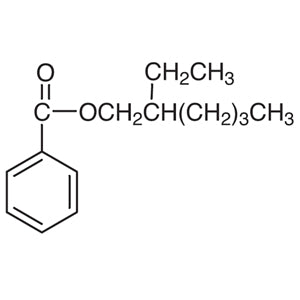
2-EthylhexylBenzoate TCI B1977
Regular price Rp 2.677.500,00Regular price -
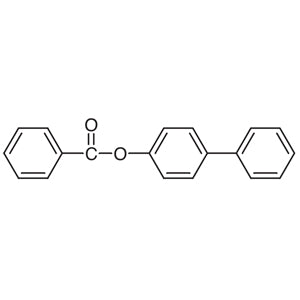
4-BiphenylBenzoate TCI B1866
Regular price From Rp 1.220.100,00Regular price -
3-Methyl-2-butenylBenzoate TCI B1409
Regular price Rp 2.068.500,00Regular price