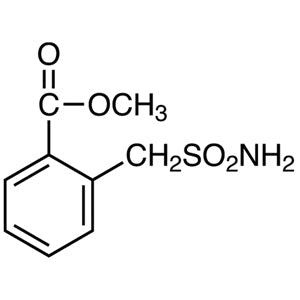
TCI M1867 Methyl 2-(Aminosulfonylmethyl)benzoate is a benzoate derivative that carries a methyl ester group on the aromatic ring and a sulfamoyl group connected through a methylene bridge at the ortho position. The presence of a single connecting carbon atom between the aromatic ring and the sulfonamide group distinguishes it from directly attached aromatic sulfonamides, because that bridge provides additional conformational flexibility and alters both the acidity and the reactivity of the sulfonamide group. In the laboratory, this compound serves as a specialised intermediate widely used to construct sulfonylurea-class compounds as well as heterocyclic frameworks that are difficult to obtain from simpler starting materials.
The property that makes this material valuable is the duality of its functional groups, separated by an appropriate distance. The primary sulfonamide group can be deprotonated with a mild base and then reacted with an electrophile to form a sulfonylurea linkage, while the methyl ester group survives many reaction conditions and therefore remains available for use in a subsequent step. The methylene bridge makes the molecule more flexible, allowing it to accommodate different ring geometries during ring-closure reactions. This combination gives synthetic chemists two independent handles on a single small scaffold, which shortens route design and reduces the need for protecting-group manipulation.
In Indonesian laboratories, this building block is typically encountered in university research groups, agrochemical research units, and pharmaceutical development laboratories that carry out multi-step organic synthesis on a bench scale. It is generally ordered in small research quantities for route scouting, method development, and the preparation of reference compounds, rather than for production use. Researchers working on sulfonylurea chemistry and heterocyclic scaffold construction rely on materials of this kind to reach target structures efficiently within limited project timelines.
- Sulfonylurea synthesis: the primary sulfonamide can be deprotonated with a mild base and coupled with a suitable electrophile, giving direct access to the sulfonylurea linkage that defines this compound class.
- Heterocyclic scaffold construction: the flexible methylene bridge allows the molecule to adopt the geometry required for ring closure, making it suitable for building heterocyclic frameworks that are hard to reach otherwise.
- Multi-step route development: the methyl ester tolerates many reaction conditions while the sulfonamide reacts first, so chemists can plan sequential transformations without introducing additional protecting groups.
- Reference compound preparation: research groups use this intermediate to prepare well-defined target molecules that serve as analytical standards and structural references in method development work.
- Structure-activity exploration: the two independently addressable functional groups let researchers vary substituents systematically on a single small scaffold when investigating how structural changes affect molecular behaviour.
| Brand | TCI (Tokyo Chemical Industry) |
|---|---|
| CAS number | 112941-26-1 |
| Molecular formula | — |
| Purity | — |
| Category | Chemistry > Building Blocks > Non-Heterocyclic Building Blocks |
| Pack sizes | available in research-scale packaging; please refer to the size options listed on this page |
| Physical form | — |
| Storage | store in a cool, dry place in a tightly closed container, following the manufacturer's label |
- Product Code: M1867
Store this product in a cool, dry, and well-ventilated area, away from direct sunlight, moisture, and incompatible chemicals. Keep the material in its original tightly closed container, or in a clean, chemically resistant, clearly labelled bottle if transfer is necessary, and reseal the container immediately after each use to limit exposure to atmospheric moisture. Handle the compound in a fume hood while wearing safety goggles, a laboratory coat, and suitable chemical-resistant gloves. Avoid inhalation of dust and contact with skin and eyes, and always consult the manufacturer's Safety Data Sheet before use, transport, or disposal.
—
Produk Terkait
-
Methyl3,4,5-Tris(benzyloxy)benzoate TCI T1870
Regular price Rp 1.458.450,00Regular price -
Methyl3-(Bromomethyl)benzoate TCI B2224
Regular price From Rp 1.856.400,00Regular price -
Methyl4-(Bromomethyl)benzoate TCI B2053
Regular price From Rp 1.353.450,00Regular price -
AllylBenzoate TCI B2041
Regular price Rp 2.650.200,00Regular price -
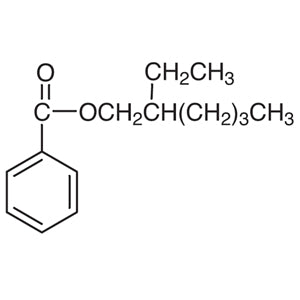
2-EthylhexylBenzoate TCI B1977
Regular price Rp 2.677.500,00Regular price -
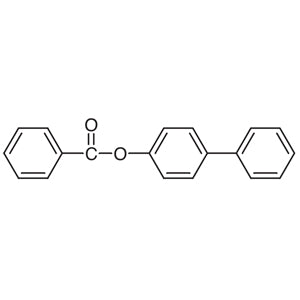
4-BiphenylBenzoate TCI B1866
Regular price From Rp 1.220.100,00Regular price -
3-Methyl-2-butenylBenzoate TCI B1409
Regular price Rp 2.068.500,00Regular price -
4-ChlorobutylBenzoate TCI B1399
Regular price From Rp 769.650,00Regular price