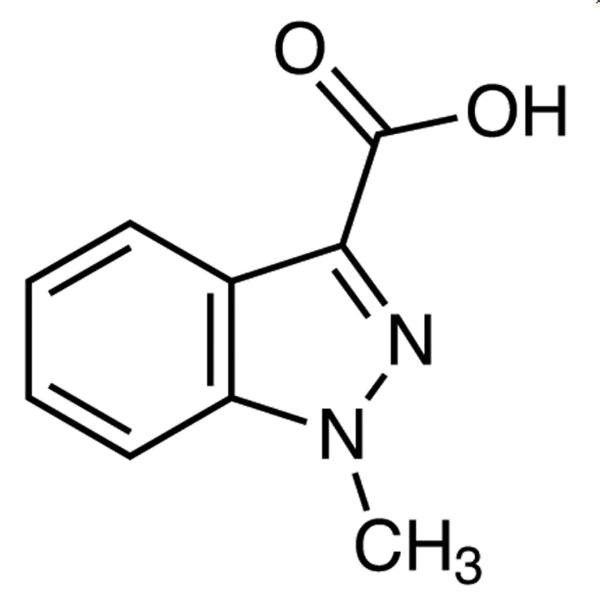
TCI M2143 1-Methylindazole-3-carboxylic Acid is a bicyclic heterocyclic compound that combines an indazole core with a carboxylic acid group at the 3-position and a methyl group on the nitrogen at position 1. The indazole ring system is a highly valued motif in medicinal chemistry because it can mimic both indole and purine rings while offering a distinctive hydrogen-bonding profile. In the laboratory, this compound serves primarily as a key intermediate for constructing indazole amides, including the scaffolds that underlie several active compounds in the serotonin 5-HT3 receptor antagonist class.
The properties that make this building block a preferred choice are the combination of a rigid aromatic framework with a carboxylic acid group that is ready for coupling. Methylation at N1 has already fixed the nitrogen regiochemistry from the outset, so researchers avoid the classic problem of separating mixtures of N1 and N2 isomers that frequently arises during indazole alkylation. The carboxyl group can be activated to the acid chloride or coupled directly using common amidation reagents to give amides with both primary and secondary amines. The fused benzene ring additionally provides extra positions for aromatic substitution whenever structural variation is required.
In Indonesian laboratories, this building block is typically used in synthetic organic chemistry and medicinal chemistry research groups at universities, government research institutes, and pharmaceutical development units. It supports the preparation of indazole amide libraries, structure-activity relationship studies, and the synthesis of reference intermediates. Because the regiochemistry is already defined, it is well suited to teaching and research settings where straightforward, reproducible coupling chemistry is preferred over multi-step isomer separation work.
Related TCI products
- TCI X0031 82-07-5 Xanthene-9-carboxylic Acid
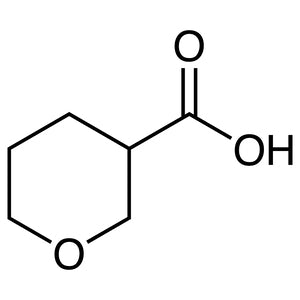
- TCI T4166 873397-34-3 Tetrahydro-2H-pyran-3-carboxylic Acid
- TCI T4112 51673-83-7 Tetrahydro-2H-pyran-2-carboxylic Acid
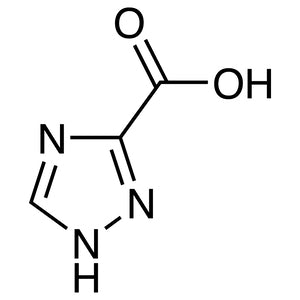
- TCI T3824 4928-87-4 1H-1,2,4-Triazole-3-carboxylic Acid
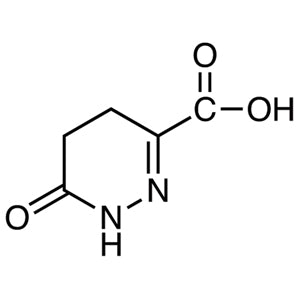
- TCI T2955 27372-38-9 1,4,5,6-Tetrahydro-6-oxopyridazine-3-carboxylic Acid
- TCI T2495 14527-41-4 Thiazole-5-carboxylic Acid
- Indazole amide synthesis: the 3-carboxylic acid group couples directly with primary and secondary amines using standard amidation reagents, giving reliable access to amide products.
- Serotonin 5-HT3 receptor antagonist research: this compound provides the indazole amide scaffold that underlies several active compounds in this pharmacological class, supporting comparative synthetic studies.
- Acid chloride preparation: the carboxyl group can be activated to the corresponding acid chloride, enabling more reactive acylation routes when direct coupling reagents are unsuitable.
- Medicinal chemistry scaffold work: the indazole core mimics both indole and purine rings while contributing a distinctive hydrogen-bonding profile useful for designing bioisosteric analogues.
- Aromatic substitution studies: the fused benzene ring offers additional positions for electrophilic substitution, allowing researchers to introduce structural variation around the established indazole framework.
| Brand | TCI (Tokyo Chemical Industry) |
|---|---|
| CAS number | 50890-83-0 |
| Molecular formula | — |
| Purity | — |
| Category | Chemistry > Building Blocks > Heterocyclic Building Blocks |
| Pack sizes | available in standard TCI research-scale packaging; please confirm the available size when ordering |
| Physical form | — |
| Storage | store according to the conditions stated on the manufacturer label and certificate of analysis |
- Product code: M2143
Store this compound in a tightly closed original container in a cool, dry, and well-ventilated area, away from direct sunlight, moisture, and incompatible materials such as strong bases and strong oxidizing agents. Keep the container sealed when not in use to prevent moisture uptake. Handle the material in a fume hood using appropriate personal protective equipment, including safety glasses, chemical-resistant gloves, and a laboratory coat. Avoid generating dust during weighing and transfer. Always consult the manufacturer safety data sheet before use, and follow institutional procedures for chemical waste disposal.
—
Produk Terkait
-
Xanthene-9-carboxylicAcid TCI X0031
Regular price From Rp 1.008.000,00Regular price -
Tetrahydro-2H-pyran-3-carboxylicAcid TCI T4166
Regular price From Rp 1.405.950,00Regular price -
Tetrahydro-2H-pyran-2-carboxylicAcid TCI T4112
Regular price From Rp 1.565.550,00Regular price -
1H-1,2,4-Triazole-3-carboxylicAcid TCI T3824
Regular price From Rp 2.942.100,00Regular price -
1,4,5,6-Tetrahydro-6-oxopyridazine-3-carboxylicAcid TCI T2955
Regular price From Rp 743.400,00Regular price -
Thiazole-5-carboxylicAcid TCI T2495
Regular price From Rp 1.644.300,00Regular price -
Thiazole-4-carboxylicAcid TCI T2494
Regular price From Rp 1.431.150,00Regular price -
Tetrahydropyran-4-carboxylicAcid TCI T2493
Regular price From Rp 1.961.400,00Regular price