1-(2-Methoxyethyl)piperazine is a chemical compound widely used as a building block in the synthesis of heterocyclic compounds. This material plays a crucial role in laboratories where complex molecular structures are being developed, particularly in research and development settings. Its modified piperazine structure, with a methoxyethyl group, enhances its reactivity and stability, making it a versatile reagent for various chemical reactions. In the context of Indonesian laboratories, it is a key component in the creation of specialized compounds used in pharmaceutical, material science, and chemical industries.
The compound is valued for its chemical stability under controlled conditions and its solubility in organic solvents, which simplifies mixing and reaction processes. These properties make it an ideal choice for applications requiring efficiency and precision. Its reactivity also allows it to participate in a wide range of synthetic pathways, enabling the formation of more complex and functional molecules. This combination of stability and reactivity ensures that it remains a preferred material for chemists and researchers working on advanced chemical syntheses.
In Indonesian laboratories, 1-(2-Methoxyethyl)piperazine is commonly used by chemists, pharmacists, and material scientists to expand their research capabilities. It is particularly favored in projects involving drug development, polymer synthesis, and functional material creation. Its ability to contribute to the formation of specific molecular structures makes it an essential tool for advancing scientific knowledge and industrial applications in the region.
Related TCI products
- TCI B4270 179688-29-0 6,7-Bis(2-methoxyethoxy)-3H-quinazolin-4-one
- TCI M3068 2098786-35-5 10-[2-(2-Methoxyethoxy)ethyl]-10H-phenothiazine
- TCI A0304 140-31-8 N-(2-Aminoethyl)piperazine
- TCI T3404 39512-51-1 1-(o-Tolyl)piperazine
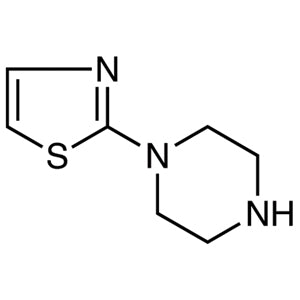
- TCI T3273 42270-37-1 1-(2-Thiazolyl)piperazine
- TCI T2956 39593-08-3 1-(p-Tolyl)piperazine
- Drug development research utilizes this compound to synthesize active pharmaceutical ingredients due to its reactivity and structural versatility.
- Organic synthesis projects benefit from its solubility and stability, allowing for efficient reaction conditions and product formation.
- Material science experiments incorporate it to create functional polymers and advanced chemical materials with specific properties.
- Pharmaceutical compound testing relies on its role in building complex molecular frameworks for drug candidate development.
- Chemical research initiatives use it as a key reagent for constructing heterocyclic structures in various synthetic pathways.
| Brand | TCI |
|---|---|
| CAS number | 13484-40-7 |
| Molecular formula | — |
| Purity | — |
| Category | Chemistry > Building Blocks > Heterocyclic Building Blocks |
| Pack sizes | Available in various quantities as per standard laboratory supply |
| Physical form | Liquid or solid, depending on formulation |
| Storage | Store in a cool, dry place away from direct sunlight and incompatible substances |
This compound should be stored in a cool, dry environment, away from direct sunlight and sources of heat. It is recommended to use sealed containers made of glass or high-density polyethylene to prevent contamination and maintain chemical integrity. Due to its reactivity, it should be handled with care, using appropriate personal protective equipment such as gloves and safety goggles. It is important to ensure proper ventilation when working with this material to minimize exposure. Storage should be in a location that is inaccessible to children and unauthorized personnel. Regular checks of storage conditions are advised to maintain the compound's stability and effectiveness for laboratory use.
—
Produk Terkait
-
6,7-Bis(2-methoxyethoxy)-3H-quinazolin-4-one TCI B4270
Regular price From Rp 769.650,00Regular price -
10-[2-(2-Methoxyethoxy)ethyl]-10H-phenothiazine TCI M3068
Regular price Rp 3.312.750,00Regular price -
N-(2-Aminoethyl)piperazine TCI A0304
Regular price From Rp 505.050,00Regular price -
1-(o-Tolyl)piperazine TCI T3404
Regular price From Rp 1.670.550,00Regular price -
1-(2-Thiazolyl)piperazine TCI T3273
Regular price Rp 1.326.150,00Regular price -
1-(p-Tolyl)piperazine TCI T2956
Regular price From Rp 1.298.850,00Regular price -
1-(Tetrahydro-2-furoyl)piperazine TCI T2617
Regular price From Rp 769.650,00Regular price -
1-(m-Tolyl)piperazine TCI T2260
Regular price From Rp 1.431.150,00Regular price

![2098786-35-5 10-[2-(2-Methoxyethoxy)ethyl]-10H-phenothiazine - AMI Scientific](http://amiscientific.com/cdn/shop/files/TCI2510M3068.jpg?v=1767127707&width=533)