Methyl 11-Bromoundecanoate is a chemical compound widely used as a building block in laboratory settings, particularly in organic synthesis. It serves as a key reagent in the development of complex molecular structures, enabling chemists to perform substitution reactions and other essential chemical transformations. This compound is commonly employed in research environments where the creation of new organic compounds is required, making it a versatile tool for synthetic chemists. Its role in the laboratory is critical for advancing chemical research and innovation in various scientific fields.
The compound is valued for its chemical stability under controlled conditions and its solubility in organic solvents, which facilitates easy handling and integration into chemical reactions. These properties make it a preferred choice for researchers aiming to achieve high reactivity and controlled outcomes in their experiments. Its ability to participate in a range of chemical reactions also enhances its utility in diverse synthetic pathways. The compound’s reactivity and solubility characteristics contribute to its effectiveness in laboratory applications, ensuring reliable results in chemical synthesis.
In Indonesian laboratories, Methyl 11-Bromoundecanoate is frequently used in organic chemistry research, especially in the synthesis of complex compounds. It is a common reagent in academic and industrial research settings, where its properties support the development of new materials and pharmaceutical compounds. Its use is widespread among research institutions and universities, contributing to the advancement of chemical sciences in Indonesia.
- Organic synthesis is a primary application where this compound is used to construct complex molecular structures through substitution reactions.
- Pharmaceutical research benefits from its reactivity, allowing the development of new drug compounds with specific molecular configurations.
- Material science applications utilize its chemical properties to create advanced polymers and functional materials.
- Analytical chemistry experiments often incorporate this compound as a standard for testing reaction mechanisms and reactivity profiles.
- Educational institutions use it to teach synthetic chemistry techniques and demonstrate reaction pathways in laboratory settings.
| Brand | TCI |
|---|---|
| CAS number | 6287-90-7 |
| Molecular formula | — |
| Purity | — |
| Category | Chemistry > Building Blocks > Non-Heterocyclic Building Blocks |
| Pack sizes | Available in various quantities as per standard laboratory supply |
| Physical form | Liquid or crystalline, depending on the specific formulation |
| Storage | Store in a cool, dry place away from direct sunlight and moisture |
Methyl 11-Bromoundecanoate should be stored in a cool, dry environment to maintain its chemical stability. It is recommended to keep it in a tightly sealed container to prevent exposure to moisture and air, which can affect its reactivity. Suitable containers for storage include glass or high-density polyethylene bottles to ensure chemical compatibility. In laboratory settings, it is important to handle the compound with care, using appropriate personal protective equipment such as gloves and safety goggles. Due to its reactivity, it should be stored separately from incompatible substances to prevent unwanted chemical interactions. Proper storage and handling practices are essential to ensure safety and maintain the compound’s effectiveness in chemical applications.
—
Produk Terkait
-
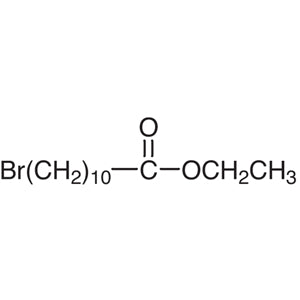
Ethyl11-Bromoundecanoate TCI B2242
Regular price Rp 2.969.400,00Regular price -
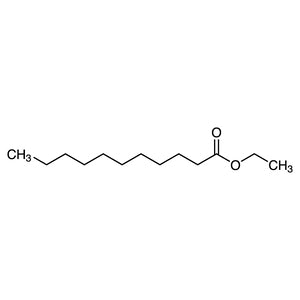
EthylUndecanoate TCI U0049
Regular price From Rp 1.115.100,00Regular price -
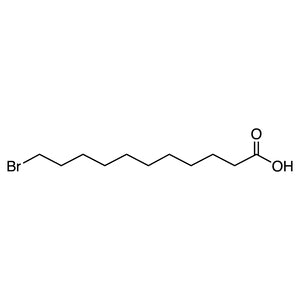
11-BromoundecanoicAcid TCI B0389
Regular price From Rp 875.700,00Regular price -
Zinc(II)Dodecanoate TCI Z0048
Regular price Rp 1.220.100,00Regular price -
PropylDodecanoate TCI P3211
Regular price From Rp 1.115.100,00Regular price -
IsopropylDodecanoate TCI I1169
Regular price From Rp 3.048.150,00Regular price -
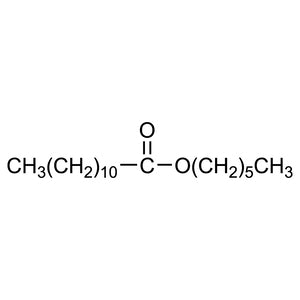
HexylDodecanoate TCI H1907
Regular price From Rp 2.068.500,00Regular price -
MethylUndecanoate TCI U0050
Regular price Rp 3.100.650,00Regular price