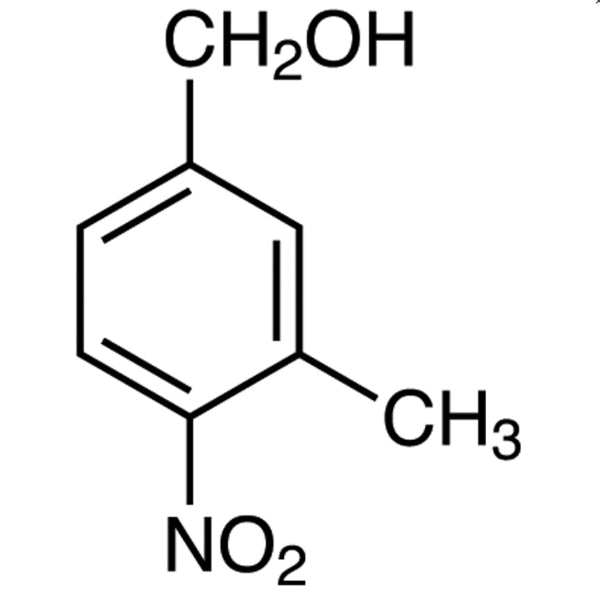
3-Methyl-4-nitrobenzyl Alcohol is a chemical compound widely used as a foundational building block in laboratory synthesis. It plays a crucial role in organic chemistry by serving as a versatile intermediate in the creation of complex molecules. This compound is particularly valuable in the development of heterocyclic and non-heterocyclic structures due to its reactive functional groups. Its presence in laboratory settings is essential for a variety of chemical transformations, making it an indispensable tool for researchers working in synthetic chemistry.
The compound’s unique properties, including its polar nature and high reactivity, make it a preferred choice for many chemical reactions. The presence of both hydroxyl and nitro groups contributes to its ability to participate in multiple reaction mechanisms, such as electrophilic substitution and esterification. These characteristics allow it to interact effectively with various reagents and catalysts, enhancing its utility in both academic and industrial research environments. Its chemical stability and predictable behavior further support its reliability in laboratory applications.
In Indonesian laboratories, 3-Methyl-4-nitrobenzyl Alcohol is commonly used in organic synthesis and drug development. Its availability and consistent quality make it a trusted material for researchers aiming to produce pharmaceutical compounds and industrial chemicals. The compound’s role in supporting advanced chemical processes underscores its importance in the scientific community, particularly in the context of chemical innovation and research.
- Synthesis of heterocyclic compounds due to its reactive functional groups and structural versatility.
- Electrophilic substitution reactions because of its ability to interact with various reagents and catalysts.
- Esterification processes owing to the presence of a hydroxyl group that can undergo acylation.
- Development of pharmaceutical compounds as a key intermediate in drug molecule construction.
- Industrial chemical production where reliable and consistent chemical building blocks are required.
| Brand | TCI |
|---|---|
| CAS number | 80866-75-7 |
| Molecular formula | — |
| Purity | — |
| Category | Chemistry > Building Blocks > Non-Heterocyclic Building Blocks |
| Pack sizes | Available in various quantities as per standard chemical supply practices |
| Physical form | Liquid |
| Storage | Store in a cool, dry place away from direct sunlight and incompatible materials |
This compound should be stored in a cool, dry environment to maintain its chemical integrity. It is recommended to use sealed containers to prevent exposure to moisture and air, which could affect its stability. Due to its polar nature, it should be kept away from incompatible substances such as strong oxidizers or acids. Proper ventilation is essential when handling the material to minimize inhalation risks. Laboratory personnel should wear appropriate personal protective equipment, including gloves and safety goggles, to ensure safe handling. Regular monitoring of storage conditions is advised to ensure the compound remains in optimal condition for use.
—
Produk Terkait
-
4-Methyl-3-nitrobenzylAlcohol TCI M2916
Regular price From Rp 1.829.100,00Regular price -
4,5-Dimethoxy-2-nitrobenzylAlcohol TCI D4811
Regular price From Rp 1.353.450,00Regular price -
4-NitrobenzylAlcohol TCI N0180
Regular price From Rp 1.035.300,00Regular price -
2-NitrobenzylAlcohol TCI N0179
Regular price Rp 1.246.350,00Regular price -
3-NitrobenzylAlcohol TCI N0178
Regular price From Rp 1.565.550,00Regular price -
2-Hydroxy-5-nitrobenzylAlcohol TCI H1549
Regular price Rp 3.419.850,00Regular price -
4-Chloro-3-nitrobenzylAlcohol TCI C1712
Regular price From Rp 769.650,00Regular price -
2-Chloro-5-nitrobenzylAlcohol TCI C1214
Regular price Rp 2.199.750,00Regular price