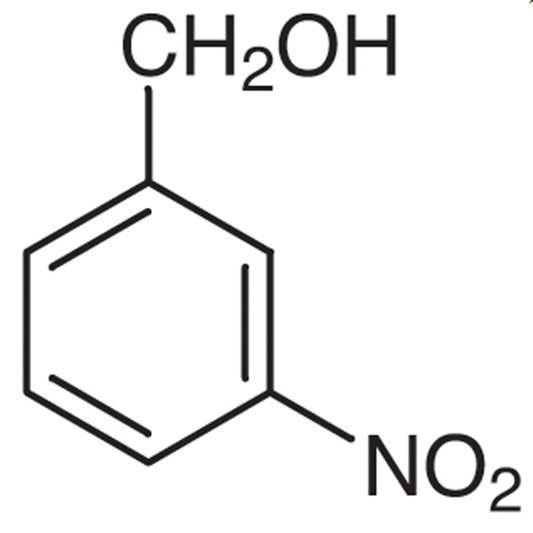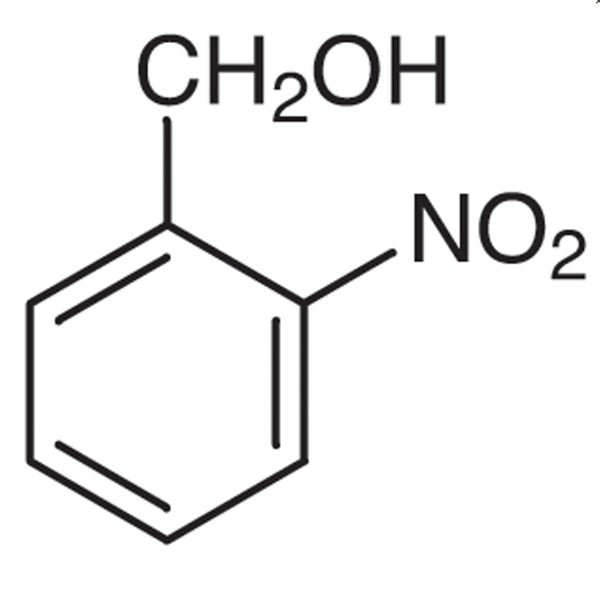
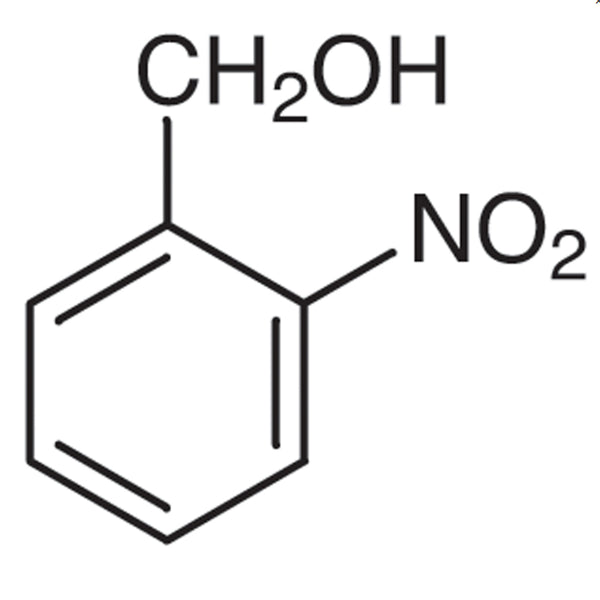
2-Nitrobenzyl Alcohol is a chemical compound widely used in laboratory settings for various synthetic reactions, particularly in the synthesis of complex molecules. As a building block in organic chemistry, it serves as a versatile intermediate that enables the creation of more intricate chemical structures. Its presence in laboratory workflows is essential for researchers aiming to develop new compounds or modify existing ones. This compound is commonly found in academic and industrial research environments where chemical synthesis is a core activity.
The compound’s reactivity and solubility in organic solvents make it a preferred choice for chemists. It is soluble in solvents such as ethyl acetate and chloroform, which facilitates its use in multiple reaction conditions. Its molecular structure, featuring a nitro group on a benzene ring and a hydroxyl group on an alkyl chain, contributes to its unique reactivity. These properties allow it to participate in substitution, reduction, and cross-coupling reactions, making it a valuable tool in synthetic chemistry.
In Indonesian laboratories, 2-Nitrobenzyl Alcohol is commonly used by researchers and students in higher education institutions and research centers. It is an essential reagent in the development of organic compounds and is frequently employed in both teaching and research contexts. Its role in the synthesis of heterocyclic compounds and complex structures makes it a standard component in many laboratory protocols across Indonesia.
Related TCI products
- Synthesis of Heterocyclic Compounds: 2-Nitrobenzyl Alcohol is ideal for creating heterocyclic structures due to its reactive nitro group, enabling the formation of complex ring systems.
- Organic Synthesis Reactions: Its solubility in organic solvents and reactivity make it suitable for substitution and cross-coupling reactions, enhancing the efficiency of synthetic pathways.
- Reduction Reactions: The compound’s hydroxyl group can be modified through reduction processes, allowing for the synthesis of various functional derivatives.
- Teaching and Research in Academic Institutions: It is widely used in educational settings to demonstrate chemical reactivity and synthetic techniques to students.
- Industrial Chemical Development: Its versatility supports the development of new chemical products in research and development laboratories.
| Brand | TCI |
|---|---|
| CAS number | 612-25-9 |
| Molecular formula | — |
| Purity | — |
| Category | Chemistry > Building Blocks > Non-Heterocyclic Building Blocks |
| Pack sizes | — |
| Physical form | Liquid |
| Storage | Store in a cool, dry place away from direct sunlight |
2-Nitrobenzyl Alcohol should be stored in a cool, dry environment, away from direct sunlight and sources of heat. It is recommended to keep the compound in a tightly sealed container to prevent exposure to air and moisture. Due to its reactivity, it should be handled with care in a well-ventilated area, ideally under a fume hood. Avoid contact with skin and eyes, and use appropriate personal protective equipment such as gloves and safety goggles. Ensure that storage areas are secure and inaccessible to unauthorized personnel. Regular monitoring of storage conditions is advised to maintain the integrity and stability of the compound.
—
Produk Terkait
-
4-NitrobenzylAlcohol TCI N0180
Regular price From Rp 1.035.300,00Regular price -
3-NitrobenzylAlcohol TCI N0178
Regular price From Rp 1.565.550,00Regular price -
4-Methyl-3-nitrobenzylAlcohol TCI M2916
Regular price From Rp 1.829.100,00Regular price -
3-Methyl-4-nitrobenzylAlcohol TCI M2915
Regular price From Rp 689.850,00Regular price -
2-Hydroxy-5-nitrobenzylAlcohol TCI H1549
Regular price Rp 3.419.850,00Regular price -
4,5-Dimethoxy-2-nitrobenzylAlcohol TCI D4811
Regular price From Rp 1.353.450,00Regular price -
4-Chloro-3-nitrobenzylAlcohol TCI C1712
Regular price From Rp 769.650,00Regular price -
2-Chloro-5-nitrobenzylAlcohol TCI C1214
Regular price Rp 2.199.750,00Regular price