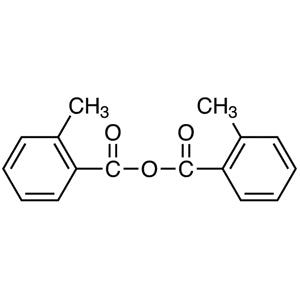
TCI M2997 is 2-Methylbenzoic Anhydride, a symmetrical acid anhydride derived from 2-methylbenzoic acid, also known as o-toluic acid. The compound serves as an acylating reagent in organic synthesis laboratories, where it is used to transfer the 2-methylbenzoyl group onto a wide range of nucleophilic substrates including amines, alcohols, and phenols. Compared with the corresponding acid chloride derivative, the anhydride offers a gentler and more controllable acylation pathway, making it a practical choice when the substrate under investigation is sensitive or when researchers wish to avoid the generation of hydrogen chloride during the course of the reaction.
The defining characteristic of this material is the combination of adequate reactivity with relatively straightforward handling. Aromatic acid anhydrides are generally more stable solids and are not as corrosive as acid chlorides, yet they remain sufficiently electrophilic to carry out acylation effectively. The methyl group at the ortho position introduces a distinctive steric hindrance around the carbonyl centre, a property that researchers deliberately exploit to direct reaction selectivity or to prepare model compounds for studies on steric effects. The reaction by-product is the parent carboxylic acid rather than a strongly acidic gas, which simplifies work-up and neutralisation.
In Indonesian laboratories, TCI M2997 is typically found in university and institutional organic synthesis groups, in medicinal chemistry and materials research programmes, and in analytical laboratories preparing derivatised reference compounds. It is generally ordered in research-scale quantities for methodology development, structure-activity exploration, and the preparation of intermediates that are later carried forward into multi-step synthetic routes. Its role is that of a specialised building block rather than a bulk process chemical.
Related TCI products
- Amide bond formation — the anhydride reacts cleanly with primary and secondary amines to install the 2-methylbenzoyl group without releasing hydrogen chloride, which protects acid-labile functionality elsewhere in the molecule.
- Ester synthesis from alcohols and phenols — controlled electrophilicity allows the acylation of hydroxyl groups under mild basic conditions, giving researchers a workable alternative when acid chloride routes prove too aggressive.
- Steric effect studies — the ortho-methyl substituent creates well-defined hindrance around the carbonyl centre, making this reagent a useful probe for investigating how steric crowding influences the rate and selectivity of acyl transfer.
- Preparation of model and reference compounds — synthetic and analytical groups use the reagent to build defined 2-methylbenzoyl derivatives that serve as standards or as comparison structures in mechanistic and spectroscopic work.
- Multi-step intermediate preparation — as a non-heterocyclic building block, it introduces a substituted aromatic acyl fragment early in a synthetic sequence for later elaboration in medicinal chemistry and materials research.
| Brand | TCI (Tokyo Chemical Industry) |
|---|---|
| CAS number | 607-86-3 |
| Molecular formula | — |
| Purity | — |
| Category | Chemistry > Building Blocks > Non-Heterocyclic Building Blocks |
| Pack sizes | available in standard TCI research-scale catalogue packs; please confirm the currently listed size when ordering |
| Physical form | acid anhydride, typically supplied as a solid in the manner usual for aromatic anhydrides |
| Storage | keep tightly closed in a cool, dry place away from moisture |
Store the container tightly closed in a cool, dry, well-ventilated area, protected from moisture, since acid anhydrides are susceptible to hydrolysis back to the parent carboxylic acid on contact with atmospheric water. Original supplier packaging or a tightly sealed glass container with a chemically resistant closure is appropriate; storage under an inert atmosphere or with a desiccant further helps preserve reagent quality. Handle the material in a fume hood using safety glasses, gloves, and a laboratory coat, and weigh it quickly to limit exposure to humid air. Keep it separated from water, strong bases, alcohols, and amines, which react with the anhydride. Always consult the manufacturer's Safety Data Sheet before use and follow your institution's chemical waste procedures for disposal.
—
Produk Terkait
-
2-Bromo-5-methylbenzoicAcid TCI B4145
Regular price From Rp 1.510.950,00Regular price -
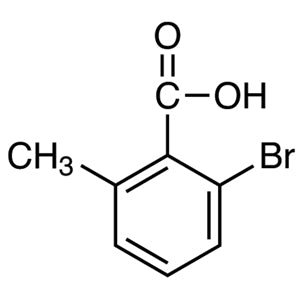
2-Bromo-6-methylbenzoicAcid TCI B4097
Regular price From Rp 1.431.150,00Regular price -
2-Bromo-4-methylbenzoicAcid TCI B3879
Regular price From Rp 795.900,00Regular price -
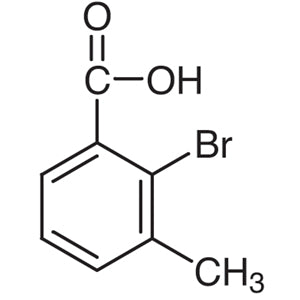
2-Bromo-3-methylbenzoicAcid TCI B3636
Regular price From Rp 769.650,00Regular price -
4-Bromo-2-methylbenzoicAcid TCI B3337
Regular price From Rp 3.260.250,00Regular price -
3-Bromo-2-methylbenzoicAcid TCI B3221
Regular price From Rp 1.829.100,00Regular price -
4-Bromo-3-methylbenzoicAcid TCI B3113
Regular price From Rp 1.087.800,00Regular price -
5-Bromo-2-methylbenzoicAcid TCI B3050
Regular price From Rp 769.650,00Regular price