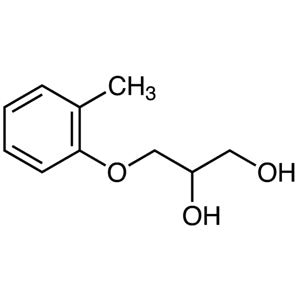
Mephenesin is a chemical compound widely used in laboratory settings for various chemical reactions aimed at synthesizing other compounds. As a fundamental building block in chemistry, it plays a crucial role in the formation of complex molecular structures. Its versatility makes it an essential tool for researchers working on organic synthesis and molecular design. Mephenesin is commonly used in chemical laboratories for substitution reactions and other processes that require molecular stability. Due to its unique chemical properties, it is a preferred choice for scientists involved in the development of new compounds.
One of the key attributes of mephenesin is its chemical stability, which allows it to be easily manipulated in different chemical environments. It can act as both an electron donor and an acceptor, depending on the reaction conditions, making it highly adaptable in various synthetic pathways. This flexibility enables researchers to tailor reactions to achieve desired outcomes. Additionally, its ability to interact with a wide range of substrates enhances its utility in diverse chemical applications. The solid form of mephenesin also simplifies handling and storage, making it convenient for laboratory use.
In Indonesian laboratories, mephenesin is extensively used in chemical research, particularly in the synthesis of organic compounds. It is frequently employed by educational and research institutions for experimental purposes and the development of new products. Its reliability in chemical reactions ensures consistent results, supporting both academic and industrial research efforts. The compound’s widespread use highlights its importance in advancing chemical innovation in the region.
- Organic synthesis is a primary application where mephenesin is used to construct complex molecular structures through substitution and other reaction mechanisms.
- Medicinal chemistry research benefits from mephenesin's ability to participate in diverse chemical reactions, aiding in the development of new pharmaceutical compounds.
- Analytical chemistry laboratories utilize mephenesin for its stability and reactivity, allowing for precise chemical analysis and compound characterization.
- Teaching laboratories incorporate mephenesin in undergraduate and graduate courses to demonstrate fundamental chemical reactions and synthesis techniques.
- Industrial research and development teams use mephenesin to explore new synthetic pathways and improve existing chemical processes.
| Brand | TCI |
|---|---|
| CAS number | 59-47-2 |
| Molecular formula | — |
| Purity | — |
| Category | Chemistry > Building Blocks > Non-Heterocyclic Building Blocks |
| Pack sizes | Available in various quantities as per supplier specifications |
| Physical form | Solid |
| Storage | Store in a cool, dry place away from direct sunlight |
Mephenesin should be stored in a cool, dry environment to maintain its chemical stability. It is recommended to keep it in a tightly sealed container to prevent moisture absorption and contamination. Proper ventilation is essential when handling the compound to minimize exposure to vapors. Laboratory personnel should wear appropriate personal protective equipment, including gloves and safety goggles, when working with mephenesin. The compound should be stored away from incompatible materials such as strong oxidizers to ensure safety. Regular inspection of storage conditions and container integrity is advised to maintain the quality and usability of the material.
—
Produk Terkait
-
TCI B5774 5,10-Bis(4,4,5,5-tetramethyl-1,3,2-dioxaborolan-2-yl)naphtho[1,2-c:5,6-c']bis([1,2,5]oxadiazole)
Regular price Rp 10.255.350,00Regular price -
Dihydroiodide TCI B6569
Regular price From Rp 1.936.200,00Regular price -
Trifluoromethanesulfonate TCI B7003
Regular price From Rp 1.936.200,00Regular price
![5,10-Bis(4,4,5,5-tetramethyl-1,3,2-dioxaborolan-2-yl)naphtho[1,2-c:5,6-c']bis([1,2,5]oxadiazole) - TCI B5774 - AMI Scientific](http://amiscientific.com/cdn/shop/files/TCI2510B5774.jpg?v=1769180228&width=533)