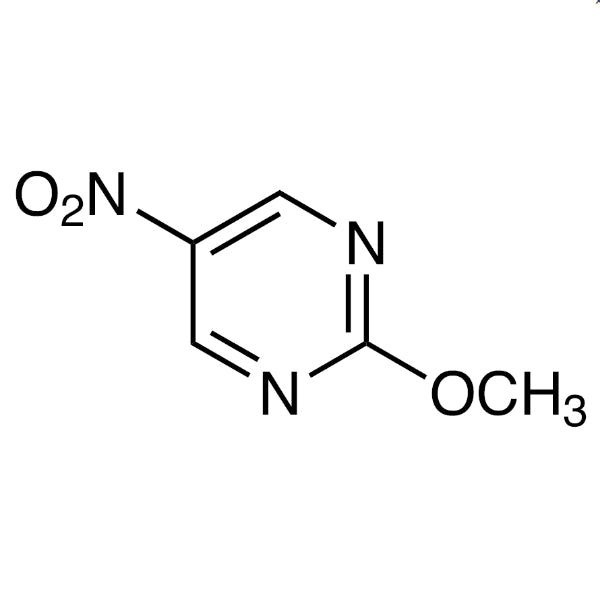
TCI M3080 is 2-Methoxy-5-nitropyrimidine, CAS number 14001-69-5, a heterocyclic building block built on a pyrimidine ring that carries two important functional groups at opposing positions. Pyrimidine is one of the most frequently encountered scaffolds in medicinal chemistry because of its resemblance to the natural nucleobases, so ring systems of this type have always held a distinct place in the synthesis laboratory. This compound supplies a pre-functionalised pyrimidine core, freeing researchers from having to assemble the ring themselves through multi-step condensations that consume time and often deliver only modest yields.
The main attraction of this material lies in how readily both of its substituents can be transformed. The nitro group at position 5 can be reduced to a primary amine using reduction methods that are routine in most laboratories, giving a 5-aminopyrimidine ready for acylation, alkylation, or further coupling. Meanwhile, the methoxy group at position 2 sits on a carbon that is electron-poor as a result of the pyrimidine ring itself and the electron-withdrawing effect of the nitro group, so it is comparatively easy to displace by nucleophilic aromatic substitution with amines and other nucleophiles. Two orthogonal handles on one small ring make it an efficient starting point for building libraries of related structures.
In Indonesian laboratories this kind of building block is typically used by organic synthesis and medicinal chemistry groups at universities, research institutes, and pharmaceutical development units. It suits work where a reliable heterocyclic core is needed as the first step of a synthetic route rather than being prepared in-house. Because the subsequent chemistry relies on standard reduction and substitution procedures, it fits comfortably into laboratories equipped for routine small-scale organic synthesis.
Related TCI products
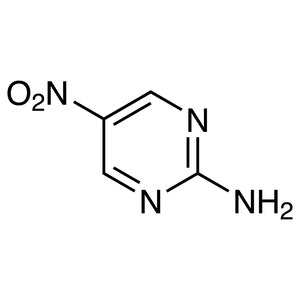
- TCI A2031 3073-77-6 2-Amino-5-nitropyrimidine
- TCI D1960 2164-83-2 4,6-Dihydroxy-5-nitropyrimidine
- TCI X0084 142627-97-2 1,4-Bis[[(3-ethyloxetan-3-yl)methoxy]methyl]benzene
- TCI B4317 179688-01-8 7-Benzyloxy-6-methoxy-3H-quinazolin-4-one
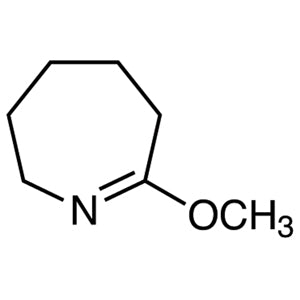
- TCI A3282 2525-16-8 1-Aza-2-methoxy-1-cycloheptene
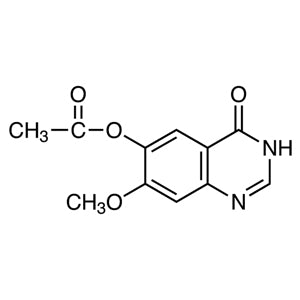
- TCI A2717 179688-53-0 6-Acetoxy-7-methoxy-3H-quinazolin-4-one
- Medicinal chemistry scaffold preparation: the pyrimidine ring resembles natural nucleobases, making it a familiar and well-precedented core for researchers designing biologically oriented target molecules.
- Reduction to 5-aminopyrimidine intermediates: the position-5 nitro group converts cleanly to a primary amine under common laboratory reduction conditions, opening the way to acylation and alkylation.
- Nucleophilic aromatic substitution studies: the position-2 methoxy group sits on an electron-poor carbon and is readily displaced by amines, giving quick access to 2-substituted analogues.
- Analogue library synthesis: having two independently addressable functional groups on one small ring lets chemists generate families of related pyrimidine derivatives from a single common starting material.
- Multi-step synthetic route development: using a pre-functionalised pyrimidine avoids lengthy in-house ring condensations that consume time and frequently return only modest yields for the team.
| Brand | TCI |
|---|---|
| CAS number | 14001-69-5 |
| Molecular formula | — |
| Purity | — |
| Category | Chemistry > Building Blocks > Heterocyclic Building Blocks |
| Pack sizes | available in standard TCI research-scale packaging; please confirm the size required when ordering |
| Physical form | — |
| Storage | keep in the originally supplied container, tightly closed, in a cool and dry place |
- Chemical name: 2-Methoxy-5-nitropyrimidine
- Product code: M3080
Store the container tightly closed in a cool, dry, and well-ventilated area, away from direct sunlight, heat sources, and incompatible materials. The original supplier packaging is the most suitable container; if transfer is necessary, use chemically compatible glass or an approved alternative and label it clearly with the compound name and CAS number. Handle inside a fume hood and wear standard personal protective equipment including safety glasses, gloves, and a laboratory coat. Keep the container closed when not in use to limit moisture uptake, avoid generating dust, and wash hands thoroughly after handling. Dispose of residues and contaminated materials according to institutional chemical waste procedures and consult the manufacturer's safety data sheet before first use.
—
Produk Terkait
-
2-Amino-5-nitropyrimidine TCI A2031
Regular price Rp 2.332.050,00Regular price -
4,6-Dihydroxy-5-nitropyrimidine TCI D1960
Regular price Rp 1.829.100,00Regular price -
1,4-Bis[[(3-ethyloxetan-3-yl)methoxy]methyl]benzene TCI X0084
Regular price From Rp 1.298.850,00Regular price -
7-Benzyloxy-6-methoxy-3H-quinazolin-4-one TCI B4317
Regular price From Rp 689.850,00Regular price -
1-Aza-2-methoxy-1-cycloheptene TCI A3282
Regular price From Rp 955.500,00Regular price -
6-Acetoxy-7-methoxy-3H-quinazolin-4-one TCI A2717
Regular price From Rp 584.850,00Regular price -
2-Amino-4-methoxy-6-methyl-1,3,5-triazine TCI A1560
Regular price From Rp 689.850,00Regular price -
2-Amino-4-methoxy-6-methylpyrimidine TCI A0950
Regular price From Rp 1.485.750,00Regular price

![142627-97-2 1,4-Bis[[(3-ethyloxetan-3-yl)methoxy]methyl]benzene - AMI Scientific](http://amiscientific.com/cdn/shop/files/TCI2510X0084.jpg?v=1768819865&width=533)