![918524-63-7 1-Methyl-4-[5-(4,4,5,5-tetramethyl-1,3,2-dioxaborolan-2-yl)pyridin-2-yl]piperazine - AMI Scientific](http://amiscientific.com/cdn/shop/files/TCI2510M3116.jpg?v=1769181061&width=1946)
![918524-63-7 1-Methyl-4-[5-(4,4,5,5-tetramethyl-1,3,2-dioxaborolan-2-yl)pyridin-2-yl]piperazine - AMI Scientific](http://amiscientific.com/cdn/shop/files/TCI2510M3116.jpg?v=1769181061&width=1445)
TCI M3116 1-Methyl-4-[5-(4,4,5,5-tetramethyl-1,3,2-dioxaborolan-2-yl)pyridin-2-yl]piperazine is an organoboron reagent in the form of a pinacol boronate ester that carries both a pyridine and a piperazine group in a single molecule. It serves as a coupling partner in Suzuki-Miyaura reactions, one of the most important methods for carbon-carbon bond formation in modern organic chemistry. In a single reaction step, researchers can install the intact pyridinyl-piperazine fragment onto a target molecular scaffold, making the synthetic route considerably shorter than building that group up stage by stage.
The advantage that makes this reagent a preferred choice lies in the pinacol boronate ester itself, which is far more stable towards air and moisture than the corresponding free boronic acid. This makes weighing and storage easier to manage and gives more reproducible reaction outcomes. The piperazine fragment it carries is a structural motif encountered very frequently in drug molecules, because it helps improve aqueous solubility and provides a basic site for salt formation. The combination of a pyridine ring and a piperazine ring makes this reagent highly valuable for medicinal chemistry work.
In Indonesian laboratories, reagents of this type are typically used in university research groups, pharmaceutical research and development units, and synthetic chemistry laboratories working on new active compounds. Pack sizes of 200 mg and 1 g give users the option to match the quantity purchased to the scale of the work, from small exploratory screening reactions through to repeated preparations, without having to hold a larger quantity of material than the project actually requires.
TCI brochures (PDF)
- Suzuki-Miyaura Cross Coupling Reaction 2025-12-01 · p. 19
Related TCI products
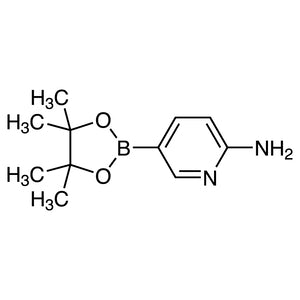
- TCI A3206 827614-64-2 5-(4,4,5,5-Tetramethyl-1,3,2-dioxaborolan-2-yl)pyridin-2-amine
- TCI M3245 883738-27-0 1-Methyl-4-[3-(4,4,5,5-tetramethyl-1,3,2-dioxaborolan-2-yl)benzyl]piperazine
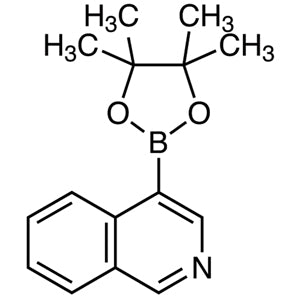
- TCI I0739 685103-98-4 4-(4,4,5,5-Tetramethyl-1,3,2-dioxaborolan-2-yl)isoquinoline
- TCI T4406 1219637-88-3 1-(4,4,5,5-Tetramethyl-1,3,2-dioxaborolan-2-yl)-9H-carbazole
- TCI T4400 942919-26-8 4-(4,4,5,5-Tetramethyl-1,3,2-dioxaborolan-2-yl)-1H-pyrrolo[2,3-b]pyridine
- TCI T4396 928664-98-6 4-(4,4,5,5-Tetramethyl-1,3,2-dioxaborolan-2-yl)isoxazole
- Suzuki-Miyaura cross-coupling: the pinacol boronate ester acts as the boron coupling partner with aryl or heteroaryl halides, forming carbon-carbon bonds under palladium catalysis with reliable and reproducible behaviour.
- Medicinal chemistry scaffold construction: installs the complete pyridinyl-piperazine fragment in one operation, shortening synthetic routes that would otherwise require building the group up step by step.
- Drug discovery analogue synthesis: the piperazine motif appears frequently in pharmaceutical molecules, so this reagent lets chemists prepare related analogues quickly around a common structural core.
- Solubility-directed molecular design: the piperazine ring helps improve aqueous solubility of target compounds, making the reagent useful when a candidate structure needs better water compatibility.
- Salt-form development work: the basic nitrogen supplied by the piperazine provides a site for salt formation, supporting studies where a basic centre in the target molecule is required.
| Brand | TCI |
|---|---|
| CAS number | 918524-63-7 |
| Molecular formula | — |
| Purity | — |
| Category | Chemistry > Organometallic Reagents > Organoboron [Organometallic Reagents] |
| Pack sizes | 200 mg and 1 g |
| Physical form | — |
| Storage | keep in a tightly closed container, protected from moisture, following the manufacturer's stated storage conditions on the label |
- Chemical class: pinacol boronate ester bearing pyridine and piperazine groups
Store the reagent in its original tightly closed container and keep it protected from moisture, following the storage conditions stated by the manufacturer on the product label. Although the pinacol boronate ester is considerably more stable towards air and moisture than a free boronic acid, good practice is still to minimise unnecessary exposure of the container to atmospheric humidity, and to allow cold material to reach room temperature before opening so that condensation does not form on the contents. Handle and weigh the material in a well-ventilated area or a fume hood, wearing a laboratory coat, safety glasses, and chemical-resistant gloves. Use clean, dry spatulas and glassware for each transfer to avoid contaminating the stock. Keep the container clearly labelled, store it away from incompatible chemicals, and consult the supplier's safety data sheet before first use and before disposing of any residues or contaminated materials.
—
Produk Terkait
-
5-(4,4,5,5-Tetramethyl-1,3,2-dioxaborolan-2-yl)pyridin-2-amine TCI A3206
Regular price Rp 3.021.900,00Regular price -
1-Methyl-4-[3-(4,4,5,5-tetramethyl-1,3,2-dioxaborolan-2-yl)benzyl]piperazine TCI M3245
Regular price From Rp 1.829.100,00Regular price -
4-(4,4,5,5-Tetramethyl-1,3,2-dioxaborolan-2-yl)isoquinoline TCI I0739
Regular price From Rp 2.386.650,00Regular price -
1-(4,4,5,5-Tetramethyl-1,3,2-dioxaborolan-2-yl)-9H-carbazole TCI T4406
Regular price Rp 3.021.900,00Regular price -
4-(4,4,5,5-Tetramethyl-1,3,2-dioxaborolan-2-yl)-1H-pyrrolo[2,3-b]pyridine TCI T4400
Regular price From Rp 3.630.900,00Regular price -
4-(4,4,5,5-Tetramethyl-1,3,2-dioxaborolan-2-yl)isoxazole TCI T4396
Regular price From Rp 2.174.550,00Regular price -
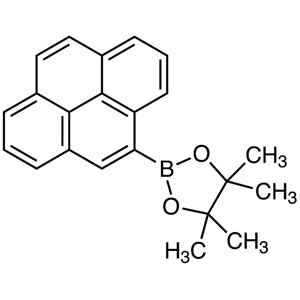
4-(4,4,5,5-Tetramethyl-1,3,2-dioxaborolan-2-yl)pyrene TCI T3857
Regular price Rp 4.399.500,00Regular price -
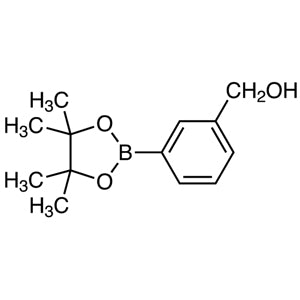
3-(4,4,5,5-Tetramethyl-1,3,2-dioxaborolan-2-yl)benzylAlcohol TCI T3830
Regular price From Rp 717.150,00Regular price
![883738-27-0 1-Methyl-4-[3-(4,4,5,5-tetramethyl-1,3,2-dioxaborolan-2-yl)benzyl]piperazine - AMI Scientific](http://amiscientific.com/cdn/shop/files/TCI2510M3245.jpg?v=1768205872&width=533)
![883738-27-0 1-Methyl-4-[3-(4,4,5,5-tetramethyl-1,3,2-dioxaborolan-2-yl)benzyl]piperazine - AMI Scientific](http://amiscientific.com/cdn/shop/files/TCI2510M3245_a076a757-1c0f-4f19-8e0d-d99f5073b984.jpg?v=1769056954&width=533)

![942919-26-8 4-(4,4,5,5-Tetramethyl-1,3,2-dioxaborolan-2-yl)-1H-pyrrolo[2,3-b]pyridine - AMI Scientific](http://amiscientific.com/cdn/shop/files/TCI2510T4400.jpg?v=1767145178&width=533)