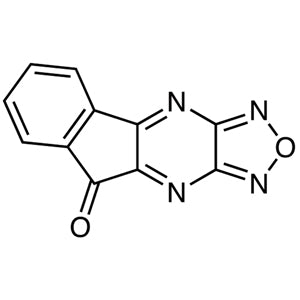
SMER3, listed under CAS number 67200-34-4, is a small molecule known as the third small molecule enhancer of rapamycin. The compound was identified through chemical library screening and has drawn sustained attention for its ability to influence protein degradation pathways. It belongs to the life science reagent category covering enzymes, enzyme inhibitors, and enzyme substrates. In the laboratory, SMER3 is employed as a chemical tool, meaning a compound deliberately applied to disrupt one biological component in a targeted manner so that the role of that component within the cell can be studied directly.
The property that makes SMER3 particularly valuable to researchers is its selectivity toward the SCF-type ubiquitin ligase complex carrying the Met30 recognition subunit, which forms part of the ubiquitin-proteasome system. The ability to inhibit a single ligase specifically, without blocking the entire protein degradation machinery, offers a considerable advantage over general proteasome inhibitors whose effects are broad and difficult to interpret. As a small molecule, the compound also acts rapidly and can be added to or washed out of an experimental system, making it well suited to experiments requiring strict temporal control and clear observation of the resulting effects.
In Indonesian laboratories, SMER3 is typically used within university research groups, institutional biochemistry facilities, and molecular biology units working on protein turnover and cell signalling. It is generally ordered in small research quantities appropriate to targeted mechanistic studies rather than routine testing. Researchers commonly incorporate it into cell-based assay work where a defined, reversible perturbation of a specific ubiquitin ligase is needed alongside conventional biochemical and analytical methods.
- Ubiquitin-proteasome system research: the compound allows investigators to interrogate a single degradation route in detail, because it targets one ligase complex rather than suppressing protein turnover across the whole cell.
- SCF ligase mechanism studies: its selectivity for the Met30 recognition subunit makes it an appropriate probe for examining how substrate recognition contributes to the overall activity of SCF-type complexes.
- Chemical biology tool compound applications: as a screening-derived small molecule, it serves as a defined chemical perturbation for dissecting the cellular function of its target protein in a controlled manner.
- Time-resolved cellular experiments: the molecule acts quickly and can be washed out of the system, which supports experimental designs that depend on precise timing of addition and removal.
- Comparative inhibitor studies: researchers use it alongside broad proteasome inhibitors to distinguish effects arising from one specific ligase from those caused by general blockade of protein degradation.
| Brand | TCI |
|---|---|
| CAS number | 67200-34-4 |
| Molecular formula | — |
| Purity | — |
| Category | Life Science > Biochemicals and Reagents > Enzymes, Enzyme Inhibitors, Enzyme Substrates |
| Pack sizes | available in research-scale pack sizes; please confirm the currently listed options when ordering |
| Physical form | — |
| Storage | store according to the conditions stated on the manufacturer label and accompanying documentation |
- Product code: M3172
Store the compound under the conditions specified on the manufacturer label and in the accompanying product documentation, keeping the container tightly closed and protected from moisture and direct light. Keep the material in its original supplier container, or in a clean, chemically compatible and clearly labelled vessel if it is transferred or prepared as a stock solution. Handle the product in a well-ventilated laboratory area using standard personal protective equipment, including gloves, safety glasses, and a laboratory coat. Avoid direct contact with skin and eyes as well as inhalation of any dust. Consult the current Safety Data Sheet before use, and dispose of residues and contaminated consumables in accordance with applicable laboratory chemical waste procedures.
—
Produk Terkait
-
TCI B5774 5,10-Bis(4,4,5,5-tetramethyl-1,3,2-dioxaborolan-2-yl)naphtho[1,2-c:5,6-c']bis([1,2,5]oxadiazole)
Regular price Rp 10.255.350,00Regular price -
Dihydroiodide TCI B6569
Regular price From Rp 1.936.200,00Regular price -
Trifluoromethanesulfonate TCI B7003
Regular price From Rp 1.936.200,00Regular price
![5,10-Bis(4,4,5,5-tetramethyl-1,3,2-dioxaborolan-2-yl)naphtho[1,2-c:5,6-c']bis([1,2,5]oxadiazole) - TCI B5774 - AMI Scientific](http://amiscientific.com/cdn/shop/files/TCI2510B5774.jpg?v=1769180228&width=533)